
Causes, symptoms, current treatments and the future of diabetes care.
Diabetes is one of the most common chronic conditions in Ireland — and one of the most misunderstood. It is often described as a "silent disease" because Type 2 diabetes, which accounts for approximately 88% of all cases, can develop slowly over many years with few noticeable symptoms. By the time many people are diagnosed, the condition has already been present for some time.
Section 01
Diabetes in Ireland: Understanding the Scale
Ireland does not yet have a national diabetes registry — a gap repeatedly highlighted by Diabetes Ireland and the HSE National Clinical Programme for Diabetes. Prevalence estimates are therefore derived from Scotland's national registry (where 6% of the population are affected) applied to Ireland's similar population size, suggesting approximately 308,000 people are living with diabetes in Ireland today.
Source: HSE National Clinical Programme for Diabetes; Diabetes Ireland prevalence data; Irish Longitudinal Study on Ageing (TILDA).
Research published in July 2025 by RCSI University of Medicine and Health Sciences — analysing Healthy Ireland survey data from 2015 to 2023 — found striking inequalities: those from disadvantaged communities were almost three times more likely to have diabetes (6%) compared to those from more affluent areas (2.2%). This underscores that diabetes in Ireland is not only a health challenge, but a social one.
Section 02
Types of Diabetes
Not all diabetes is the same. Understanding the type you have — or are at risk of — is the first step to effective management.
Section 03
Causes and Risk Factors
Type 1 Diabetes
The exact cause of Type 1 diabetes remains incompletely understood. It is an autoimmune condition — the body's immune system incorrectly targets and destroys the beta cells of the pancreas, which are responsible for producing insulin. Genetic factors play a role, as does potentially exposure to certain viral infections during development. Ireland has one of the highest rates of childhood Type 1 diabetes in the world, a pattern that has been studied by researchers at institutions including University College Dublin and Trinity College Dublin, though the reasons for Ireland's elevated incidence remain the subject of active research.
Type 2 Diabetes
Type 2 diabetes has a more complex and modifiable set of causes, combining genetic predisposition with lifestyle and environmental factors. The core mechanism is insulin resistance — where the body's cells stop responding effectively to insulin — combined with a progressive decline in the pancreas's ability to compensate by producing more.
Section 04
Signs and Symptoms
Symptoms vary considerably between Type 1 and Type 2 diabetes. Type 1 often presents acutely — with rapid onset of symptoms that may signal diabetic ketoacidosis (DKA), a medical emergency. Type 2, by contrast, typically develops slowly and silently over years, with symptoms so mild or gradual that many people attribute them to aging, stress or fatigue.
Section 05
Current Treatments for Diabetes in Ireland
Diabetes treatment has undergone a genuine revolution in the last decade. The HSE National Clinical Programme for Diabetes, with support from the Department of Health, launched updated National Clinical Guidelines for both Type 1 and Type 2 diabetes in May 2024 — reflecting these advances and setting a new standard for care in Ireland.
Lifestyle Modification — The Foundation of All Treatment
For both Type 1 and Type 2 diabetes, lifestyle is the bedrock of management. For Type 2 in particular, dietary change and increased physical activity can significantly reduce HbA1c, improve insulin sensitivity, and in some cases — especially following bariatric surgery or very-low-calorie diets — lead to sustained remission. The HSE's Discover Diabetes programme and structured education initiatives provide evidence-based support for lifestyle management across Ireland.
Pharmacological Treatment
The following are the main drug classes available in Ireland today. Treatment decisions are individualised — the 2024 HSE and American Diabetes Association (ADA) guidelines both emphasise a patient-centred approach that considers cardiovascular risk, kidney function, weight, and personal preference.
Section 06
The Importance of Regular Check-Ups
Diabetes is a chronic condition that changes over time, and its complications — if left undetected — can be serious and irreversible. Diabetic retinopathy is a leading cause of blindness in working-age adults in Ireland. Diabetic nephropathy is a major driver of end-stage kidney disease. Peripheral neuropathy leads to foot complications that in severe cases can result in amputation. Cardiovascular disease risk is significantly elevated in people with diabetes.
The critical insight from decades of research is that all of these complications are largely preventable — or significantly delayed — with good glucose control, blood pressure management, and regular monitoring. The annual structured diabetes review is one of the most evidence-based and cost-effective interventions in all of medicine.
What Your Annual Diabetes Review Should Include
- HbA1c measurement (your 3-month average blood glucose)
- Blood pressure measurement and review of antihypertensive therapy
- Kidney function — eGFR and urine albumin-to-creatinine ratio (ACR)
- Cholesterol and lipid profile
- Weight and BMI assessment
- Foot examination — including assessment of pulses and sensation
- Retinal screening — annual photography via the Diabetic RetinaScreen programme
- Medication review and adjustment as needed
- Review of diabetes self-management education
- Smoking status assessment and cessation support if applicable
- Flu vaccination (strongly recommended for people with diabetes)
Screening for Those Not Yet Diagnosed
If you have risk factors for Type 2 diabetes and have never been tested, your GP can arrange a simple fasting blood glucose test or HbA1c blood test. This is especially important if you are over 45, have a family history of diabetes, have high blood pressure, or were overweight during pregnancy. Early detection of prediabetes provides a genuine window of opportunity to prevent or delay the onset of Type 2 diabetes through lifestyle change.
Section 07
The Future of Diabetes Treatment
The pace of innovation in diabetes medicine is unprecedented. Several areas of research — some already entering clinical trials — have the potential to fundamentally change what it means to live with diabetes within the next decade.
Research into stem cell therapy for Type 1 diabetes is reviewed in detail in a 2025 publication in PMC (PMID: PMC12689004), which concludes that "stem cell therapy offers a two-pronged strategy: regenerating insulin-producing beta cells and regulating immune responses." While a definitive cure remains ahead, the direction of travel is clearer than it has ever been.
Section 08
Key Irish Institutions and Resources
If you are living with diabetes in Ireland, or concerned you may be at risk, the following organisations and services are your primary points of reference for clinical care, education and support.
HSE National Clinical Programme for Diabetes
Established in 2010, the HSE National Clinical Programme for Diabetes provides clinical leadership across all aspects of diabetes care in Ireland. In May 2024 it published landmark updated guidelines for both Type 1 and Type 2 diabetes — the most significant revision in a decade. These guidelines, available on the HSE website, define best practice for primary care and specialist management in Ireland.
Diabetes Ireland
Diabetes Ireland is the national charity for people living with diabetes. It provides education, advocacy, support groups and a comprehensive online resource library. It has consistently called for the establishment of a national diabetes registry and for improved access to newer medications including CGM and GLP-1 agents across the public health system.
Diabetic RetinaScreen
The Diabetic RetinaScreen programme offers free annual retinal photography to all people with diabetes in Ireland aged 12 and over. This population-based screening programme has been instrumental in detecting early retinopathy — when treatment is most effective — and has prevented thousands of cases of preventable blindness in Ireland.
Section 09
Frequently Asked Questions
How many people have diabetes in Ireland?
It is estimated that approximately 308,000 people are living with diabetes in Ireland, with around 272,904 of those having Type 2 diabetes. Ireland does not yet have a national diabetes registry, so these estimates are based on Scottish prevalence data applied to the Irish population by the HSE. Ireland also has one of the highest rates of childhood Type 1 diabetes in the world, with approximately 285 new diagnoses annually in children under 15.
What are the early warning signs of diabetes?
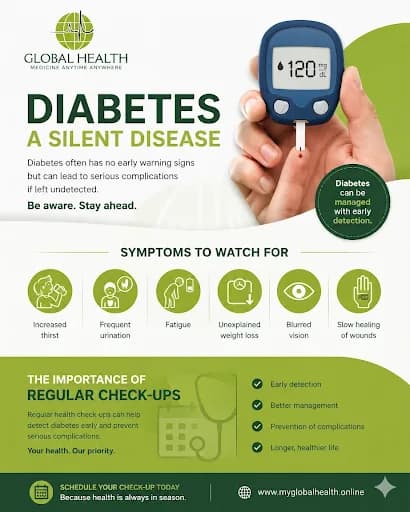
The most common early signs include increased thirst, frequent urination (especially at night), unexplained fatigue, blurred vision, slow healing of cuts or wounds, increased hunger even after eating, and tingling or numbness in the hands or feet. Importantly, Type 2 diabetes can develop slowly and silently — many people have no symptoms for years before diagnosis. If you have risk factors, ask your GP about a fasting blood glucose or HbA1c test even in the absence of symptoms.
What is the difference between Type 1 and Type 2 diabetes?
Type 1 diabetes is an autoimmune condition in which the immune system destroys the insulin-producing beta cells of the pancreas. It requires lifelong insulin therapy and typically presents in childhood or young adulthood. Type 2 diabetes occurs when the body becomes resistant to insulin or does not produce enough — it is strongly associated with lifestyle factors such as diet, physical inactivity and excess weight, and accounts for approximately 88% of all diabetes cases in Ireland. The two conditions have different causes, treatments and clinical courses, though both require careful management to prevent complications.
What are the best current treatments for Type 2 diabetes in Ireland?
Current first-line treatment typically begins with metformin alongside lifestyle modification (dietary change and increased physical activity). Newer drug classes — particularly GLP-1 receptor agonists (such as semaglutide/Ozempic) and SGLT2 inhibitors (such as empagliflozin/Jardiance) — have transformed treatment by not only lowering blood sugar but also protecting the heart and kidneys and aiding weight loss. The 2024 HSE updated Integrated Model of Care for Type 2 Diabetes and the ADA 2025 guidelines both recommend these agents for patients with cardiovascular disease, heart failure or kidney disease. Treatment is individualised — your GP or endocrinologist will tailor your plan to your specific profile.
How often should I get checked if I have diabetes in Ireland?
If you are diagnosed with diabetes, a structured annual review with your GP is recommended as a minimum — covering HbA1c, blood pressure, kidney function, cholesterol, weight, foot examination, and retinal screening via the Diabetic RetinaScreen programme. More frequent HbA1c checks (every 3–6 months) are appropriate if glucose control is not at target or if treatment has been changed. The 2024 HSE guidelines also recommend continuous glucose monitoring (CGM) for all adults with Type 1 diabetes in Ireland.
Can diabetes be cured or put into remission?
Type 2 diabetes can in some cases be put into remission — defined as achieving near-normal blood glucose levels without medication — through significant weight loss, often via very-low-calorie diets or bariatric surgery. The landmark DiRECT trial demonstrated remission in approximately 50% of participants at one year following a structured dietary programme. This does not mean the underlying tendency is eliminated — remission requires sustained lifestyle change to maintain. Type 1 diabetes currently cannot be cured, though promising stem cell therapies in clinical trials aim to restore insulin production and may reach patients within the next several years.
Can I consult a doctor about diabetes online in Ireland?
Yes. Global Health offers online GP consultations with Irish Medical Council-registered doctors from €39 — including diabetes review appointments, assessment of symptoms consistent with diabetes, medication review, and referral for blood tests including HbA1c, fasting glucose and full metabolic panel. Sick leave certificates can be issued where clinically appropriate. For patients in Dublin, clinical-grade home lab test kits (including HbA1c and full metabolic panels) are also available. Book at myglobalhealth.online or email globalhealth@myglobalhealth.online.