
Seborrhoeic dermatitis: how to recognise it, what helps and when to see a doctor
Flaking on the scalp, the face or behind the ears often has a common and manageable explanation. An online skin consultation lets you confirm it and start a plan without leaving home.
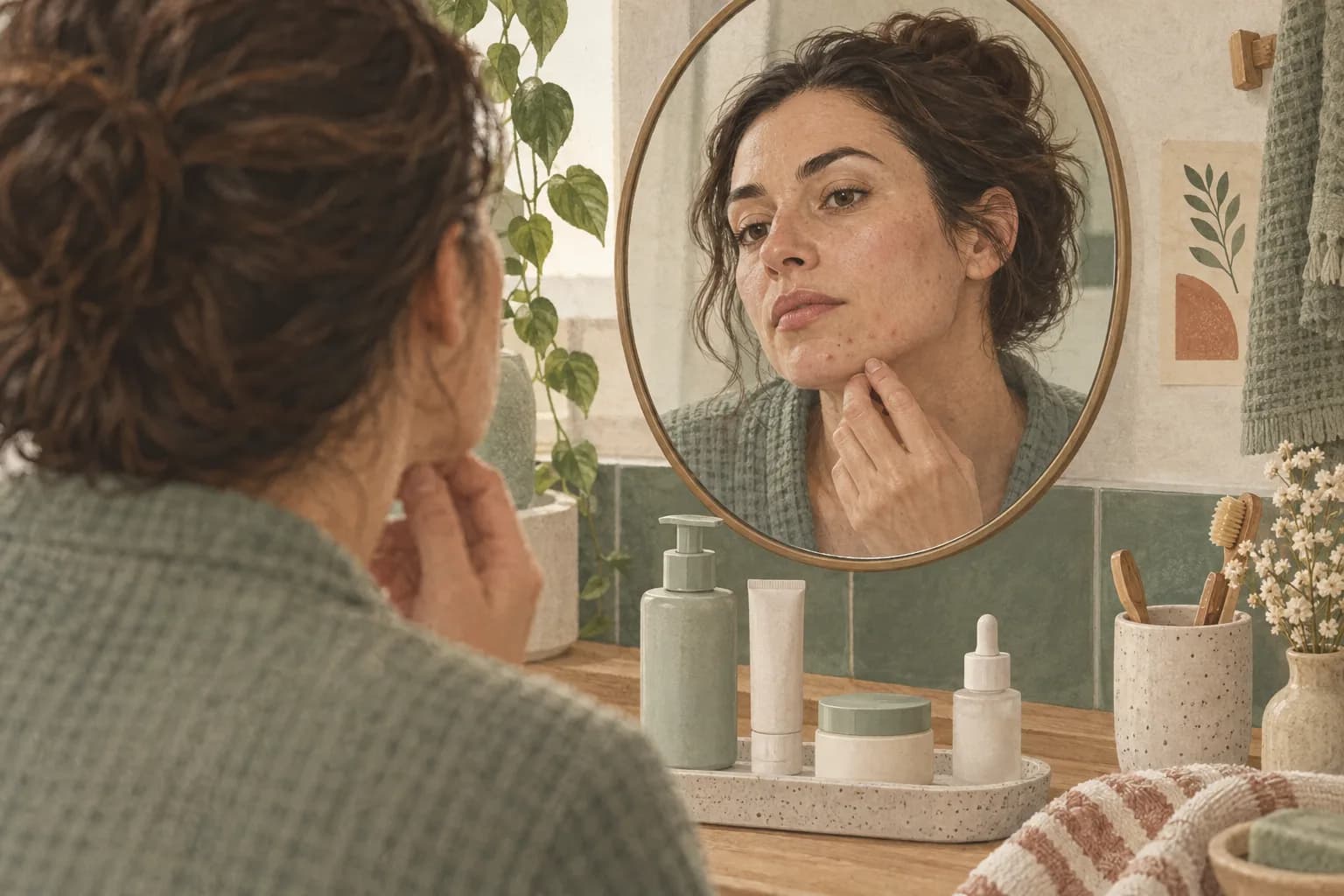
Seborrhoeic dermatitis is a long-term inflammation of the skin that causes redness, itching and white or yellowish scales in oily areas: the scalp, eyebrows, the folds beside the nose, behind the ears or the chest. It comes and goes, with more flare-ups in the colder months, and there is no definitive cure, but it can be controlled. In an online skin consultation, the doctor sees your skin by video call and in your photos, confirms whether it is seborrhoeic dermatitis or something similar (psoriasis, rosacea, eczema or a fungal infection), suggests a plan to keep it under control and follows up with you.
Seborrhoeic dermatitis
What seborrhoeic dermatitis is and who it affects
It is a chronic inflammation of the skin that appears in the areas with the most sebaceous glands. It can affect people of any age.
The Spanish Academy of Dermatology and Venereology (AEDV) describes two age peaks: in infants before three months of age and in adults between their fourth and seventh decades of life, with more cases in men than in women. In babies, when it affects the scalp, it is known as cradle cap.
The Fisterra clinical guide defines it as a common inflammatory condition that is chronic and recurrent. The Clínica Universidad de Navarra adds that it can persist for months to years and come in flare-ups; that is why it makes sense to have a doctor who knows your case and adjusts the plan when it returns.
Sources: AEDV · Fundación Piel Sana, Wikiderma; Fisterra, Dermatitis seborreica del adulto; Clínica Universidad de Navarra.
Seborrhoeic dermatitis
Symptoms: scalp, face and other areas
The typical pattern combines scaling, mild or intense redness and, often, itching, always in oily areas.
- Scalp: fine flaking, like dandruff, or greasy yellowish scales and crusts. This is the most commonly affected area.
- Face: the inner part of the eyebrows and the folds between the nose and the cheeks.
- Other areas: behind the ears, the ear canal and the centre of the chest.
- Infants: greasy scales and crusts on the scalp or in skin folds, usually with little inflammation and little or no itching.
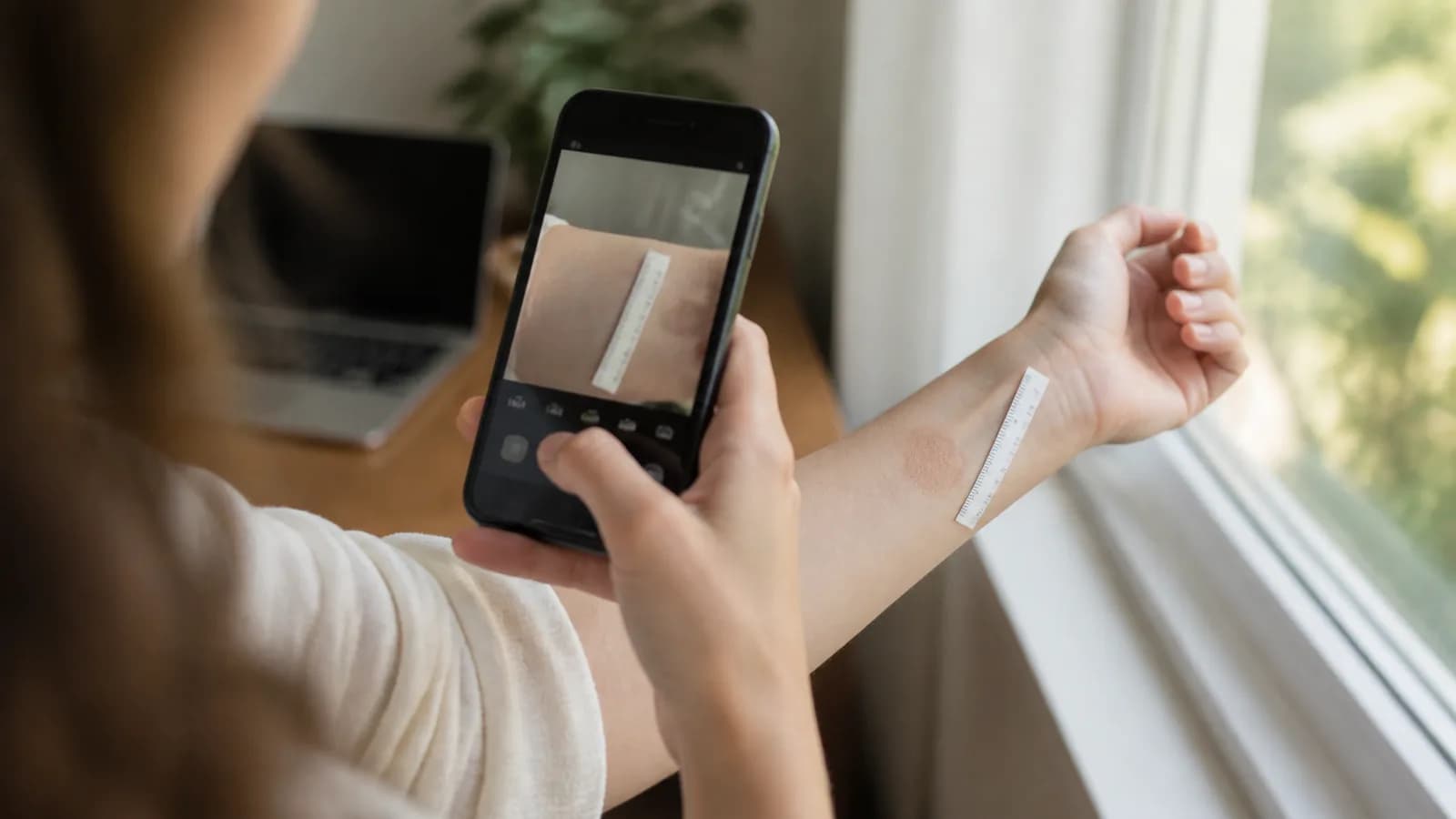
These are changes you can see. With good light and clear photos of the area, the doctor recognises the pattern during the video call and guides you on how to point the camera.
Sources: AEDV · Fundación Piel Sana, Wikiderma; Clínica Universidad de Navarra.
Seborrhoeic dermatitis
Why it appears and what makes it worse
Its exact cause is not known. The activity of the sebaceous glands and a yeast that lives naturally on the skin both play a part.
Fisterra links it to the skin's oil secretion, colonisation by yeasts of the genus Malassezia and a susceptibility of the immune system, although the mechanism is not fully understood.
According to the AEDV, emotional stress, the cold of autumn and winter and the low humidity of heated rooms make it worse, and it usually improves in warmer seasons. Fisterra names stress as the most important trigger of flare-ups, followed by heavy alcohol consumption. MedlinePlus adds tiredness.
It is more common in people with certain neurological conditions, such as Parkinson's disease, and in people with HIV. That is why the doctor asks about your full medical history during the consultation, not just about your skin.
Sources: AEDV · Fundación Piel Sana, Wikiderma; Fisterra, Dermatitis seborreica del adulto; MedlinePlus en español.
Seborrhoeic dermatitis
Seborrhoeic dermatitis treatment: controlling flare-ups
The aim is to reduce scaling, itching and redness, and to keep the skin stable.
For the scalp, the AEDV lists specific shampoos with antifungal or keratolytic ingredients (which help loosen the scales). On the face and trunk, the doctor may recommend low-potency topical corticosteroids, antifungal creams or other options; the Clínica Universidad de Navarra specifies that low-potency corticosteroids are used only for the first few days.
In the online consultation, the doctor chooses the treatment according to the area, the severity and your history, explains how to apply it and for how long and, if clinically indicated, issues the corresponding clinical documentation.
There is no definitive cure: the AEDV sets control as the goal, and the Clínica Universidad de Navarra states that maintenance treatment is needed. A clear plan and a review when flare-ups occur help keep it in check.
Sources: AEDV · Fundación Piel Sana, Wikiderma; Clínica Universidad de Navarra.
Seborrhoeic dermatitis
Daily care that supports treatment
Some habits help treatment work better.
- Use mild, moisturising soaps and avoid very hot showers.
- Avoid pre-shave and aftershave lotions on the affected areas.
- Leave the shampoo on for as long as your doctor tells you before rinsing.
- Note when flare-ups appear and which products you have used, and take photos during a flare-up: they will be useful in the video consultation.
If the itching keeps you from resting, mention it in the consultation: it is part of what needs treating.
Sources: Clínica Universidad de Navarra; AEDV · Fundación Piel Sana, Wikiderma.
Seborrhoeic dermatitis
When to see a doctor and what an online consultation can do
By video call, the doctor sees how the scaling and redness are distributed, reviews your photos and your history and tells seborrhoeic dermatitis apart from other similar conditions. If a lesion needs an in-person examination, the doctor tells you and refers you.
Book a consultation if self-care does not keep it under control, if flare-ups keep coming back or if you are not sure it is seborrhoeic dermatitis. Psoriasis, atopic dermatitis, rosacea and some fungal infections look similar. According to the Clínica Universidad de Navarra, the diagnosis is based on the appearance and location of the lesions, which is exactly what the doctor assesses when looking at your skin.
In an online skin consultation, a registered doctor assesses your skin, gives you the most likely diagnosis and a plan and, if needed, refers you to our online specialist dermatology on the same platform. Our guide on what an online dermatologist can help with explains this in more detail.
Sources: Clínica Universidad de Navarra; MedlinePlus en español.
Next step
Get your skin assessed
Book your online skin consultation or meet our doctors first.
Control your seborrhoeic dermatitis with an online doctor
Show your skin to a registered doctor by video call, confirm what you have and leave with a plan to control flare-ups, from anywhere in Spain and with referral to our specialist dermatology if you need it.
Sources
Sources and editorial review
Sources consulted and verified on 8 October 2026.
The clinical information is based on the AEDV (Wikiderma), the Fisterra clinical guide, the Clínica Universidad de Navarra and MedlinePlus en español, verified on 8 October 2026. Some lesions need an in-person examination: in that case the doctor says so and refers you. This article does not recommend products or brands and does not replace the doctor's treatment decision.
Common questions
Questions about seborrhoeic dermatitis
Are dandruff and seborrhoeic dermatitis the same thing?
Not exactly. On the scalp, seborrhoeic dermatitis can look like dandruff, but it usually comes with redness and itching and can also affect the face and other areas. In the consultation, the doctor assesses whether this is the cause or something else.
Can it be cured for good?
There is no definitive cure. It tends to come and go, with more flare-ups in the colder months, but treatment and daily care keep it under control. Your doctor adjusts the plan when a flare-up appears.
Can it be treated by video consultation?
Yes. It is a visible condition: the doctor looks at your skin by video call, reviews your photos, gives you the most likely diagnosis and suggests a plan. If you need a specialist assessment, the doctor refers you to our online specialist dermatology.