
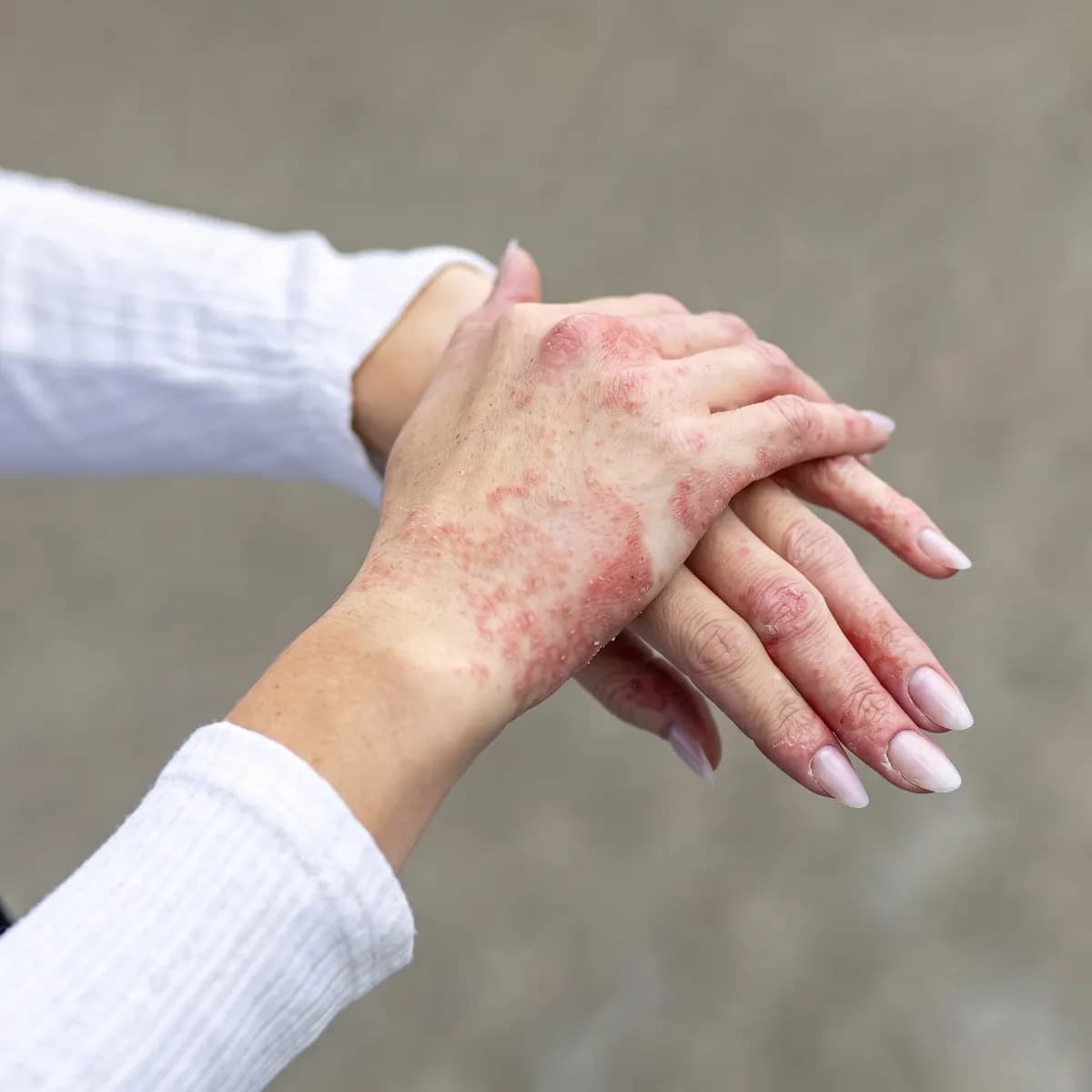
Eczema, also called atopic dermatitis, makes the skin dry, itchy, red and cracked, and tends to flare up and settle over time. Eczema treatment usually combines daily moisturising with a treatment cream to calm flares. With Global Health you can request eczema treatment online in Spain. You complete a secure questionnaire, a doctor reviews your answers, and if treatment is clinically suitable the doctor issues a digital treatment plan that you receive in your Global Health account and can take to a pharmacy in Spain. If it is not suitable, the doctor explains why and suggests what to do next.
What is included
- A review of your medical questionnaire by a doctor
- A treatment plan for an emollient and, where needed, a steroid cream or ointment of suitable strength, if clinically suitable
- A digital treatment plan in your Global Health account, ready to take to a pharmacy in Spain
- Written advice on how to apply the treatment and manage flares
- Secure messaging with the doctor about your request
The medication is not included and is paid for separately at the pharmacy.
Who this service is not suitable for
Our doctors cannot safely recommend eczema treatment online if:
- the treatment is for a child under 16
- your eczema is weeping, crusted, oozing yellow fluid or spreading quickly, which can mean it is infected
- you have painful clusters of blisters or open sores with a fever or feeling unwell (this can be eczema herpeticum, which is a medical emergency)
- you need treatment for the eyelids or the skin around the eyes
- your eczema covers large areas of your body or has not responded to previous treatment
- you are pregnant or breastfeeding and need more than an emollient
- you have never been diagnosed with eczema and are not sure what the rash is
If you think you may have eczema herpeticum, seek urgent medical care straight away, or call 112 if you are very unwell. For other concerns, please book a video consultation with a GP so a doctor can assess you properly.
How it works
- Complete the questionnaire. Answer questions about your skin, general health and any medication you take. You may be asked for photos of the affected areas. It takes about five minutes.
- Doctor review. A doctor reviews your answers against clinical guidance and may message you if more information is needed.
- Treatment plan issued. If treatment is suitable, the doctor issues a digital treatment plan that you receive in your Global Health account and can take to a pharmacy in Spain.
What is eczema?
Atopic eczema is a long-term condition in which the skin barrier does not hold moisture well, so the skin dries out and becomes inflamed more easily. It often starts in childhood, and many children grow out of it, but it can continue into adulthood or appear for the first time later in life. It commonly affects the hands, the inside of the elbows, the backs of the knees, the neck and the face. Eczema is not contagious.
What causes it?
Eczema tends to run in families and is often linked with asthma and hay fever. People with eczema have a weaker skin barrier, which lets irritants and allergens in and lets moisture out. The immune system then reacts with inflammation and itching.
Common triggers
Soaps, bubble baths and detergents, wool and synthetic fabrics, heat and sweating, cold dry weather, house dust mites, pet dander, stress and skin infections can all trigger flares. Other types of eczema, such as contact dermatitis from a substance that touches the skin, may need a different approach.
Eczema treatment options
Eczema cannot be cured, but the right treatment can control flares and keep the skin comfortable:
- Emollients. Moisturising creams, ointments and soap substitutes are the foundation of treatment. Use them generously every day, even when your skin is clear, and as a replacement for soap when washing.
- Steroid creams and ointments. These reduce inflammation during a flare. They come in different strengths, from mild to very potent. Your doctor decides the strength based on how severe the flare is and where it is on your body. Milder strengths are used on thinner skin such as the face and folds.
How to use steroid creams
Apply a thin layer to the inflamed skin once or twice a day, as advised, until the flare settles, usually within one to two weeks. A fingertip unit (the amount squeezed along the top segment of an adult finger) covers an area about the size of two adult hands. Apply the emollient first and wait around 30 minutes before applying the steroid cream.
Having a flare plan
A flare plan sets out what to do when your eczema worsens: increase emollient use, start the recommended steroid cream early, and step back down once the skin has settled. Some people with frequent flares are advised to use a steroid cream on problem areas twice a week to prevent them.
Dry skin treatment and self-care
Take short, lukewarm baths or showers, pat the skin dry and apply emollient straight away. Keep nails short, wear soft cotton clothing, and avoid known triggers. This approach also helps general dry skin.
Side effects and safety
Used as directed, steroid creams are safe and effective. Stinging may happen at first. Overusing strong creams for long periods, or using them on the face without advice, can thin the skin and cause stretch marks or visible blood vessels. Emollients can make baths and floors slippery, and paraffin-based products can soak into fabrics and make them a fire hazard, so keep away from naked flames.
When to see a doctor in person
See your GP if your eczema is not improving after a week or two of treatment, if it is affecting your sleep or daily life, if it is on your eyelids, or if you have signs of infection such as weeping, crusting or pain. Seek urgent care for blisters or sores with fever. You can also meet our doctors or see all online treatment services.