
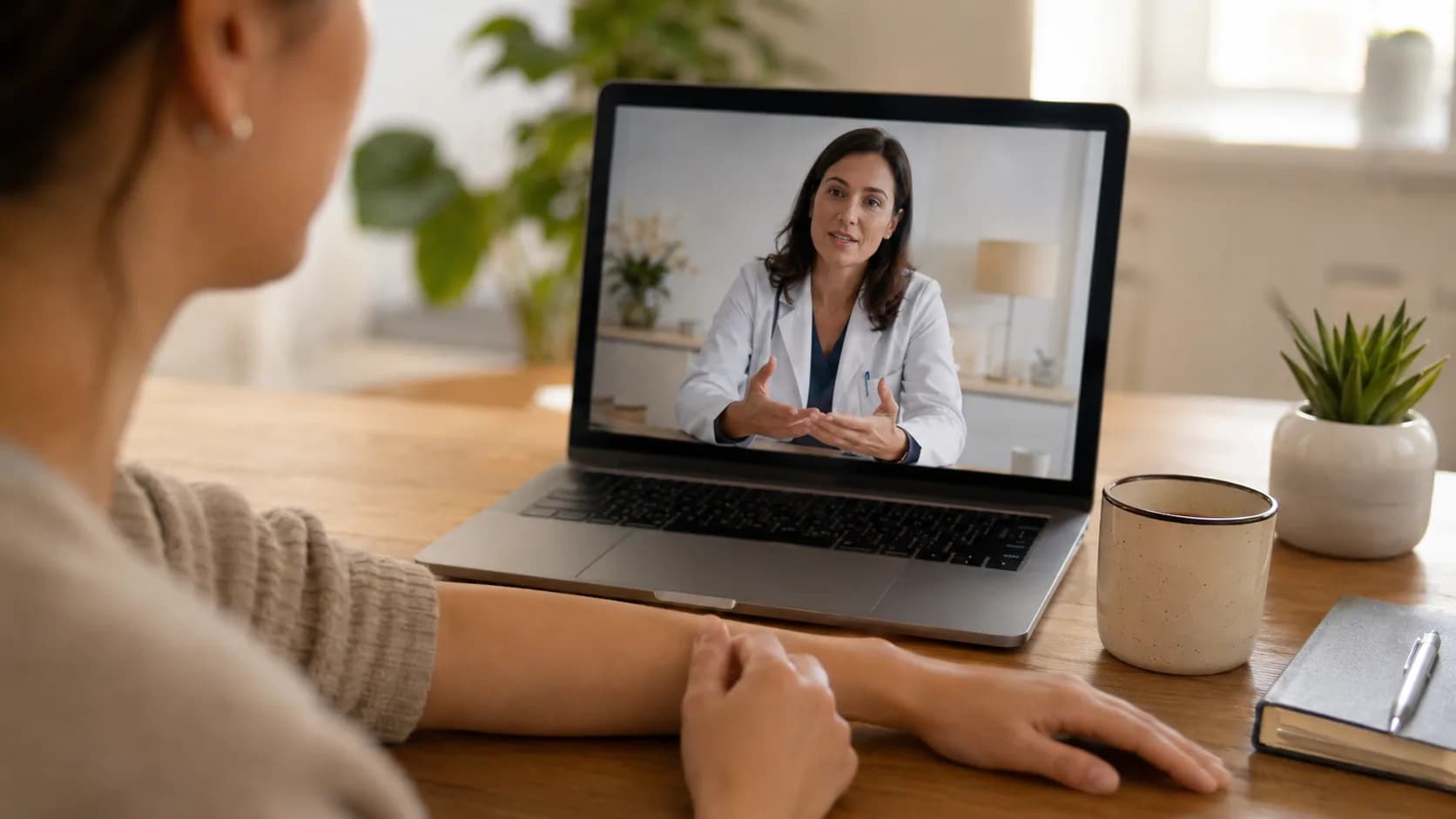
How skin assessment by teleconsultation works
The skin teleconsultation goes beyond the video call. Before the appointment, you send high-resolution photos of the lesion or condition — and the doctor reviews them carefully before joining the call. This allows a much more detailed visual assessment than would be possible during the video call alone.
How to take good photos for the appointment:
- Photograph the lesion in good natural lighting — direct light, no flash
- Include a context photo showing the location on the body
- Include a photo as close up as possible with the phone camera
- If the condition has changed, include comparative photos from different times if you have them
- For small lesions, use the portrait or macro mode of the camera for maximum detail
Who this service is for
This general practitioner skin consultation is indicated for adults and children with:
- Acne — mild to moderate, initial assessment and treatment
- Eczema and atopic dermatitis — assessment and management
- Skin spots — pigmented, red, white, or other colored, for initial assessment
- Skin infections — impetigo, folliculitis, furunculosis, early erysipelas
- Skin fungus — tinea corporis, tinea pedis, cutaneous candidiasis, pityriasis versicolor
- Cold sores and shingles — assessment and treatment
- Urticaria — assessment and treatment
- Mild psoriasis — initial assessment and management
- Seborrheic dermatitis — assessment and treatment
- Rosacea — initial assessment and management
- Hair loss — initial assessment of causes and request for tests
- Ingrown toenail and periungual infection — assessment and guidance
- Skin allergic reactions — assessment and treatment
- Insect bites with reaction — assessment and treatment
- Warts and molluscum contagiosum — assessment and guidance on treatment
- Lesions suspicious for initial assessment — with referral to a dermatologist when indicated
Specific skin conditions in Brazil
Brazil has a unique dermatological profile — influenced by the tropical climate, high sun exposure, and endemic diseases that do not exist in most European countries.
Sun exposure and skin cancer
Brazil has one of the highest skin cancer incidence rates in the world — especially basal cell carcinoma and squamous cell carcinoma, and melanoma. The UV index in Brazil is extremely high throughout the year — especially in the North, Northeast, and Central-West regions. For suspicious lesions — spots that have changed color, size, or shape, lesions with irregular borders, lesions that bleed or do not heal — the doctor assesses based on the ABCDE criteria and refers urgently to a dermatologist when indicated. Definitive diagnosis of skin cancer requires in-person dermoscopy and biopsy. High-resolution image assessment allows a quality initial evaluation — and where there is significant clinical suspicion, the doctor refers to a dermatologist on the same day.
Dengue and skin manifestations
Dengue is endemic in Brazil and often causes a skin rash — maculopapular exanthem — especially between the third and fifth day of fever. The doctor assesses whether the rash may be compatible with dengue and advises on the next steps.
Pityriasis versicolor
Extremely common in Brazil because of the heat and humidity — causes light or dark patches on the skin, especially on the trunk. Often confused with vitiligo. The doctor assesses and prescribes antifungal treatment when indicated.
Cutaneous leishmaniasis
Cutaneous leishmaniasis — transmitted by sand flies — causes a characteristic ulcer especially after exposure in endemic areas. The doctor assesses and refers to a specialized service when suspected.
Cutaneous larva migrans
Common on beaches and in areas with contaminated soil — especially in the Northeast. Causes characteristic serpiginous skin lesions. The doctor assesses and prescribes treatment when indicated.
Acne in Brazil — context and treatment
Acne is the most common dermatological condition in Brazil — affecting approximately 85% of adolescents and a growing number of adults, especially women. Brazil's hot and humid climate contributes to skin oiliness and worsens acne in many patients.
The general practitioner can assess and treat:
- Mild to moderate acne — comedones, papules, and pustules without significant nodules or cysts
- Hormonal acne — especially in adult women with a mandibular distribution pattern and menstrual periodicity
- Acne with early scarring — assessment and treatment plan to prevent progression
When clinically indicated, the doctor prescribes topical treatment — benzoyl peroxide, topical retinoids, topical antibiotics — and systemic treatment when necessary — oral antibiotics, anticonception with antiandrogenic effect in women.
Severe acne with extensive nodules and cysts, acne that has not responded to usual treatments, or acne with significant scarring requires specialized dermatological assessment. The doctor refers when indicated.
What this service does not cover
- Definitive diagnosis of skin cancer — requires in-person dermoscopy and biopsy. For suspicious lesions, the doctor refers urgently to a dermatologist
- Dermatological procedures — removal of lesions, biopsy, peels, laser, and other procedures require in-person care
- Severe acne with extensive nodules and cysts — requires specialized dermatological assessment
- Suspected cutaneous leishmaniasis — requires in-person assessment and specific tests
- Dermatological emergencies — skin rash that spreads rapidly with fever, angioedema, or severe allergic reaction — call SAMU (192) immediately