
Who this service is for
This musculoskeletal consultation with a general practitioner is indicated for adults with:
- Low back pain — acute or chronic, with or without radiation to the legs
- Neck pain — stiff neck, neck stiffness, neck pain with or without radiation to the arms
- Shoulder pain — tendinitis, bursitis, rotator cuff syndrome
- Knee pain — chondromalacia, patellofemoral syndrome, pain after exertion
- Ankle and foot pain — sprain, plantar fasciitis, Achilles tendinitis
- Elbow pain — lateral epicondylitis (tennis elbow) or medial epicondylitis (golfer's elbow)
- Wrist and hand pain — carpal tunnel syndrome, De Quervain's tendinitis
- Diffuse muscle pain — fibromyalgia, post-exercise muscle pain, myalgia
- Arthritis and osteoarthritis — chronic joint pain with or without an established diagnosis
- Gout — evaluation of a non-urgent acute episode and chronic management
- Pain after physical activity — repetitive strain injury, delayed onset muscle soreness
- Work-related pain — RSI/WRMSD (repetitive strain injuries and work-related musculoskeletal disorders)
- Review of imaging tests — X-ray, magnetic resonance imaging, musculoskeletal ultrasound
- Foreign patients and expats in Brazil with musculoskeletal complaints
What is included in the consultation
Musculoskeletal clinical evaluation
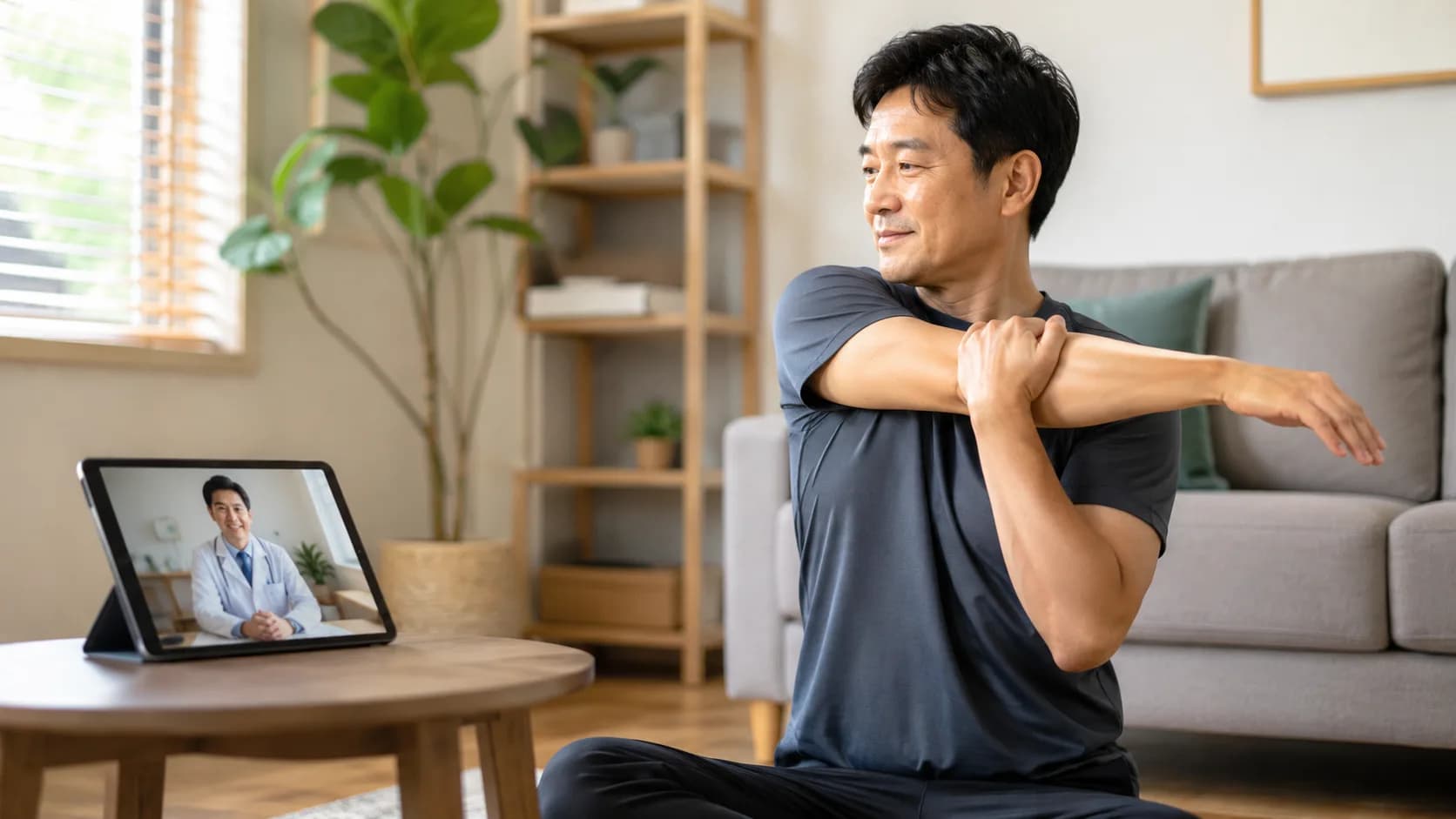
The doctor performs a complete clinical assessment of the complaint — including location, characteristics, onset, worsening and relieving factors, history of previous injuries, physical activity, and occupation. Certain elements of the musculoskeletal physical examination may be performed by video call — assessment of range of motion, posture, and provocative maneuvers that the patient can perform with the doctor's guidance during the call.
Review of imaging tests
If you have X-ray, magnetic resonance imaging, CT scan, or musculoskeletal ultrasound available, send the reports before the consultation. The doctor reviews the findings and explains what they mean clinically — and whether they are relevant to your current complaint.
Clinical diagnosis
Based on the assessment, the doctor establishes the most likely clinical diagnosis or differential diagnoses — clearly explaining what is causing the pain and what can be done.
Treatment plan — at the doctor's discretion
The doctor advises on the most appropriate treatment — which may include physical measures such as relative rest, application of heat or cold, specific exercises, and pharmacological treatment where clinically indicated.
Electronic prescription — at the doctor's discretion
Where clinically indicated after a complete assessment, the doctor issues an electronic prescription with ICP-Brasil digital signature — anti-inflammatories, pain relievers, muscle relaxants, and other medications for managing musculoskeletal pain, valid at pharmacies throughout Brazil.
Request for imaging tests — when indicated
Where clinically indicated, the doctor requests X-ray, magnetic resonance imaging, CT scan, or musculoskeletal ultrasound to be performed at private imaging clinics of your choice throughout Brazil.
Referral to a specialist or physiotherapist — when indicated
When the presentation requires orthopedic, rheumatologic, or specialized physiotherapy evaluation, the doctor refers you with complete clinical documentation.
Low back pain — the most common complaint
Low back pain is the leading cause of work absence in Brazil and one of the conditions that most often leads people to the emergency department — often unnecessarily. Most episodes of acute low back pain improve over days to weeks with appropriate conservative treatment.
The doctor assesses:
- Mechanical low back pain — the most common, caused by muscle overload, poor posture, or strain. It improves with moderate movement, local heat, and pain relief. Absolute rest is not recommended
- Low back pain with radiation to the leg (sciatica) — may indicate compression of the sciatic nerve due to a herniated disc or other causes. The doctor assesses the symptoms and advises on investigation and treatment
- Chronic low back pain — present for more than 3 months, often with a muscular and postural component. Requires a multidisciplinary approach including physiotherapy
- Warning signs (red flags) — low back pain with loss of strength in the legs, numbness in the perineal area, or changes in urinary or bowel control are warning signs of cauda equina syndrome — a surgical emergency
Cauda equina syndrome — low back pain with loss of strength in the legs, numbness in the perineal area ("saddle" area), or difficulty urinating or having a bowel movement — is a surgical emergency. Call SAMU (192) immediately or go to the nearest emergency department.
RSI/WRMSD — work-related injuries in Brazil
Brazil has one of the highest prevalences of RSI/WRMSD (Repetitive Strain Injuries and Work-Related Musculoskeletal Disorders) in the world — especially among factory workers, typists, supermarket cashiers, and professionals who work in a static position for long periods.
The most common RSI/WRMSD in Brazil include:
- Carpal tunnel syndrome — numbness and tingling in the hands, especially at night
- Tendinitis — inflammation of tendons due to repetitive strain
- Epicondylitis — tennis elbow or golfer's elbow
- De Quervain's tenosynovitis — pain in the wrist and at the base of the thumb
- Shoulder impingement syndrome — pain and limited movement in the shoulder
The doctor assesses the clinical presentation, advises on posture and ergonomics modifications, and issues clinical documentation when indicated — including a medical certificate when temporary leave is clinically justified.
Gout — evaluation and management
Gout is one of the most common forms of inflammatory arthritis in Brazil — caused by the accumulation of uric acid crystals in the joints. The acute episode of gout causes intense pain, usually in the big toe, with swelling, redness, and local warmth.
The general practitioner can:
- Assess the acute gout episode and prescribe anti-inflammatory treatment when indicated
- Request uric acid levels and other follow-up tests
- Advise on diet and lifestyle modifications to reduce uric acid
- Assess the need for preventive treatment with allopurinol for patients with recurrent gout
A very swollen, red, and hot joint with fever — especially after a procedure or in an immunosuppressed patient — may be septic arthritis, a medical emergency. Go to the emergency department immediately.
Musculoskeletal complaints in the Brazilian context
Heavy physical work
Brazil has a large proportion of workers in physically intense activities — construction, agriculture, industry — with a high prevalence of occupational musculoskeletal injuries. The doctor assesses and issues clinical documentation when indicated for temporary leave.
Sports culture
Brazil has a strong sports culture — soccer, running, weight training, martial arts. Acute and overuse sports injuries are frequent presentations that can be assessed by teleconsultation when there is no severe impairment.
Underdiagnosed rheumatologic conditions
Rheumatoid arthritis, lupus, ankylosing spondylitis, and other rheumatologic conditions are often underdiagnosed in Brazil — especially in regions with limited access to rheumatologists. The doctor assesses the suspicion and refers to a rheumatologist when indicated.