Can't find a GP in Ireland? Why it is hard and what your options are
Many people in Ireland cannot find a GP who is taking new patients. This guide sets out the official and reported numbers, how medical cards and GP visit cards fit in, and where an online consultation can help in the meantime.
If you cannot find a GP in Ireland, you are not alone. The Irish College of GPs counts about 4,600 GPs in practice against more than 6,000 needed, and surveys report that many practices are closed to new patients. This guide explains the numbers, how the medical card works when practices decline you, and what an online consultation covers.
The numbers
How bad is the GP shortage in Ireland?
Ireland has fewer GPs than its population needs, and the gap is uneven across the country.
RTÉ reported on 27 March 2026, from an Irish College of GPs (ICGP) analysis, that there are 4,600 GPs in practice and that over 6,000 are needed. The Irish Times, on 25 July 2026, put the number of practising GPs at about 4,900. The two figures use different baselines, so they are not directly comparable, but both show a gap between the workforce and what is needed.
Where you live matters. The Irish Times reported GP coverage of 50 to 52 per 100,000 people in Monaghan, the lowest in the country, followed by Roscommon at 59 to 61, Kilkenny at 64 to 66 and Meath at 67 to 69. At the other end, Sligo had 121 to 125 per 100,000. The ICGP's pre-budget submission for 2027 says GP density is about 100 per 100,000 in the main cities and about 60 per 100,000 in rural areas.
The ICGP's March 2026 analysis names areas under the highest workforce pressure: Donegal, north Mayo and Leitrim in the north west; Cavan, Monaghan and north Louth on the border; parts of Kildare in the commuter belt; Kilkenny, Carlow and Wexford in the south east; Finglas and Coolock in north Dublin; and east Clare and east Limerick in the mid-west.
Sources: RTÉ, 27 March 2026; The Irish Times, 25 July 2026; ICGP, Pre-Budget Submission 2027; ICGP, Analysis of GP shortages (see Sources).
Patient lists
Why is a GP not taking new patients?
Two surveys reported in 2025 found that most GPs were not taking some or all new patients.
Research by the ICGP, reported by The Irish Times on 17 May 2025, found that 75% of GPs were not accepting new medical card patients and that just over two thirds were not taking private patients. The article gives 2023 as the reference year and does not state the sample size or method. In the same report, the ICGP's clinical research lead described his own practice list as closed for two years.
A separate survey by The Irish Independent, reported by Newstalk on 11 January 2025, found that 61% of GPs could not take on new patients. The survey dates are not given in the report. An ICGP spokesperson in the same report named population growth as the first factor behind the workforce shortage.
These figures come from different surveys and different years, so they should not be added together. They point the same way: if one practice has said no, that is a common experience rather than a sign that you did something wrong.
Sources: The Irish Times, 17 May 2025; Newstalk, 11 January 2025 (see Sources).
Finding a practice
How do you tell if a GP is accepting new patients?
There is no national register showing which practices have open lists.
The HSE runs a Find a GP directory that lists practices by place, with a phone number for each and, for some, an email or website. The directory page does not say whether a practice is taking new patients. The HSE's page on GPs who accept medical cards says that if a GP is not on its list, they may not currently be accepting additional patients.
So the only way to know whether a GP is accepting new patients is practice by practice, and the answer can change from month to month as lists open and close. A practice that has a closed list for medical card patients may still be open to other patients, and the reverse can also be true.
- Directories show where practices are, not whether their lists are open.
- Closed lists are common, according to the research above.
- Practices with open lists may not be near your home or work.
Medical card and GP visit card
What happens if a GP refuses your medical card?
The HSE has a safety net for medical card holders who cannot find a practice that will take them.
The HSE states that if you are applying for a medical card and 3 GPs have declined to accept you, the HSE will assign you a GP.
A GP visit card means you do not pay to see your doctor, but medicines and other services still cost money. People with a medical card do not need a GP visit card. The HSE page on GP visit cards does not say what happens if a practice declines a card holder, so we do not state a rule for that case.
Sources: HSE, GPs who accept medical cards or GP visit cards; HSE, GP visit cards (see Sources).
What it means
What does it mean to have no regular GP?
Without a regular GP, you lose continuity rather than all access to care.
A regular GP knows your history, your long-term treatment and your family context. When you have none, you start each new episode of illness without that background, and routine reviews of blood pressure, diabetes or asthma are easy to miss. These are the real costs of a closed list, and a one-off consultation does not remove them.
A GP also writes the referral letters that open the usual route to a public hospital clinic. The HSE describes the first outpatient appointment as the one after your GP refers you.
For a new, short-term problem, a regular GP is not the only way to be assessed. That is where an online consultation fits.
Our service
Can an online consultation cover the gap?
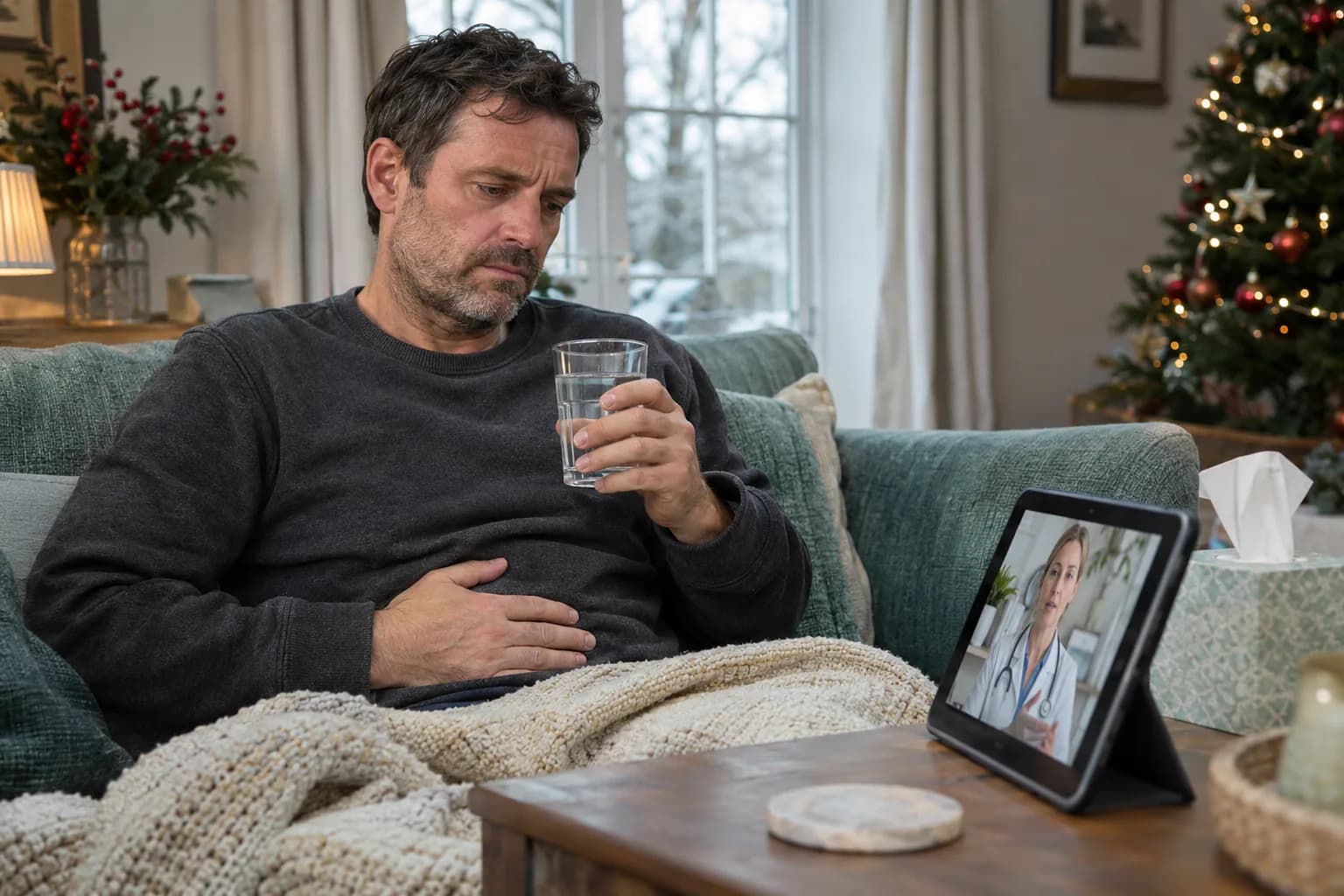
For many short-term, non-emergency problems, a video consultation can fill the gap while you look for a regular practice.
Our Same-Day Online Doctor Consultation is a 15-minute video consultation with an Irish-registered doctor, at €39 per consultation. The service page lists the problems it assesses, including colds and flu, sore throat, ear and chest infections, urinary infections, rashes, eczema, back and neck pain, headaches, and acute worsening of long-term conditions such as hypertension, diabetes or asthma. Online consultations with us start from €29, the lowest price across our GP and specialist services.
- Same-day slots are offered, subject to availability.
- The doctor can assess you, explain next steps and advise on what to watch for.
- Referrals for blood tests, imaging or specialist review, when clinically appropriate.
- Medical certificates, when clinically appropriate and at the doctor's discretion.
The service page states two limits. Illness Benefit certificates for the Department of Social Protection are not routinely issued, and treatment with controlled substances is not routinely provided online. Referrals, documents and treatment are given only when clinically appropriate.
The same-day online doctor consultation page has the details, and booking is open online. Our online General Practice Doctor page describes the wider service.
Limits
When does a problem need an in-person examination?
A video consultation cannot examine you, and some problems need hands-on care.
A doctor cannot listen to your chest, feel your abdomen or look in your ear by video. If the doctor judges that you need an examination, a test or urgent care, they will tell you so and explain what to arrange. That is part of the consultation, not a failure of it.
Looking ahead
Will the shortage ease?
The training pipeline is growing, but it takes years to turn into practice lists.
The ICGP says GP training places are rising from 350 to 400 a year and have grown 85% since 2017, with 1,191 trainees in supervised training places. Its pre-budget submission for 2027 gives intake as 172 in 2016 and 350 in 2026, with 400 planned. The ICGP also says over 170 international GPs have been recruited for rural practices.
Even so, a trainee takes years to qualify. Until more practices open their lists, people will keep finding that one practice after another says no.
Sources: ICGP, Analysis of GP shortages (27 March 2026); ICGP, Pre-Budget Submission 2027; The Irish Times, 25 July 2026 (see Sources).
Care in Ireland
Talk to a doctor now
A video consultation with an Irish-registered doctor can assess a short-term problem while you look for a regular practice.
- Same-Day Online Doctor Consultation
- Online General Practice Doctor
- Book a consultation
- Our doctors
- Health articles
No GP and not feeling well?
Talk through your symptoms with an Irish-registered doctor by secure video. Same-day slots are offered, subject to availability.
Sources
Evidence behind this article
Sources checked on 10 November 2026.
No official national figure for practices with closed lists was found. The closed-list percentages come from an ICGP research summary (2023 data, reported in May 2025) and a newspaper survey (reported January 2025); neither report gives a sample size or method. GP numbers differ between the RTÉ (4,600) and Irish Times (about 4,900) reports because they use different baselines.
Questions
Common questions about finding a GP
Why can't I find a GP in Ireland?
Many practices have closed lists. The ICGP says there are about 4,600 GPs in practice against over 6,000 needed, and research it reported in 2025 found that 75% of GPs were not accepting new medical card patients. Rural counties and parts of the commuter belt are under the most pressure.
How many GPs are there in Ireland?
RTÉ reported 4,600 GPs in practice on 27 March 2026, from an ICGP analysis. The Irish Times reported about 4,900 on 25 July 2026. The figures use different baselines, so they do not match exactly.
What if three GPs refuse my medical card application?
The HSE states that if you are applying for a medical card and 3 GPs have declined to accept you, the HSE will assign you a GP.
Can an online doctor replace my GP?
Not entirely. An online consultation can assess many short-term, non-emergency problems, but it does not provide the continuity of a regular GP, and some problems need an in-person examination.
Can I get an Illness Benefit certificate online?
Illness Benefit certificates for the Department of Social Protection are not routinely issued in an online consultation. A doctor may issue one only when clinically appropriate and after a full assessment.