Winter vomiting bug: symptoms, how long it lasts and how to stop it spreading
Norovirus spreads fast wherever people gather, and December is full of parties, family visits and shared meals. This guide explains the symptoms, how it differs from food poisoning, how to avoid dehydration and how to protect the rest of the household.
The winter vomiting bug is norovirus, a very common stomach virus that causes sudden nausea, vomiting and watery diarrhoea. Symptoms usually start 12 to 48 hours after you catch it and last 1 to 2 days. Most people recover fully at home with rest and plenty of fluids. The main risk is dehydration, especially in babies, young children and older people. You stay infectious for at least 48 hours after symptoms stop, so plan Christmas visits around that.
The basics
What is the winter vomiting bug?
Norovirus is one of the most common causes of gastroenteritis (a stomach bug) in Ireland. It earned the name "winter vomiting bug" because it is more common in the colder months, but you can catch it at any time of year.
It spreads very easily from person to person. Both the vomit and the faeces of an infected person contain the virus. You can catch it through close contact with someone who is ill, by touching contaminated surfaces and then your mouth, or by eating food or drinking water that has been contaminated.
Norovirus often surges in winter, helped by more socialising indoors. Outbreaks are common wherever many people spend several days together, such as hotels, schools, nursing homes, hospitals and cruise ships. The virus is hardy: it can survive on surfaces for days or even weeks.
There are many strains and immunity is short-lived, so you can catch norovirus more than once, even in the same season.
Sources: HPSC, Norovirus frequently asked questions; HPSC news, norovirus levels; national patient guidance on norovirus (see Sources).
Symptoms
Norovirus symptoms and how fast they start
Norovirus symptoms usually come on suddenly, often with no warning beyond a wave of nausea.
- Nausea, often sudden
- Vomiting, often forceful (projectile)
- Watery diarrhoea
- Painful stomach cramps
- Sometimes a slight temperature, chills, headache and aching limbs
Symptoms begin around 12 to 48 hours after infection. That timing helps work out where you caught it: if several guests fall ill a day or two after the same party or family dinner, norovirus is a common cause.
Duration
How long the winter vomiting bug lasts, and how long you are infectious
The illness itself is short. In most people, symptoms last about 1 to 2 days, and up to 2 or 3 days at most.
Being infectious lasts longer than feeling ill. You are most infectious from when symptoms start until 48 hours after they have all gone, and you may be infectious for a short time before and after that. Some people remain contagious for up to 2 weeks after recovery.
In a study of volunteers infected with a norovirus, illness lasted 1 to 2 days, but the virus could still be found in stools for a median of 28 days. Researchers do not yet know how infectious that late shedding is, but it is a good reason to keep washing your hands carefully for some time after you recover.
There are no long-term effects from norovirus. Most people make a full recovery, but very young and older people can become very dehydrated and occasionally need hospital treatment.
Sources: HPSC, Norovirus frequently asked questions; Atmar et al., 2008.
Comparison
Norovirus symptoms or food poisoning symptoms?
The two overlap. Norovirus is itself a cause of food poisoning, but most food poisoning is caused by bacteria picked up from food that was not cooked, stored or handled properly.
| Norovirus | Bacterial food poisoning | |
|---|---|---|
| Main features | Sudden nausea, forceful vomiting and watery diarrhoea | Nausea, vomiting, diarrhoea that may contain blood or mucus, cramps, fever, weakness |
| Usual start | 12 to 48 hours after infection | Usually 1 to 2 days after eating, but anything from a few hours to several weeks |
| How it spreads | Person to person, surfaces, food and water | Mainly contaminated food, such as undercooked meat, raw eggs, raw shellfish or unpasteurised milk |
| Usual length | 1 to 2 days | Most people recover within a few days |
Common bacterial causes include campylobacter (often from undercooked chicken), salmonella, listeria (pre-packed sandwiches, cooked sliced meats, soft cheeses) and E. coli (undercooked beef). Over Christmas, risks rise when a large turkey is not fully cooked through, leftovers sit out of the fridge for too long, or raw and cooked food share a chopping board.
You do not always need to know which it is, because home care is the same. Blood in your diarrhoea, or symptoms that do not start to improve after a few days, are reasons to speak to a doctor.
Main risk
Dehydration: the main risk
Repeated vomiting and diarrhoea drain fluid and salts quickly. Babies, children and people aged 65 and over are most at risk, as are people with diabetes or another long-term condition.
Early signs of dehydration include:
- Feeling thirsty, with a dry mouth, lips or tongue
- Dark yellow, strong-smelling urine, or passing urine fewer than 4 times a day
- Feeling dizzy, lightheaded or tired
- Sunken eyes
Self-care
Looking after yourself at home
There is no cure for norovirus; it has to run its course. Antibiotics will not help, because it is caused by a virus. The aim is to stay hydrated and comfortable.
- Sip fluids often. Small, frequent sips of water are easier to keep down than large drinks.
- Replace lost salts. Oral rehydration solution helps if you are losing a lot of fluid or showing signs of dehydration, especially if you are older or frail.
- Eat when you feel ready. Start with small, light meals of plain food, such as toast or rice.
- Rest at home until you feel better and the symptoms have stopped.
- Take extra care if you have diabetes or another long-term condition, as dehydration can upset it.
Most people do not need to see a doctor for norovirus. Getting medical advice makes sense when there is a risk of a more serious problem, as set out in the next sections.
Stopping the spread
Stopping it spreading over Christmas
With parties, house guests and shared meals, one case can quickly become a household outbreak. It is not always possible to avoid norovirus, but these steps cut the spread.
- Stay off work or school until at least 48 hours after your symptoms have passed. Skip parties and family visits in that time too.
- Do not visit anyone in hospital or a nursing home until 48 hours after symptoms stop.
- Do not cook for others until 3 days after your symptoms have gone. Hand the Christmas dinner to someone who is well.
- Wash your hands thoroughly with soap and water, especially after the toilet and before eating. Alcohol hand gels do not kill norovirus.
- Clean up straight away after vomiting or diarrhoea, using a bleach-based household cleaner on surfaces, taps, toilet seats and door handles.
- Wash contaminated clothes and bedding separately on a hot wash, and do not share towels or flannels.
- Avoid raw, unwashed produce, and keep the person who is ill out of the kitchen.
Sources: HPSC, Norovirus frequently asked questions; HPSC news, norovirus levels; national patient guidance on norovirus (see Sources).
Safety
When vomiting and diarrhoea need a doctor
Most stomach bugs settle without treatment. Speak to a doctor if you have vomiting and diarrhoea and:
- You cannot keep fluids down because you keep vomiting
- Symptoms have not started to improve after a few days
- You are pregnant, or aged 60 or older
- Your baby or young child is affected
- You have a weakened immune system, for example from medicines, cancer treatment or HIV
- You have a long-term condition such as inflammatory bowel disease, kidney disease or diabetes
- There is blood or mucus in your diarrhoea
Online care
How our online doctor can help with a stomach bug
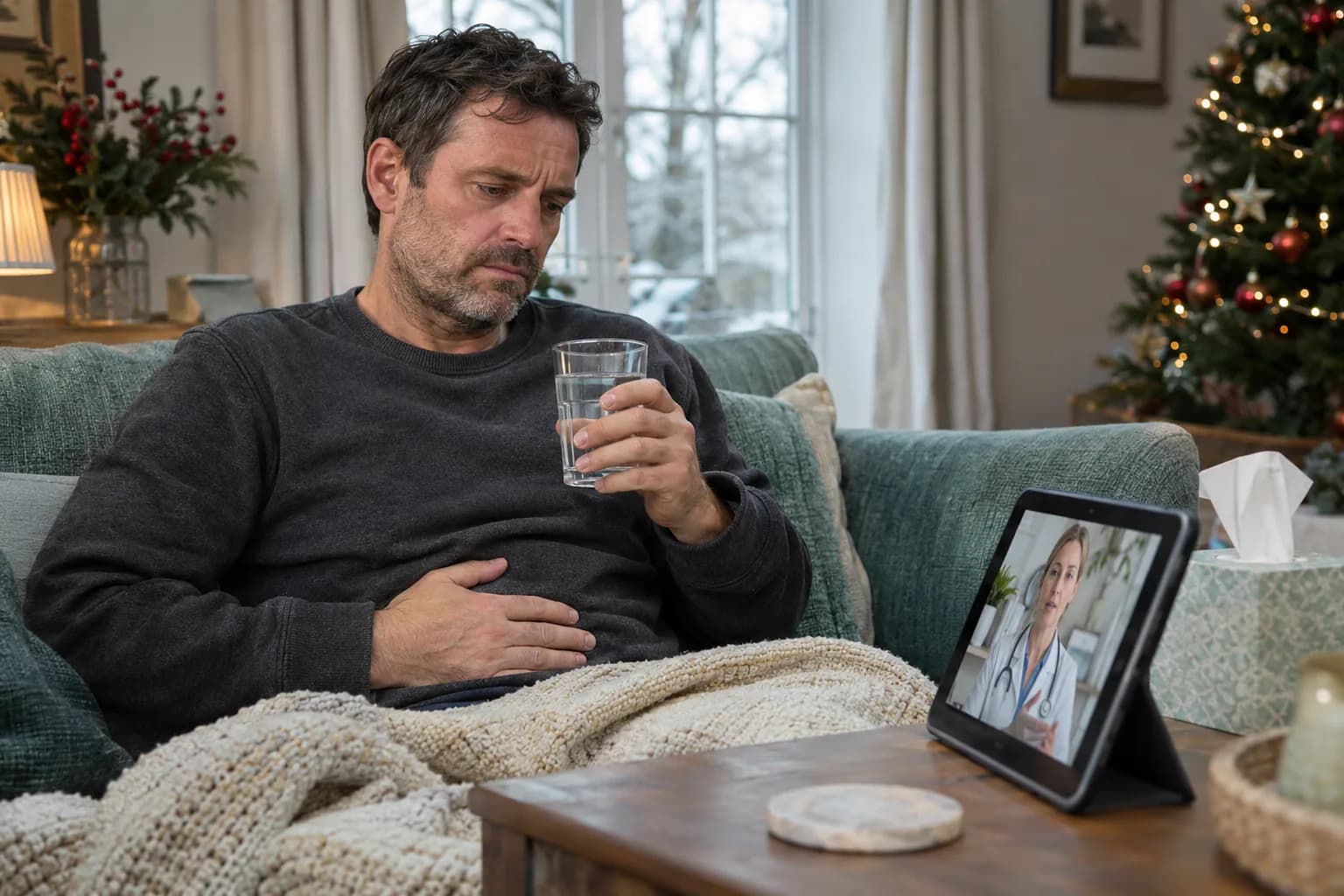
A video consultation lets a doctor assess you without you leaving the house, which also keeps norovirus away from waiting rooms.
Our Same-Day Online Doctor Consultation is a 15-minute secure video call for €39 with an Irish-registered doctor. The service covers nausea, vomiting, diarrhoea and abdominal pain, and same-day slots are available. The doctor will:
- Assess your symptoms: when they started, how often you are vomiting or have diarrhoea, what you have eaten and who else is ill.
- Check for red flags: signs of dehydration or of a more serious cause that needs urgent in-person care.
- Agree a plan: fluids and diet, how long to stay off work and when you can safely host or visit family again.
- Issue documentation, such as a medical certificate, when clinically appropriate and at the doctor's discretion.
- Arrange next steps: referral for tests or specialist review where clinically indicated.
Please note that electronic sick leave certificates are not accepted by the Department of Social Protection, and backdated notes are not routinely issued. Some cases, such as severe tummy pain, need a hands-on examination; if so, the doctor will tell you clearly and direct you to the right service.
Care in Ireland
Talk to a doctor about vomiting and diarrhoea
A video consultation with an Irish-registered doctor can help you judge whether you can manage at home, spot dehydration early and plan your return to work and family plans.
Stomach bug not settling?
Talk through your symptoms with an Irish-registered doctor by secure video, often the same day, without leaving home or passing the bug on.
Sources
Evidence behind this article
Sources checked on 8 November 2026.
Symptom timings and infectious periods come from Irish national public health guidance. The shedding study involved a small number of healthy adult volunteers. National surveillance reports were paused in October 2026, so this article gives no current-season case numbers.
Questions
Common questions about the winter vomiting bug
How long does the winter vomiting bug last?
Usually 1 to 2 days, and up to 2 or 3 days at most. Symptoms start 12 to 48 hours after you catch it. You stay infectious until at least 48 hours after your symptoms stop.
When can I go back to work after norovirus?
At least 48 hours after your last episode of vomiting or diarrhoea. Avoid preparing food for others until 3 days after your symptoms have gone, and avoid visiting hospitals and nursing homes for at least 48 hours.
Does hand sanitiser kill norovirus?
No. Alcohol hand gels do not kill norovirus. Wash your hands thoroughly with soap and water, and clean contaminated surfaces with a bleach-based household cleaner.
Can I catch norovirus twice in one winter?
Yes. There are many strains of norovirus and immunity is short-lived, so you can be infected more than once.
Is it norovirus or food poisoning?
They overlap, and norovirus can itself be spread through food. Norovirus tends to start suddenly with forceful vomiting and passes in 1 to 2 days. Bacterial food poisoning may bring blood or mucus in the diarrhoea, and fever. Home care is the same; see a doctor if symptoms are severe or not improving.
Can an online doctor help with vomiting and diarrhoea?
Yes, for most cases. Our doctor assesses your symptoms by video, checks for dehydration and other red flags, agrees a plan and arranges tests or referral if needed. Some cases need an in-person examination, and the doctor will say so.