
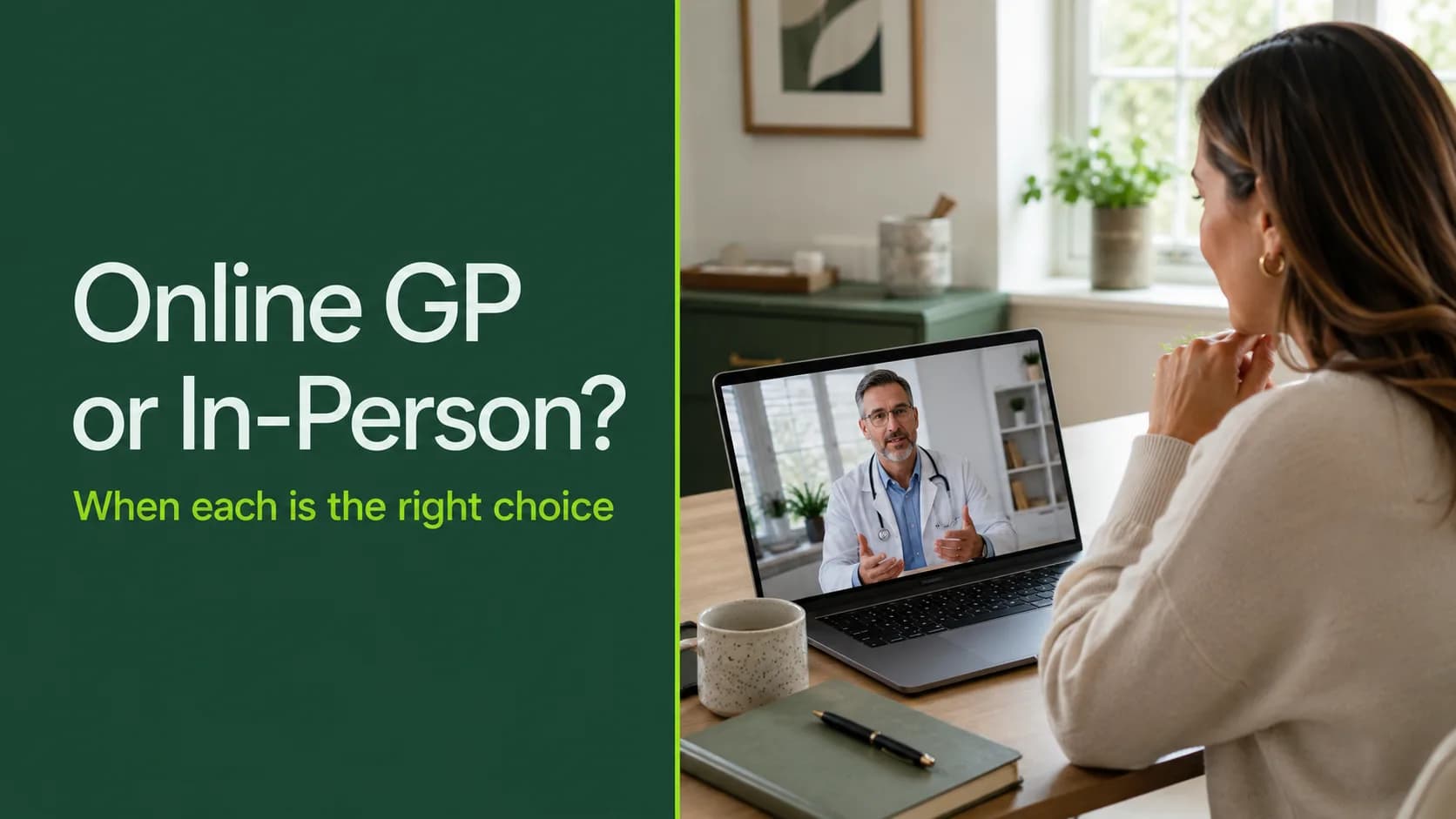
Ghid bazat pe simptome pentru alegerea între telemedicină, medic de familie în persoană și servicii de urgență.
Telemedicina a făcut accesul la medic mai rapid și mai comod, dar nu este alegerea potrivită pentru fiecare simptom. Alegerea unui traseu greșit poate întârzia un diagnostic care necesită examinare fizică sau poate duce la o vizită inutilă într-un Departament de Urgență aglomerat pentru o problemă care s-ar fi rezolvat de acasă în cincisprezece minute. Acest ghid explică când este adecvată consultația online, când trebuie să fiți examinat în persoană și când trebuie să sunați la 999/112 sau să mergeți direct la Urgențe.
Secțiunea 01
De ce contează alegerea
Telemedicina a eliminat cea mai mare barieră în calea sfatului medical — disponibilitatea — dar nu și necesitatea examinării fizice în multe afecțiuni.
De la pandemia de COVID-19, consultațiile online la medicul de familie au devenit o componentă obișnuită a îngrijirii medicale în Irlanda, Regatul Unit și UE. Organizația Mondială a Sănătății și Uniunea Internațională a Telecomunicațiilor au publicat împreună recomandări de implementare care recunosc telemedicina drept „o abordare accesibilă și eficientă din punctul de vedere al costurilor” pentru extinderea accesului la îngrijire, cu condiția să fie utilizată corespunzător și să nu înlocuiască îngrijirea care depinde de examinarea fizică atunci când aceasta este necesară.
Cea mai utilă întrebare pe care să v-o puneți înainte de a programa o consultație online este: „Medicul trebuie să mă examineze fizic sau să efectueze imediat un test pentru a afla ce am ori pentru a mă trata în siguranță?” Dacă răspunsul este nu — de exemplu, pentru o rețetă repetată, evaluarea unor simptome pe care le puteți descrie exact sau un certificat medical pentru o boală deja diagnosticată — telemedicina este de obicei mai rapidă și mai comodă. Dacă răspunsul este da sau nu sunteți sigur, consultația în persoană este mai sigură.
Merită, de asemenea, să înțelegeți limitele telemedicinei, pentru a avea așteptări corecte înainte de programare. Un medic online nu vă poate asculta plămânii cu stetoscopul, palpa abdomenul, măsura tensiunea arterială, examina interiorul canalului auditiv și nici efectua pe loc un test rapid pentru streptococ sau o analiză de urină — toate acestea fiind posibile imediat la un examen fizic. Pentru o mare parte dintre consultațiile obișnuite la medicul de familie, această limitare nu schimbă rezultatul: o rețetă repetată, o consultație de monitorizare sau un certificat medical pentru o afecțiune deja diagnosticată nu necesită aceste manevre. În cazul unui simptom nou, nediagnosticat, tocmai absența examenului fizic poate determina medicul online să vă spună, chiar în timpul apelului video, că trebuie să fiți consultat în persoană. Această redirecționare către îngrijirea în persoană este o componentă a telemedicinei sigure, nu un eșec al acesteia.
Secțiunea 02
Când este potrivită îngrijirea online
Telemedicina se potrivește afecțiunilor care pot fi evaluate prin conversație, fotografii și descrierea simptomelor și istoricului, fără examen fizic sau diagnostic urgent.
- Rețete repetate și revizuirea medicației pentru o afecțiune stabilă, deja diagnosticată
- Certificate medicale pentru boli comune, autolimitante (răceală, gripă, gastroenterită, migrenă)
- Afecțiuni ale pielii evaluabile din fotografii clare (erupții, acnee ușoară, pusee de eczemă)
- Simptome de răceală și gripă, durere în gât sau congestie sinusală fără dificultăți respiratorii
- Monitorizare după un diagnostic în persoană sau externarea din spital
- Simptome ușoare de infecție urinară necomplicată la adulți, fără febră sau durere lombară
- Întrebări despre contracepție, rețete repetate pentru contraceptive și sfaturi generale de sănătate sexuală
- Monitorizare în sănătatea mintală, anxietate ușoară-moderată, dispoziție scăzută și revizuirea medicației
- Sfaturi de medicină de călătorie, stil de viață și prevenție
- Trimiteri pentru analize, imagistică sau specialist când nu este necesar mai întâi un examen fizic
Și recomandările HSE pentru serviciile medicului de familie în afara programului face o distincție asemănătoare pentru îngrijirea prin telefon: serviciul este destinat problemelor urgente care pot fi evaluate și pentru care se pot oferi recomandări de la distanță, nu înlocuiește examinarea fizică atunci când aceasta este necesară clinic. Medicul online vă va recomanda întotdeauna îngrijire în persoană sau de urgență dacă simptomele nu pot fi evaluate în siguranță de la distanță.
Unul dintre cele mai frecvente motive pentru care oamenii amână orice fel de îngrijire — online sau în persoană — este imposibilitatea de a obține suficient de repede o programare în timpul zilei de lucru. Pentru afecțiunile enumerate mai sus, telemedicina elimină această barieră: o consultație video poate fi, de regulă, programată și finalizată în decurs de o oră, în loc să așteptați câteva zile până la următorul loc disponibil la medicul de familie. Acest lucru contează mai ales în situații sensibile la timp, dar cu risc scăzut, cum ar fi obținerea unui certificat medical înainte de o tură sau reînnoirea unei rețete care se termină într-un weekend prelungit. Avantajul comodității este real, însă nu trebuie să fie niciodată motivul pentru care un simptom ce necesită cu adevărat examinare este tratat online în loc de a fi evaluat în persoană — comoditatea poate departaja două opțiuni sigure, dar nu justifică alegerea uneia nesigure.
Secțiunea 03
Când trebuie să fiți văzut în persoană
Unele afecțiuni necesită cu adevărat examinare, diagnostic în clinică sau evaluare fizică în aceeași zi; descrierile și fotografiile nu pot înlocui acest lucru în siguranță.
- Durere abdominală severă, localizată sau însoțită de febră ori vărsături
- Durere în piept, palpitații sau orice simptom cardiac nou
- Suspiciune de fractură, luxație sau rană adâncă ce necesită sutură
- Simptome care necesită examen fizic pentru excluderea unei boli grave (de exemplu, durere testiculară sau noduli fără explicație)
- Durere de ureche la copil mic, când timpanul trebuie examinat
- Febră mare persistentă, mai ales la sugari, vârstnici sau persoane imunodeprimate
- Orice simptom care necesită tensiune arterială, saturație de oxigen sau auscultație pentru evaluare sigură
- Sângerare sau durere în sarcină ori reducerea mișcărilor fetale
- Leziune oculară, schimbare bruscă a vederii sau ochi roșu și dureros
- Simptome deja evaluate online pentru care medicul a recomandat control în persoană
Cabinetul medicului dumneavoastră sau serviciul HSE de găsire a îngrijirii urgente și de urgență vă poate ajuta să găsiți opțiunea potrivită pentru îngrijire în persoană — cabinetul medicului de familie, serviciul de gardă al medicilor de familie, unitatea pentru leziuni sau Departamentul de Urgență — în funcție de gravitatea simptomelor.
Secțiunea 04
Semne de urgență — sunați la 999/112
Unele simptome nu sunt niciodată potrivite pentru consultație online și nu trebuie să aștepte nicio programare.
În Regatul Unit, recomandările echivalente din partea ghidul NHS privind folosirea 111 și 999 trasează aceeași limită: 999 este rezervat urgențelor care pun viața în pericol, simptomele urgente care nu pot aștepta sunt triate prin 111 sau printr-un serviciu echivalent în afara programului, iar îngrijirea de rutină este asigurată de medicul de familie obișnuit.
Secțiunea 05
Considerații speciale pentru copii
Copiii se pot deteriora rapid și descriu mai greu simptomele; pragul pentru evaluare în persoană trebuie să fie mai scăzut.
O consultație online poate fi potrivită pentru un copil cu o răceală ușoară, o erupție cutanată stabilă sau o întrebare simplă despre medicamente. Totuși, părinții și îngrijitorii trebuie să solicite fără întârziere îngrijire în persoană sau de urgență dacă un sugar ori un copil mic are: febră mare care nu scade cu paracetamol sau ibuprofen, mai ales dacă are sub 3 luni; alimentație redusă, vărsături persistente sau semne de deshidratare (mai puține scutece ude, ochi înfundați); somnolență neobișnuită, lipsă de tonus sau dificultăți la trezire; o erupție care nu dispare la apăsare („testul paharului”); dificultăți de respirație, gemete sau buze albastre; ori o convulsie. Dacă aveți orice îndoială în privința unui copil, alegerea mai sigură este întotdeauna evaluarea în persoană sau apelarea 999/112.
Secțiunea 06
Cum funcționează consultația medicală online
Un serviciu bun de telemedicină face mai întâi triajul, astfel încât consultația online să fie oferită doar când este cu adevărat potrivită.
La Global Health, fiecare rezervare începe cu un scurt chestionar despre simptome. Dacă simptomele sugerează că trebuie să fiți consultat în persoană sau că aveți nevoie de îngrijire de urgență, vi se comunică imediat, înainte de programarea consultației — o consultație online nu trebuie să devină niciodată o barieră care întârzie escaladarea adecvată. Atunci când consultația online este potrivită, un medic de familie înregistrat la Irish Medical Council vă analizează istoricul prin video sau telefon, poate trimite electronic rețete către farmacia locală, poate emite certificate medicale când sunt indicate clinic și vă poate trimite la analize de sânge, investigații imagistice sau consult de specialitate atunci când este necesar.
Nu știți ce tip de îngrijire vă trebuie?
Serviciul de medicină online al Global Health triază mai întâi fiecare rezervare în funcție de simptome, astfel încât vi se oferă o consultație video numai când aceasta este adecvată clinic — iar dacă nu este, sunteți îndrumat imediat către îngrijire în persoană sau de urgență.
Secțiunea 07
Resurse importante
Aceste surse oficiale stabilesc recomandările pe care se bazează articolul.
Sursă: recomandările HSE pentru îngrijire urgentă și de urgență; ghidul serviciului NHS 111; recomandările comune OMS/UIT privind accesibilitatea telemedicinei (2024).
Secțiunea 08
Întrebări frecvente
Poate medicul online să stabilească diagnosticul la fel de exact ca la consultația în persoană?
Pentru multe afecțiuni — revizuirea medicației, consultații de monitorizare, probleme ale pielii vizibile la cameră și boli evaluate pe baza simptomelor, precum răceala sau migrena — da. Totuși, unele diagnostice depind de constatările examenului fizic (ascultarea toracelui, palparea abdomenului sau examinarea urechilor), care pur și simplu nu pot fi reproduse de la distanță. Un medic online responsabil vă va spune întotdeauna când este necesar un examen în persoană, în loc să presupună diagnosticul.
Poate un medic online să emită un certificat medical?
Da, atunci când este adecvat clinic pentru afecțiunea descrisă. În Irlanda, în scop profesional, certificatele medicale emise după consultații online sunt tratate la fel ca cele emise după o consultație în persoană la medicul de familie.
Ce fac dacă nu știu dacă simptomele reprezintă o urgență?
Dacă nu sunteți sigur, tratați situația ca urgentă: sunați la 999/112 sau mergeți la cel mai apropiat Departament de Urgență. Este întotdeauna mai sigur să fiți evaluat și să vi se spună că nu era necesar să veniți decât să așteptați acasă cu o afecțiune gravă.
Poate medicul online să mă trimită la analize sau imagistică?
Da. Medicii de familie online pot emite trimiteri pentru analize de sânge, investigații imagistice și consultații de specialitate la fel ca medicii care consultă în persoană, fără să fie necesar mai întâi un examen fizic, cu excepția situației în care simptomele dumneavoastră specifice îl impun.
Este potrivită consultația medicală online pentru copii?
Poate fi potrivită pentru afecțiuni ușoare și stabile. Totuși, deoarece copiii se pot deteriora rapid și sunt mai greu de evaluat de la distanță, părinții trebuie să solicite mai devreme îngrijire în persoană sau de urgență — în special pentru sugarii sub 3 luni, febră mare, dificultăți de respirație sau reactivitate redusă.
Cât de repede pot obține o consultație online la Global Health?
Global Health oferă consultații online cu medici înregistrați la Irish Medical Council, adesea în aceeași zi, de la 39 €. Fiecare rezervare începe cu un scurt triaj al simptomelor, astfel încât vi se oferă o consultație video numai când este alegerea potrivită — iar dacă nu este, sunteți îndrumat imediat către îngrijire în persoană sau de urgență. Rezervați pe myglobalhealth.online sau trimiteți un e-mail la globalhealth@myglobalhealth.online.