
Back pain: causes, symptoms, diagnosis and treatment
What happens in the spine, how to recognise a herniated disc or sciatica, when an MRI is needed and which treatments work, with verified figures from Romania.
Most back pain has no serious cause and improves within a few weeks with movement and simple treatment. Pain becomes chronic when it lasts more than three months, and low back pain is the leading cause of disability worldwide. A European study found that Romania had a frequency of low back pain significantly above the average of 44.6%. If the pain persists, travels down your leg or comes with weakness, numbness or fever, ask for a medical assessment; an online consultation with our doctor is a good first step.
In brief
What back pain is and when it becomes chronic
Back pain most often affects the lower back, but it can also involve the neck (cervical spine) or the middle of the back (thoracic spine). By duration, doctors classify it as acute (under 6 weeks), subacute (6–12 weeks) or chronic (over 12 weeks).
In about 9 cases out of 10, low back pain is non-specific: no particular disease explains it, and the cause lies in overloaded muscles, ligaments, joints and discs. The rest have a specific cause: a herniated disc, spondylosis (arthritis of the spine), spinal stenosis, scoliosis, osteoporosis or inflammatory diseases such as ankylosing spondylitis.
- Non-specific pain. The most common form, linked to overuse, posture and physical fitness.
- Herniated disc. The disc presses on a nerve root; the pain can travel down the leg (sciatica) or into the arm.
- Degenerative changes. Wear of the discs and the small joints of the spine, sometimes with narrowing of the spinal canal.
- Inflammatory pain. Morning stiffness that eases with movement, especially in younger people.
Source: WHO, low back pain fact sheet.
Verified data
How common low back pain is in Romania
Data from Romania are scarce and come from sources that measure different things. Here is what we were able to verify.
- 44.6% of adults in 32 urban areas of 11 European countries had low back pain in the previous month (data from 2011); Romania was among the countries with values significantly above the average
- 54.0% of women and 41.6% of men reported low back pain in the Romanian sample, a statistically significant difference
- 274,000 sick-leave certificates for back pain, a figure presented by Prime Minister Marcel Ciolacu in February 2024
- 7.6% of people aged 15 and over in Romania reported a chronic low back condition in 2019, the second most frequent after high blood pressure (15.7%); among those aged 65 and over, the proportion rises to 20.2%
- 619 million people worldwide had low back pain in 2020, the leading cause of disability globally
The figures do not contradict each other. The European study asked whether participants had low back pain on at least one day in the past month, so it also captures short episodes. The European Health Interview Survey (EHIS) counts only people who report a chronic back condition. Both show that the problem increases with age; in the European study, Romania had the largest difference between age groups: the frequency doubles from young to older people.
Dr Mihai Măgurean (Colentina Clinical Hospital) notes that Romania has no national statistics on the length of this sick leave or on the profile of the patients.
Sources: Ugwu and Pope, BMJ Open, 2023; Radio România Constanța, 14 February 2024; Revista Biz, 29 May 2024; Eurostat, EHIS 2019 survey; WHO.
Risk factors
Lower back pain: why it happens, causes and risk factors
Back pain rarely has a single cause. Usually several factors add up, and you can change some of them.
- A sedentary lifestyle and long hours sitting at a desk or behind the wheel, which weaken the muscles that support the spine;
- Repeated physical strain: lifting, bending, vibration, work in agriculture or construction;
- Excess weight and lack of movement;
- Degeneration of the discs and joints with age;
- Herniated discs, common in active adults;
- Injuries, osteoporosis and vertebral fractures;
- Stress, poor-quality sleep and smoking;
- rarely, inflammatory, infectious or tumour-related causes.
Romanian doctors observe that herniated discs, once considered a disease of manual workers, are appearing more and more often in sedentary people. Associate Professor Dr Lucian Eva, manager of the Prof. Dr. Nicolae Oblu Emergency Clinical Hospital in Iași, says that “degeneration of the disc seems to be favoured by this sedentary lifestyle”.
Source: BZI.ro, April 2024.
The intervertebral disc
Lumbar herniated disc: signs and outlook
The discs between the vertebrae work like shock absorbers. When the outer layer of a disc gives way, part of its contents can push out and press on a nerve root.
Herniated disc: symptoms you may notice
- pain in the lower back or in the neck;
- pain that travels into the buttock and down the leg (sciatica), or into the arm when the herniation is in the neck;
- tingling or numbness in the leg, foot or hand;
- weakness in one leg or one arm;
- pain that gets worse when you cough, sneeze or move.
Not every herniated disc causes symptoms: many people have one without knowing it. When there are symptoms, they usually improve gradually with gentle movement, painkillers and, if needed, physiotherapy. Surgery is not usually necessary; it is considered when symptoms do not improve with other treatments or when weakness or numbness gets worse.
Dr Marius Dabija, medical director of the Prof. Dr. Nicolae Oblu Emergency Clinical Hospital in Iași, says that herniated discs account for about 30–40% of the hospital's surgical work and that, after surgery, the herniation can recur in 20–25% of cases, according to some statistics, because the disc remains degenerated.
Sources: NHS, slipped disc; NHS, sciatica; BZI.ro, April 2024.
Pain that travels down the leg
Sciatica: when pain travels along the sciatic nerve
The sciatic nerve starts in the lower back and runs down the back of the leg to the foot. When one of its roots is irritated or compressed, sciatica develops; when it comes together with low back pain, doctors speak of lumbosciatica.
Many patients describe it as a “trapped sciatic nerve”. The pain usually affects one buttock and the back of one leg, sometimes down to the toes. It can be sharp or burning, with tingling, numbness or weakness, and it gets worse with movement, coughing or sneezing.
The most common causes
- A herniated disc, the most common cause, increasingly likely with age;
- Spinal stenosis, a narrowing of the canal through which the nerves pass;
- Spondylolisthesis, the slipping of one vertebra relative to the one next to it;
- Injuries to the back.
Sciatica usually improves within a few weeks to a few months, but it can last longer and can come back. Pain in both legs or problems passing urine are not part of ordinary sciatica: read the emergency signs below.
Source: NHS, sciatica.
Wear of the spine
Lumbar spondylosis: what wear of the spine means
Lumbar spondylosis is the name given to degenerative changes of the spine in the lower back: the discs lose height, and the cartilage of the small joints between the vertebrae (facet joints) thins, as in osteoarthritis.
These changes are common with age and do not always explain the pain. An MRI often shows bulging discs even in people with no symptoms at all, which is why the doctor treats the patient, not the image. When the wear narrows the spinal canal or the openings through which the nerves exit, pain, numbness or weakness in the legs can appear.
In a doctoral thesis from Ovidius University of Constanța, more than half of the 130 patients with chronic degenerative low back pain included in the study had a diagnosis of lumbar spondylosis. The core treatment is movement: strengthening and stretching exercises, rehabilitation and weight control.
Sources: MSD Manual, low back pain; Ovidius University, summary of A. A. Tabacu's thesis.
When it is urgent
Back pain symptoms and warning signs
The first signs
- dull or burning pain, worse when sitting or bending;
- stiffness in the morning or after staying still for a long time;
- pain that travels into the buttock, leg or arm, with tingling or numbness;
- limited movement and muscle spasm.
Other signs that need a medical assessment without delay: unexplained fever or weight loss, severe pain at night, a history of cancer, recent surgery, a weakened immune system, being over 55 or pain that does not improve after a few weeks. You can discuss them with our doctor in an online consultation.
Sources: NHS, sciatica; NHS, slipped disc; MSD Manual.
Assessment
How back pain is diagnosed and when an MRI is needed
Diagnosis starts with a conversation and an examination, not with images. Most back pain improves within about 6 weeks, so an X-ray or MRI is not needed at the outset.
| Step | What it shows |
|---|---|
| History and clinical examination | Type of pain, where it radiates, mobility, muscle strength, reflexes, sensation |
| Spine X-ray | The bones: degenerative changes, alignment, fractures |
| MRI | Discs, nerve roots, stenosis; with warning signs or when pain persists |
| CT | Bone detail, when MRI is not possible |
| Blood tests (ESR, CRP, full blood count) | Signs of inflammation or infection |
| EMG | Nerve root damage |
Imaging is recommended when the doctor suspects another cause, when there are warning signs or when the pain persists.
The first step can be an online consultation with our doctor, who assesses your symptoms, recommends the tests you need and, when necessary, refers you to rehabilitation, neurology, orthopaedics, neurosurgery or rheumatology.
Sources: MSD Manual, low back pain; NHS, slipped disc.
What helps
Treating and preventing back pain
The acute phase
- Stay active: gentle movement helps, and bed rest, if needed, should not exceed 1–2 days;
- Short-term medicines, as advised by the doctor: non-steroidal anti-inflammatory drugs, sometimes muscle relaxants;
- Local cold or heat: cold in the first few days, then heat, taking care not to burn yourself.
Chronic pain
The 2023 WHO guideline on chronic low back pain recommends combining several interventions:
- Education on managing pain and daily activities;
- Exercise and rehabilitation: strengthening the supporting muscles, mobilisation, posture correction;
- Some physical therapies, such as spinal manipulation and massage;
- Psychological therapies, for example cognitive behavioural therapy;
- Non-steroidal anti-inflammatory drugs, as advised by the doctor.
For most patients, the same guideline does not recommend lumbar belts or braces, traction or opioid painkillers, because their risks probably outweigh their benefits. Painkillers should not be the first treatment. For some patients, the doctor may suggest injections. Surgery remains a last-line option, and outside the warning signs a herniated disc is not operated on as an emergency.
Prevention
- regular breaks to move and stretch when you sit for long periods;
- an ergonomic workplace, alternating sitting and standing;
- at least 150 minutes of moderate physical activity a week and as little sedentary time as possible;
- lifting weights correctly, a healthy body weight and stopping smoking.
Sources: WHO, 2023 guideline; WHO; MSD; NHS; WHO, physical activity; H. A. Moisă's thesis.
If you put it off
What you risk if you put off an assessment
Most back pain passes, but persistent pain ignored for months can become harder to treat.
- Chronic pain: repeated episodes and constant pain;
- Nerve damage when compression is not treated: lasting weakness, loss of sensation, urinary problems;
- Loss of mobility and muscle mass, with a risk of falls;
- Absence from work and prolonged sick leave;
- Psychological effects: anxiety, depression, insomnia;
- Missing a serious cause, such as an infection, a fracture or a tumour;
- Long-term use of painkillers, with their side effects;
- surgery that could have been avoided.
From Romania
What researchers and doctors in Romania say
Doctoral studies
- Carol Davila University of Medicine and Pharmacy, Bucharest. Horațiu Alexandru Moisă's doctoral thesis (2021) is, according to its author, the first multicentre study in Romania on failed back surgery syndrome in patients operated on for a lumbar herniated disc. Cases from three university centres (Bucharest, Iași and Oradea) were analysed between 2015 and 2020, and patients first followed at least 6 weeks of conservative treatment. The author stresses that surgery should be reserved as a last resort.
- Ovidius University of Constanța. Andreea Alexandra Tabacu's doctoral thesis (2021) followed 130 patients with chronic degenerative low back pain treated at the Techirghiol Balneary and Rehabilitation Sanatorium, in an observational, prospective and comparative study. After the comprehensive rehabilitation treatment, disability scores improved and the serum markers serotonin and BDNF increased. It is a small study whose results need confirmation.
What specialists say
Spinal conditions are “one of the factors that cause a high degree of absenteeism at work through sick leave”. — Dr Mihai Măgurean, senior consultant in orthopaedics and traumatology, head of the spinal surgery department, Colentina Clinical Hospital, Bucharest
“I perform about 250 surgical procedures for herniated discs a year.” — Dr Marius Dabija, medical director, Prof. Dr. Nicolae Oblu Emergency Clinical Hospital, Iași
Sources: Carol Davila University, summary of H. A. Moisă's thesis; Ovidius University, summary of A. A. Tabacu's thesis; Revista Biz, 29 May 2024; BZI.ro, April 2024.
Global Health
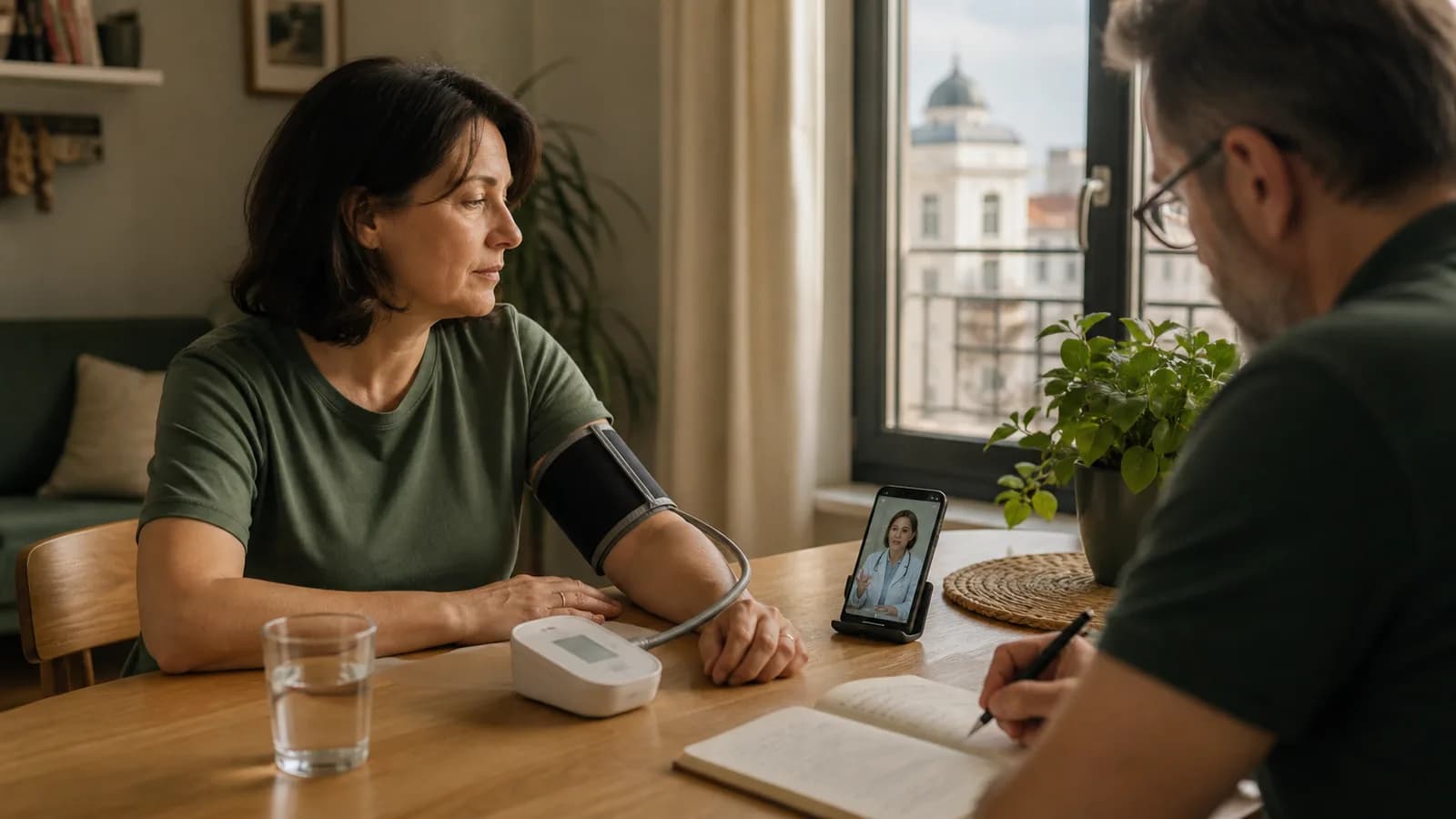
Online consultation for back pain
A video consultation with our doctor is a suitable first step when back pain persists, keeps coming back or worries you.
- Assessment. The doctor discusses your history, the type and path of the pain, what makes it worse and what you have already tried.
- Warning signs. The doctor checks for signs that need urgent assessment and tells you clearly what to do.
- Tests. The doctor recommends blood tests or imaging only when they are needed and explains the results.
- Treatment plan. The doctor sets out medication, exercises and advice for daily activities.
- Follow-up. Progress is reassessed at a follow-up consultation.
- Specialist referral. When needed, the doctor refers you to rehabilitation, neurology, orthopaedics, neurosurgery or rheumatology.
Some situations still need an in-person physical examination, for example full testing of strength and reflexes; the doctor will tell you when this is the case. Book a musculoskeletal pain assessment.
Next steps
Talk to a doctor about your back pain
Our doctor assesses your symptoms, decides which tests are needed and refers you to a specialist when necessary.
- Musculoskeletal pain assessment
- Profile of Dr Robert Gabriel Brîndus
- Doctors available in Romania
- All blog articles
Has your back been hurting for several weeks?
Book a video consultation for a musculoskeletal pain assessment. The doctor reviews your symptoms, checks for warning signs and sets out the next steps.
References
Medical sources
Sources checked on 18 October 2026.
The studies, guidelines and statistical data were consulted directly; figures and statements from the press are quoted with attribution. This article does not give individual doses or treatment regimens.
Questions
Frequently asked questions about back pain
When should I seek medical help for back pain?
If the pain does not improve after a few weeks, travels down your leg, wakes you at night or comes with weakness, tingling, fever or weight loss, book an assessment. Numbness in the genital area, problems passing urine or weakness in both legs need immediate help: follow the emergency box in the “Warning signs” section.
Do I need an MRI for low back pain?
Not always. An MRI is recommended with warning signs, when the doctor suspects another cause or when the pain persists. Bulging discs are common even in people without pain, so the image is interpreted together with the clinical examination.
Does a herniated disc always need surgery?
No. Symptoms usually improve with movement, painkillers and rehabilitation. Surgery is considered when symptoms do not respond to other treatments or when weakness or numbness gets worse.
How long does sciatica last?
Usually a few weeks to a few months, but it can last longer and can come back. Gentle movement and the exercises your doctor recommends help.
Does lumbar spondylosis mean I will always be in pain?
Not necessarily. Degenerative changes are common with age and do not always cause symptoms. Exercise, rehabilitation and weight control help reduce pain and maintain mobility.