
Flu symptoms: how to recognise them and which treatment helps
What flu looks like in adults and children, how long it lasts, what you can do at home, who is at risk of complications and how to protect your family over the holidays.
The main flu symptoms are a fever above 38 °C with a sudden onset, a dry cough, headache, muscle aches, chills and tiredness. Children may also have vomiting or diarrhoea. Most people recover in about a week with rest, fluids and treatment for the fever, but the cough and tiredness can last several weeks. Antibiotics do not shorten the illness. People over 65, pregnant women and people with chronic conditions are at higher risk of complications and need to be assessed by a doctor sooner.
In brief
What flu is and how it spreads
Flu is a contagious respiratory illness caused by influenza viruses, and it passes easily from person to person.
The virus passes from one person to another through coughing, sneezing and respiratory secretions, and also through hands, tissues or surfaces touched by someone who is ill. People standing about one metre from someone who coughs without covering their mouth can become infected. There is also evidence that very small particles in the air contribute to the spread.
- The incubation period is two days on average and can be as long as four days.
- Adults are contagious from 1–2 days before the first symptoms until up to 7 days after they appear.
- One ill person can infect, on average, between one and three healthy people.
- Flu can be passed on even by someone who does not yet have symptoms.
Flu affects Europe every winter. The National Institute of Public Health (INSP) states that up to 20 % of the population of the EU and EEA is infected each year, which is about 50 million people.
How to recognise it
Flu symptoms in adults and children
Flu usually starts suddenly: within a few hours you go from feeling well to having a fever, chills and aches all over your body.
According to the INSP, flu symptoms can include:
- a fever above 38 °C with a sudden onset;
- a cough, usually dry;
- headache;
- muscle aches;
- chills and heavy sweating;
- tiredness and feeling generally unwell;
- a sore throat or pain when swallowing;
- a runny nose.
In children
Besides fever and respiratory symptoms, children with flu may have vomiting or diarrhoea. Children under five get infected more easily because they do not yet have immunity to the virus. A lack of appetite is normal while there is a fever, so there is no need to force your child to eat; what matters is that they drink fluids.
Differences
Flu, a cold or another respiratory virus?
Many people call any mild respiratory infection “flu”. True flu is caused by the influenza virus and usually knocks you out of your normal activities: the high fever, chills and muscle aches come on suddenly. A cold starts more slowly and mainly causes a blocked nose, sneezing and a mild sore throat.
However, flu symptoms resemble those of other respiratory infections, including COVID-19. The INSP states that a reliable diagnosis requires a respiratory sample and a laboratory test. Rapid antigen tests for influenza A and B give a result in about 15 minutes, and PCR tests in 1–2 days.
Not every cough with a fever needs a test. The doctor decides whether a test would change the treatment, for example in a person at higher risk or when the symptoms do not fit ordinary flu.
Course of the illness
How long flu lasts and when you feel better
In adults, the acute symptoms usually last a few days, and most people recover in about a week.
| Stage | What happens |
|---|---|
| Days 1–2 after contact | Incubation, usually without symptoms; you may already be contagious. |
| First days of illness | Fever, chills, muscle aches, dry cough, tiredness. |
| Around one week | The fever goes down and most people feel better. |
| Several weeks | The cough and tiredness can persist even after the fever has gone. |
A cough that lasts a few more weeks after flu can be normal. Still, ask for an assessment if the fever returns after a few days of improvement, if the cough gets worse or if you develop chest pain or difficulty breathing. These can be signs of a complication, for example pneumonia.
At home
Flu treatment: what helps at home
For most healthy adults, flu treatment means rest, fluids and relief of the symptoms.
- Rest in bed while you have a fever.
- Plenty of fluids, for example water and tea, especially while you have a fever.
- Medicines for fever and pain (antipyretics or anti-inflammatories), taken as directed in the leaflet or by your doctor.
- A blocked nose can be eased with saline solution, humidified air and clearing the secretions.
- Isolate at home while you are ill, so that you do not infect others.
Antibiotics and antivirals
Flu is caused by a virus, and antibiotics do not shorten the illness. The INSP recommends them only when a bacterial superinfection develops or, as a precaution, in a few very high-risk groups, such as newborns. Do not take antibiotics left over from a previous treatment.
In severe forms, the doctor may recommend an antiviral, which can shorten recovery and prevent serious complications. The decision belongs to the doctor, after assessing your symptoms and risks. Self-medication is not advised.
Complications
Who is at higher risk of complications
Complications can affect anyone, but the INSP names several high-risk groups:
- people over 65;
- people of any age with chronic conditions: chronic metabolic, lung, heart, liver or kidney disease, severe obesity, blood disorders or chemotherapy;
- pregnant women;
- children under five;
- people with weakened immunity and those living in long-term care facilities;
- healthcare workers, because of their exposure.
The most important complications are pneumonia, worsening of asthma, middle ear infection and, more rarely, inflammation of the heart muscle (myocarditis) or of the brain (encephalitis). In developed countries, most flu-related deaths occur in people over 65.
If you belong to a risk group, do not wait to see whether it passes by itself. A medical assessment in the first days helps you find out whether you need a specific treatment.
Emergency
Warning signs that cannot wait
Ask for a medical assessment the same day if a high fever does not come down with treatment, if you are passing almost no urine, if the fever returns after you had started to feel better, or if you have a chronic condition and you are getting worse.
December
Flu during the holidays and while travelling
The flu virus circulates widely between November and March, exactly when families visit each other, parties take place and long journeys are made.
- If you have a fever, stay at home. Postpone visits to grandparents or to relatives with chronic conditions until the fever has gone and you feel better.
- Air the rooms where many people gather around the table.
- Cough and sneeze into a disposable tissue or into the crook of your elbow, then wash your hands for 40–60 seconds with soap and water or use an alcohol-based sanitiser.
- Wear a mask in closed and crowded spaces, for example on a train, coach or bus, especially if you live with someone vulnerable.
- Stay hydrated: the INSP recommends about 2 litres of water a day and a balanced diet that includes protein.
- Leave with a plan: take your chronic medicines for the whole trip, and a thermometer.
If you fall ill on holiday or away from home, you can speak to a doctor by video from anywhere in Romania, without travelling while ill.
Prevention
The flu vaccine: who gets it and when
According to the INSP, vaccination is the most effective way to reduce the risk of severe flu. The vaccine is updated every year to match the circulating strains, so it is given annually. The INSP considers October the best time to start vaccinating.
According to the Ministry of Health (announcement of 2 October 2026), the vaccine is free for risk groups: children over 6 months, pregnant women, people over 65, people with certain chronic conditions and healthcare workers. Adults aged 45 to 65 without chronic conditions receive a 50 % reimbursement of the reference price. Everyone else can buy it at the full price.
The INSP states that vaccination helps prevent illness and, in those who do fall ill, reduces the severity and duration of the disease. Hospital admissions, deaths and antibiotic use also fall. If you are unsure whether the vaccine is right for you, discuss it with our doctor at a consultation.
From Romania
What the latest flu season showed in Romania
In December 2025, the National Centre for Surveillance and Control of Communicable Diseases (CNSCBT) announced the start of the flu season. In the week of 1–7 December 2025, 3,018 cases of clinical flu were reported, twice as many as in the previous week (1,504).
The same subclade K of influenza A(H3N2) that was circulating internationally was also detected in Romania. The INSP stated that the vaccine is still expected to protect against severe disease and advised people at risk to get vaccinated without delay.
Global Health
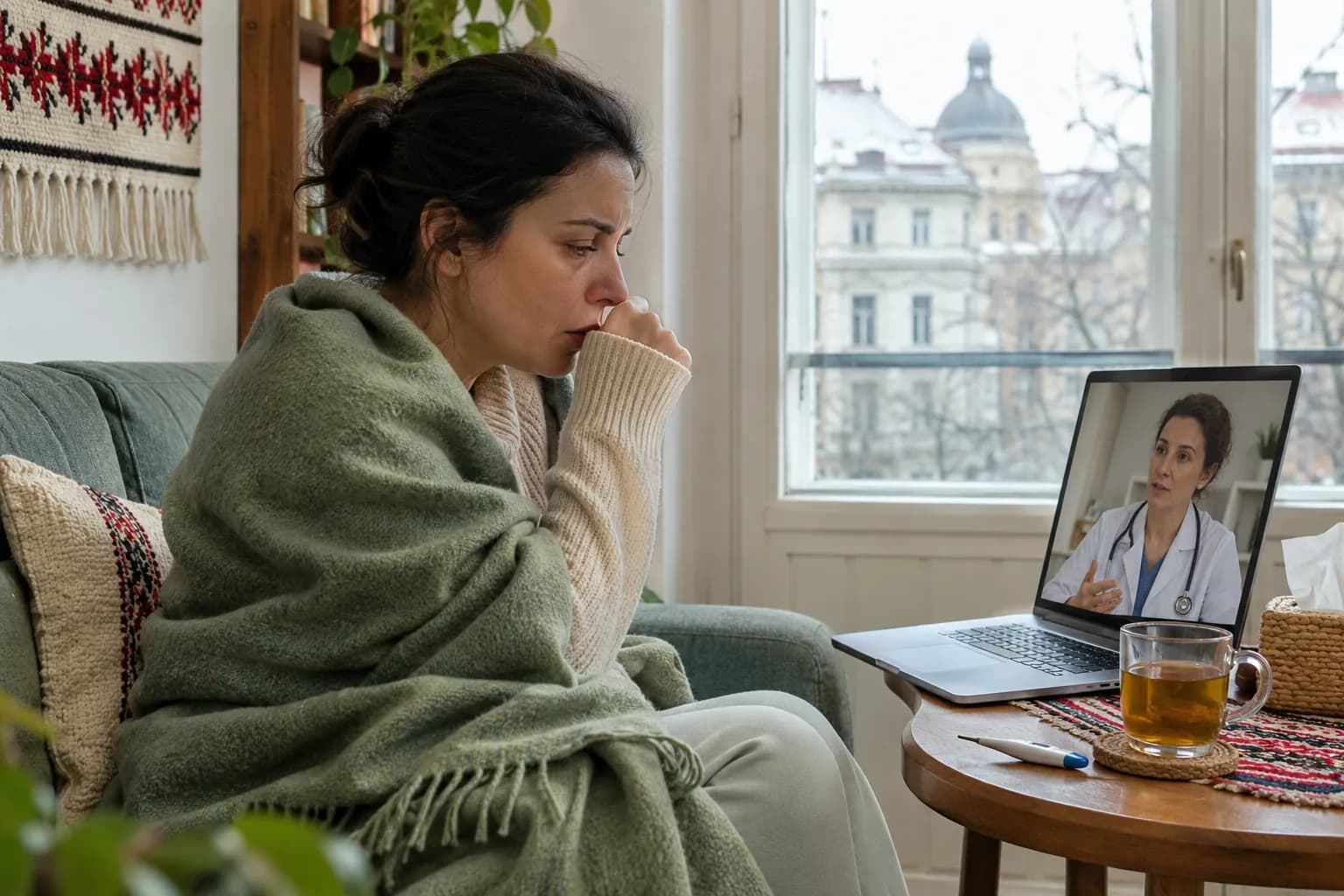
Online consultation for flu symptoms
A video consultation with our doctor helps you find out whether it is flu, how serious it is and what to do, without leaving home with a fever.
- Same-day appointments. Consultations every day of the week, including evenings and weekends, in Romanian or English.
- Full assessment. The doctor discusses your symptoms, when they started, your chronic conditions and the treatments you are taking.
- Warning signs. The doctor checks whether you need urgent care and tells you clearly what to do.
- A digital treatment plan, when clinically indicated. An antibiotic is prescribed only if the doctor suspects a bacterial superinfection.
- Referrals and tests. When referrals to a specialist, blood tests or imaging are needed, the doctor issues them the same day.
Some situations do still call for an in-person physical examination, for example listening to the lungs when pneumonia is suspected; the doctor will tell you when this is the case. Book a consultation with an online doctor.
Next steps
Talk to a doctor about flu symptoms
Our doctor assesses your symptoms, checks for warning signs and tells you which treatment is suitable.
Do you have a fever, chills and aches all over?
Book a video consultation with a doctor. The doctor assesses your symptoms, checks whether you are at risk of complications and sets out the next steps.
References
Medical sources
Sources checked on 8 November 2026.
The INSP and Ministry of Health documents were consulted directly. The article does not give individual doses or treatment regimens.
Questions
Frequently asked questions about flu
What are the first flu symptoms?
Flu usually starts suddenly, with a fever above 38 °C, chills, headache and muscle aches, and strong tiredness. A dry cough, a sore throat and a runny nose appear around the same time. Children may also have vomiting or diarrhoea.
How long does flu last in adults?
The acute symptoms usually last a few days, and most people recover in about a week. The cough and tiredness can continue for several weeks. If the fever returns after an improvement or you develop difficulty breathing, ask for a medical assessment.
Do I need an antibiotic for flu?
Usually not. Flu is caused by a virus, and antibiotics do not shorten the illness. The doctor recommends them only if a bacterial superinfection develops. In severe forms or in people at risk, the doctor may decide on antiviral treatment.
How long am I contagious?
Adults are contagious from 1–2 days before the first symptoms until up to 7 days after they appear. Stay at home while you have a fever and avoid close contact with older people, babies and people with chronic conditions.
Can I get treatment for flu through an online consultation?
Yes, in many situations. During the video consultation, the doctor assesses your symptoms and risks and, when clinically indicated, issues a digital treatment plan. If you have warning signs or need a physical examination, the doctor tells you clearly where to go and how quickly.