
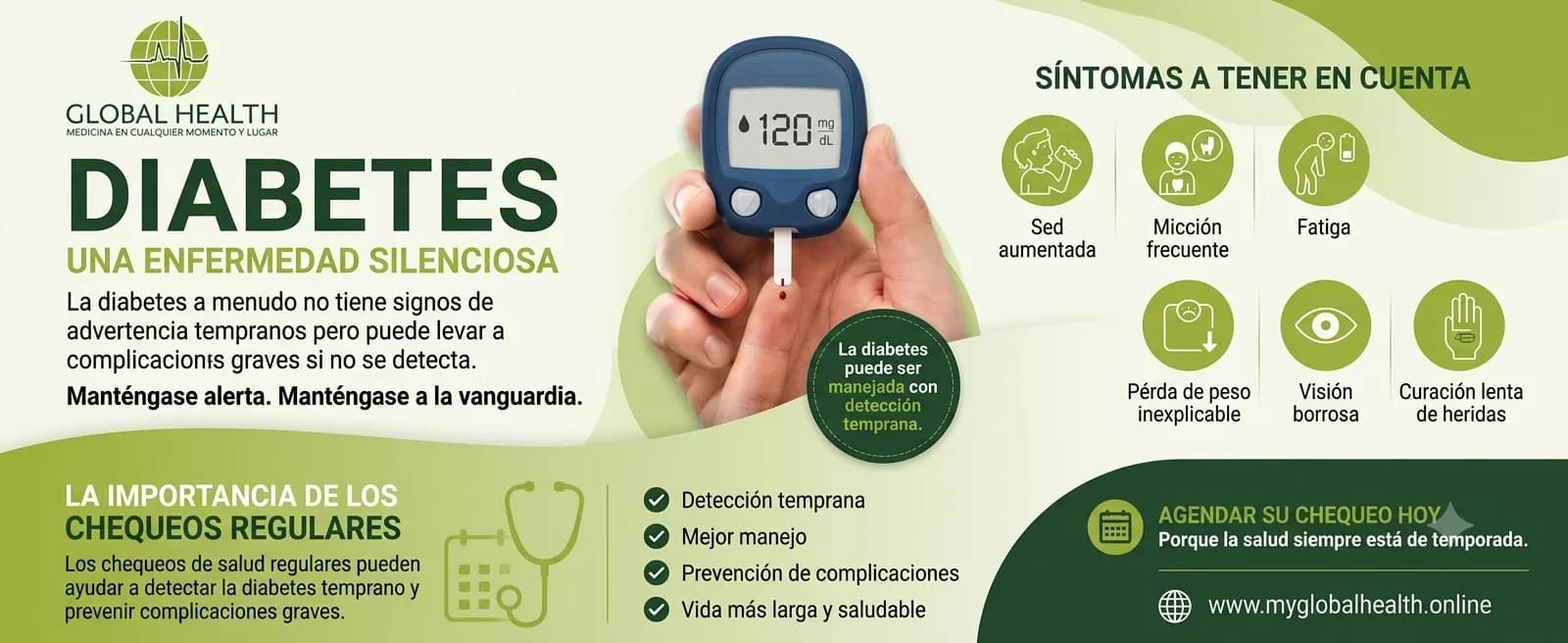
An estimated 5.1 million people in Spain live with diabetes — and thousands more remain undiagnosed. This guide covers everything you need to know: causes, warning signs, treatments that follow current diabetes management guidelines, the importance of regular check-ups and emerging therapies that could transform diabetes care in the coming years.
Diabetes mellitus is one of the most prevalent chronic diseases in Spain and, at the same time, one of the most underestimated. Type 2 diabetes, which accounts for more than 90% of cases, can develop slowly over many years without noticeable symptoms. By the time it is diagnosed, the condition has often already been present for quite some time.
The good news is that diabetes is highly manageable. With the right diagnosis, appropriate treatment and regular follow-up, people with diabetes can live full and healthy lives. And with the therapeutic advances of the past decade — especially the arrival of GLP-1 receptor agonists and SGLT2 inhibitors — the options available in Spain are now better than ever.
Section 01
Diabetes in Spain: Understanding the Scale of the Problem
During 2024, approximately 5,121,600 cases of type 1 and type 2 diabetes were recorded in Spain among adults aged 20 to 79, placing Spain among the European countries with the highest prevalence of the disease. According to the report Beyond Insulin: A Map of Type 1 Diabetes in Spain published by the Fundación DiabetesCERO in December 2024, type 1 diabetes affects 166,564 people, representing 0.36% of Spain's population, and is more common in men (89,245) than in women (77,317). The study published in Atención Primaria (2025) by Cebrián Cuenca and Escalada confirms that diabetes prevalence in Spain is higher among older people, particularly those aged 65 or over, and notes that projections for 2035 are not optimistic, with an upward trend in both adults and children.
Source: Fundación DiabetesCERO — Beyond Insulin, December 2024; Ministry of Health, BDCAP; Atención Primaria 2025;57:102992 (Cebrián Cuenca & Escalada).
The Ministry of Health coordinates epidemiological surveillance of diabetes through the Primary Care Clinical Database (BDCAP), which makes it possible to monitor prevalence, treatment and complications throughout the country. The Spanish Diabetes Society (SED) issues the reference clinical guidelines for managing the condition and, in 2025, published multidisciplinary consensus documents on dietary recommendations and the management of diabetes-associated chronic kidney disease, in collaboration with SEEN and the Spanish Society of Nephrology.
Section 02
Types of Diabetes
Not all diabetes is the same. Understanding the type you have — or may be at risk of developing — is the first step towards effective management.
Section 03
Causes and Risk Factors
Type 1 Diabetes
The exact cause of T1D is not fully understood. It is an autoimmune disease — the immune system mistakenly attacks and destroys the pancreatic beta cells responsible for producing insulin. Genetic factors play a role, as does likely exposure to certain viral infections during development. Research in this field is conducted in Spain through groups affiliated with the Instituto de Salud Carlos III (ISCIII), the Spanish Diabetes Society (SED) and referral centres such as Hospital Infantil Universitario Niño Jesús in Madrid and Hospital Sant Joan de Déu in Barcelona.
Type 2 Diabetes
T2D has a more complex and modifiable set of causes, combining genetic predisposition with lifestyle and environmental factors. The central mechanism is insulin resistance — the body's cells stop responding effectively to insulin — together with a progressive decline in the pancreas's ability to compensate by producing more.
Section 04
Symptoms and Warning Signs
Symptoms vary considerably between T1D and T2D. T1D usually presents acutely — with a rapid onset of symptoms that may indicate diabetic ketoacidosis (DKA), a serious medical emergency. T2D, by contrast, typically develops slowly and silently over many years, with symptoms so mild or gradual that many people attribute them to ageing, stress or tiredness.
Section 05
Current Diabetes Treatments in Spain
Diabetes treatment has undergone a genuine revolution over the past decade. In Spain, the Spanish Diabetes Society (SED) sets the reference clinical practice guidelines, which were updated in 2025 through multidisciplinary consensus documents prepared with SEEN, the Spanish Society of Nephrology and SEMERGEN. The joint guideline from the Spanish Society of Nephrology and the SED provides an updated framework for preventing and managing diabetes-associated chronic kidney disease. Access to medicines and funding conditions are regulated by the Ministry of Health through the Spanish Agency for Medicines and Health Products (AEMPS).
Lifestyle Changes — The Foundation of All Treatment
For both T1D and T2D, lifestyle is a fundamental pillar of treatment. In T2D in particular, dietary changes and increased physical activity can significantly reduce HbA1c, improve insulin sensitivity and, in some cases — especially after bariatric surgery or very-low-calorie diets — lead to sustained remission. The 2025 Guideline emphasises that comprehensive T2D management must go beyond glycaemic control and include core aspects of a healthy lifestyle such as stopping smoking, avoiding alcohol, good sleep hygiene and attention to mental health.
Medication
The main classes of medicines available in Spain are outlined below. Treatment decisions are individualised — the SED and ADA 2025 guidelines emphasise a patient-centred approach that considers cardiovascular risk, kidney function, weight and personal preferences.
Section 06
The Importance of Regular Check-ups
Diabetes is a chronic condition that changes over time, and its complications — if not detected — can be serious and irreversible. Diabetic retinopathy is one of the leading causes of blindness among working-age adults in Spain. Diabetic nephropathy is a major contributor to end-stage chronic kidney disease. Peripheral neuropathy causes diabetic foot complications which, in the most serious cases, can lead to amputation. Asturias, Aragón and La Rioja have the highest rates of lower-limb amputations among people with diabetes in Spain, while Cantabria, Extremadura and the Balearic Islands record the lowest.
Decades of research show that all these complications are largely preventable — or can be significantly delayed — through good glycaemic control, blood pressure management and regular monitoring. A structured annual review for a patient with diabetes is one of the most cost-effective interventions in all of medicine.
What Your Annual Diabetes Review Should Include
- HbA1c measurement (average blood glucose over the past 3 months)
- Blood pressure check and review of antihypertensive treatment
- Kidney function — estimated glomerular filtration rate (eGFR) and urine albumin-to-creatinine ratio
- Cholesterol and full lipid profile
- Assessment of body weight and body mass index (BMI)
- Foot examination — pulses, sensation and skin condition
- Diabetic retinopathy screening — fundoscopy or retinal photography (available through the SNS)
- Medication review and adjustment if needed
- Assessment of adherence to the diabetes self-management plan
- Smoking assessment and support to stop where appropriate
- Flu vaccination (strongly recommended for people with diabetes)
Screening for People Who Have Not Yet Been Diagnosed
If you have risk factors for T2D and have never been assessed, your primary care doctor can request a fasting blood glucose or HbA1c test — simple tests available at every SNS health centre. This is especially important if you are over 45, have a family history of diabetes, have high blood pressure or were overweight during pregnancy. Early detection of prediabetes offers a genuine opportunity to prevent or delay the onset of T2D through lifestyle changes.
Section 07
The Future of Diabetes Treatment
The pace of innovation in diabetology is unprecedented. Several areas of research — some already in advanced clinical trials — have the potential to fundamentally transform what it means to live with diabetes over the next decade.
Stem cell research for T1D is examined in detail in a 2025 publication in PMC (PMID: PMC12689004), which concludes that “stem cell therapy offers a dual strategy: regeneration of insulin-producing beta cells and regulation of immune responses”. Although a definitive cure remains a future goal, the direction of research is the most promising in history.
Section 08
Leading Institutions and Resources in Spain
If you live with diabetes in Spain, or are concerned about your risk of developing it, the following organisations and services are your main points of reference for clinical care, education and support.
Spanish Diabetes Society (SED)
The SED is the leading scientific authority for every aspect of diabetes care in Spain. In 2025, it published several multidisciplinary consensus documents — on dietary recommendations for people with prediabetes and diabetes (prepared with SEEN and SEEP), and on managing diabetes-associated chronic kidney disease (with the Spanish Society of Nephrology). All guidelines and documents are available on the SED website.
Ministry of Health
The Ministry of Health coordinates epidemiological surveillance of diabetes in Spain through the Primary Care Clinical Database (BDCAP) and sets funding conditions for antidiabetic medicines through AEMPS. It is also responsible for screening programmes and the national diabetes strategy within the SNS.
Fundación DiabetesCERO
The Fundación DiabetesCERO is Spain's main patient organisation focused specifically on type 1 diabetes. Its report Beyond Insulin: A Map of Type 1 Diabetes in Spain (December 2024) is the most comprehensive epidemiological analysis of T1D published in Spain to date and is a key reference for health planning and research.
Instituto de Salud Carlos III (ISCIII)
The Instituto de Salud Carlos III is Spain's main public biomedical research body, funded by the Ministry of Science and Innovation. It coordinates the Biomedical Research Networking Centres (CIBER) — including CIBERDEM (diabetes and metabolic diseases), which brings together the country's most active diabetes research groups.
Section 09
Frequently Asked Questions
How many people have diabetes in Spain?
During 2024, approximately 5,121,600 cases of type 1 and type 2 diabetes were recorded in Spain among adults aged 20 to 79, according to data published in April 2025. Type 1 diabetes affects 166,564 people (0.36% of Spain's population), with 6,000 new cases a year, according to Fundación DiabetesCERO's Beyond Insulin report (December 2024). Spain is among the European countries with the highest prevalence of diabetes.
What are the first symptoms of diabetes?
The most common symptoms include excessive thirst, frequent urination (especially at night), persistent tiredness, blurred vision, slow wound healing, constant hunger even after eating, and tingling or numbness in the hands and feet. Type 2 diabetes can develop slowly and silently — many people have no symptoms for years before diagnosis. If you have risk factors, ask your doctor about a fasting blood glucose or HbA1c test even if you have no symptoms.
What is the difference between type 1 and type 2 diabetes?
Type 1 diabetes is an autoimmune disease in which the immune system destroys the insulin-producing beta cells in the pancreas. It requires lifelong insulin therapy and usually presents in childhood or young adulthood. Type 2 diabetes occurs when the body becomes resistant to insulin or does not produce enough — it is strongly associated with lifestyle factors such as diet, physical inactivity and excess weight, and accounts for more than 90% of cases in Spain. The two forms have different causes, treatments and clinical courses, and both require careful follow-up to prevent complications.
What treatments for type 2 diabetes follow current guidelines in Spain?
First-line treatment usually includes metformin alongside lifestyle changes. Newer classes of medicines — particularly GLP-1 receptor agonists (semaglutide/Ozempic) and SGLT2 inhibitors (empagliflozin/Jardiance, dapagliflozin/Forxiga) — have revolutionised treatment by not only lowering blood glucose, but also protecting the heart and kidneys and supporting weight loss. The SED and ADA 2025 guidelines recommend these classes for patients with established cardiovascular disease, heart failure or chronic kidney disease. Treatment is always individualised to the patient's profile.
How often should I have check-ups if I have diabetes in Spain?
If you have diagnosed diabetes, you should have at least one structured annual review with your primary care doctor or endocrinologist — including HbA1c, blood pressure, kidney function, cholesterol, weight, foot examination and diabetic retinopathy screening. HbA1c measurements every 3 to 6 months are advisable if glycaemic control is not optimal or treatment has changed. Retinopathy screening is available through the SNS, although access varies by autonomous community.
Can diabetes go into remission?
In some cases, type 2 diabetes can go into remission — defined as achieving near-normal blood glucose levels without medication — through significant weight loss, usually after bariatric surgery or with very-low-calorie diets. The DiRECT trial demonstrated remission in approximately 50% of participants at one year with a structured dietary programme. This does not mean the underlying predisposition disappears — remission requires sustained lifestyle change to continue. Type 1 diabetes currently has no cure, although stem cell therapies in clinical trials aim to restore insulin production in the coming years.
Can I consult a doctor online about diabetes in Spain?
Yes. Global Health offers online diabetes consultations with registered doctors — including treatment reviews, assessment of symptoms consistent with diabetes, medication reviews and requests for tests (including HbA1c, fasting blood glucose and a full metabolic panel). Prescriptions are issued electronically when clinically indicated. Book your consultation at myglobalhealth.online or email globalhealth@myglobalhealth.online.
Do you have questions about diabetes? Speak to a doctor today.
Online diabetes consultations with registered doctors. Available in Spanish, English, Portuguese, Arabic and more. Same-day appointments available.