High blood pressure: symptoms and when to call 112
Symptoms determine the urgency.
High blood pressure is often silent: feeling well does not rule out hypertension, and a headache on its own does not confirm it. Call 112 if a high reading occurs with chest pain or pressure, severe breathlessness, weakness or loss of sensation on one side, difficulty speaking, confusion, fainting, sudden loss of vision or a sudden, unusually severe headache. Do not drive. If there are no warning signs, rest for a few minutes, repeat the reading once using the correct technique and seek prompt medical assessment if it remains around 180/110 mmHg or higher. Do not double a dose or take borrowed medication.
First distinction
Does high blood pressure always cause symptoms?
No. Many people have raised readings without noticing anything. Repeated measurements, rather than sensations, help establish whether hypertension is present.
Headache, dizziness, palpitations or blurred vision can occur alongside a high reading, but they can also be caused by pain, anxiety, exertion or poor measuring technique. Do not dismiss a new symptom as nerves without considering how severe or sudden it is.
Keep two questions separate: high readings repeated over several days need a planned assessment; sudden chest, breathing, neurological or visual symptoms make calling 112 the priority.
The Castilla y León School for Patients explains that hypertension is often silent and is diagnosed through repeated measurements.
Warning signs
When to call 112 for a high blood pressure reading
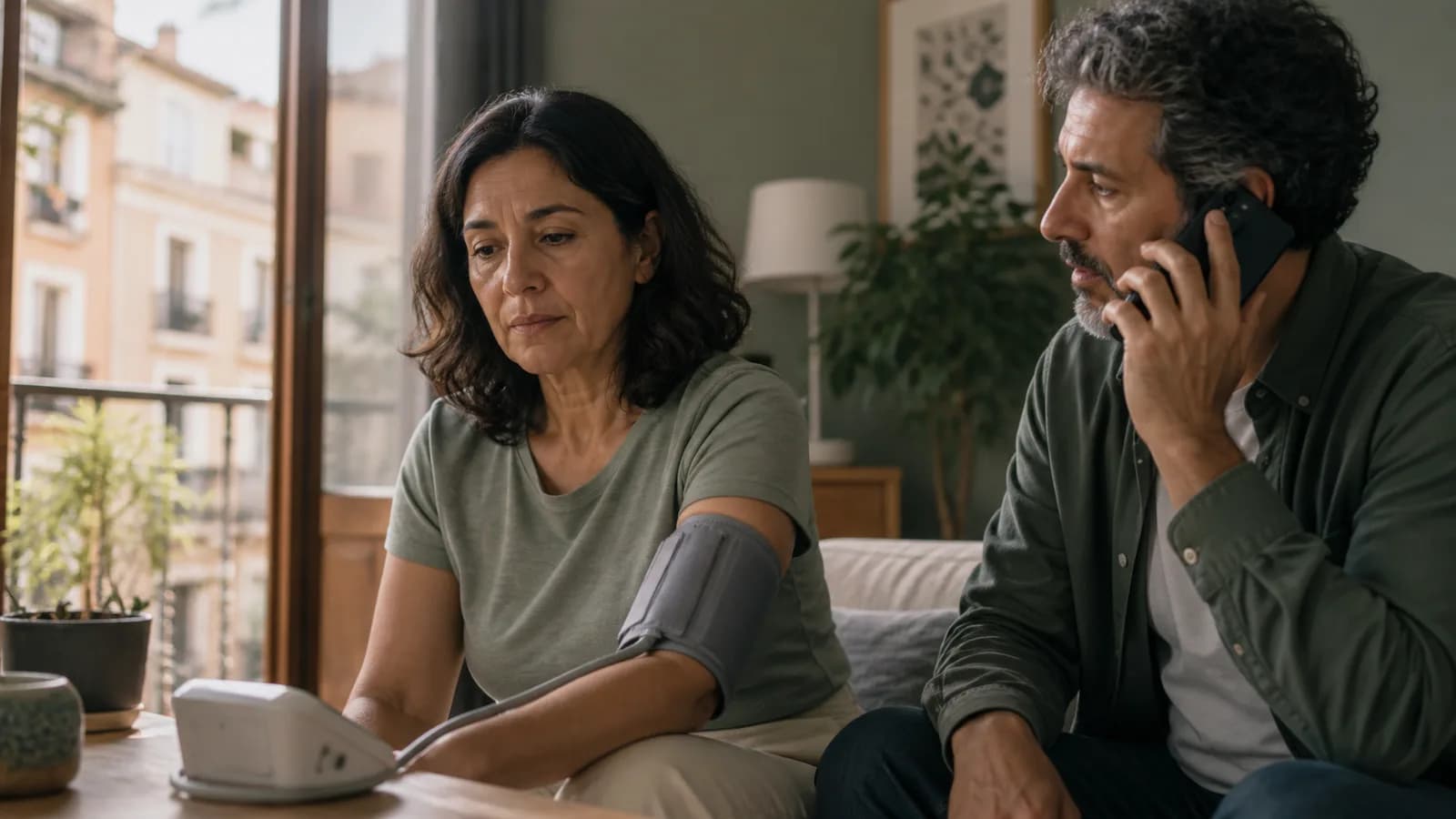
Call 112 for sudden symptoms that may involve the heart, brain, lungs or circulation. Do not delay the call to keep checking the monitor.
- Severe chest pain or pressure, especially with sweating, nausea or pain spreading to the arm, back, neck or jaw.
- Severe breathlessness, a choking feeling or rapidly worsening breathing.
- A drooping face, weakness or loss of sensation on one side, unusual speech or difficulty understanding.
- New confusion, a seizure, fainting or reduced consciousness.
- Sudden loss of vision or an explosive headache unlike your usual headaches.
Do not drive. Note when the symptoms began, have your medication ready and follow the 112 operator’s instructions. A lower second reading does not rule out a stroke or heart attack.
The Community of Madrid treats stroke as an emergency and lists one-sided weakness, difficulty speaking, sudden loss of vision and sudden headache among its warning signs.
Safe measurement
What to do if the reading is very high but there are no warning signs
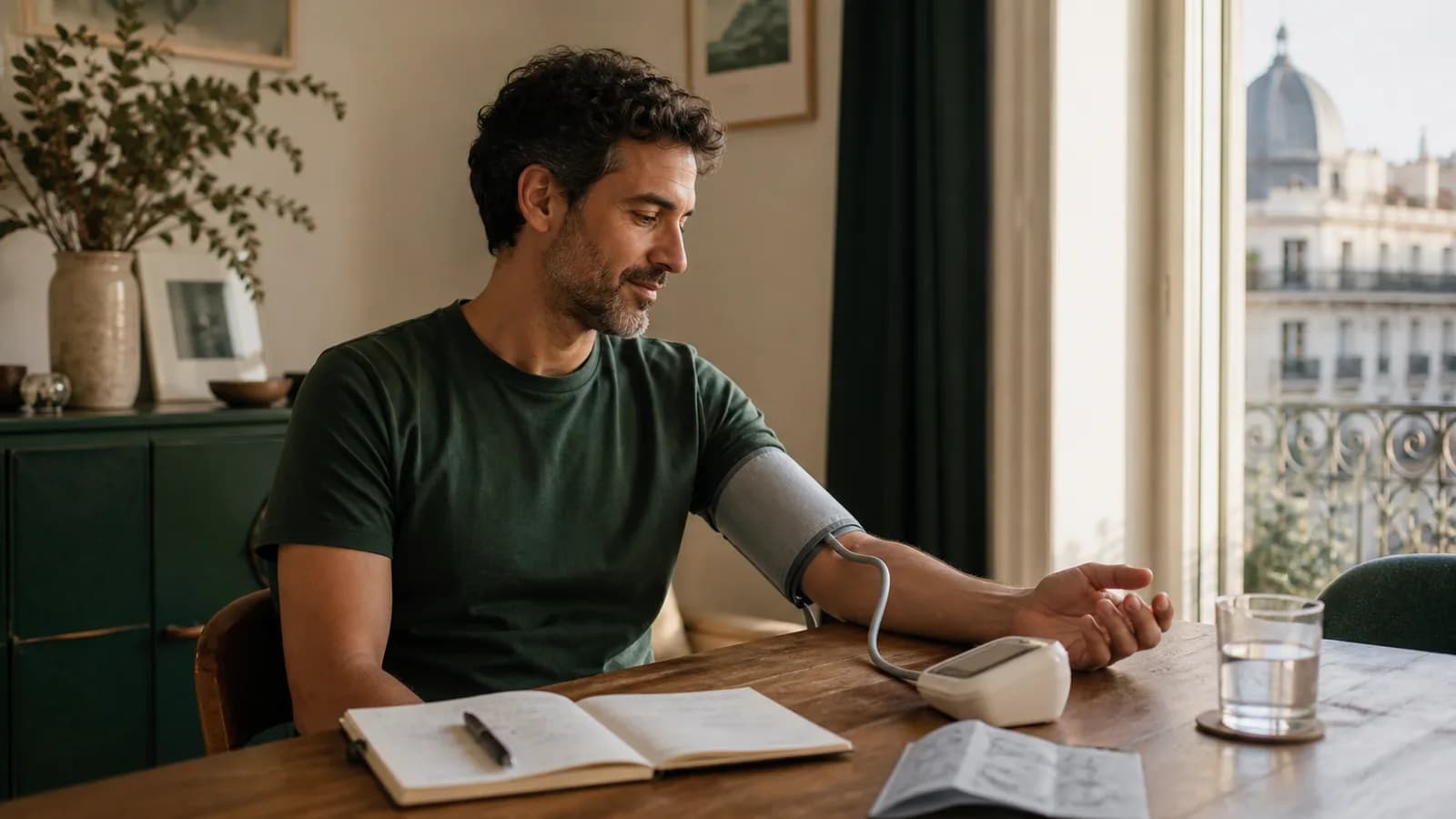
If you are stable, sit down, breathe normally and repeat the measurement once after a few minutes of rest.
- Support your back and feet, and do not cross your legs.
- Place a correctly sized cuff on your bare upper arm and support it at heart level.
- Do not talk during the measurement. Record both readings, your pulse, the time and how you felt.
- If the result remains around 180/110 mmHg or higher, seek urgent medical assessment that day.
A very high reading without symptoms does not rule out organ injury. If any warning sign appears, call 112.
The blood pressure record can organise stable readings for a clinician to review. Do not use it to delay emergency care or choose a dose.
Stable care
Stable hypertension care starts in general practice
Most stable cases are assessed and followed up in primary care. An isolated reading without warning signs does not make cardiology the necessary first stop.
A general practice consultation can review your measuring technique, record, medicines and risks, and arrange blood tests, an ECG or in-person assessment when needed.
A cardiology consultation is a reasonable next step for known heart disease, abnormal tests, cardiovascular symptoms, resistant hypertension or a primary-care referral. It does not replace 112.
Useful information
What to bring if this is not an emergency
Bring recent readings, a full medication list and any reports you already have.
- Two readings each time, with the date, time, pulse and any symptoms.
- Medicines, doses, supplements and any missed doses.
- Pregnancy or recent delivery, diabetes, kidney disease and cardiovascular history.
- Recent blood tests, ECGs and reports; bring the monitor if you are unsure about technique.
If your condition worsens while you wait, call 112.
Global Health Spain
Next steps if you are stable
Bring your readings and medication list.
- General practice and chronic care
- Blood pressure record
- Cardiology, if escalation is needed
- Doctors in Spain
- Contact
Are your readings repeatedly high without warning signs?
Start with general practice and bring your record and medicines. If chest pain, breathlessness or a sudden neurological symptom appears, call 112.
Clinical sources
Sources used
Safety depends on distinguishing a raised reading from possible acute-injury symptoms.
General information. It cannot diagnose or treat an emergency remotely.
FAQ
Questions about high blood pressure and emergencies
What symptoms does high blood pressure cause?
Often none. Headache, dizziness or blurred vision are not specific. Hypertension is assessed through repeated measurements; urgency depends on the reading, how suddenly symptoms began and signs of possible acute injury.
Should I call 112 for a reading of 180/110?
Call 112 if it occurs with chest pain, breathlessness, neurological symptoms, confusion, fainting, loss of vision or a sudden severe headache. Without those symptoms, repeat the reading once correctly and seek urgent same-day assessment if it remains high.
Can I take an extra dose to lower it?
Not without an explicit personal plan. Doubling, bringing forward or mixing blood pressure medicines can cause a dangerous fall and does not treat possible acute organ injury by itself.
Who manages stable hypertension?
General practice or primary care usually coordinates measurements, tests and treatment. Cardiology may be added for heart disease, abnormal tests, persistently poor control or a referral.