
 950 Kč
Women's Health
Confidential women's health assessments in English by secure video call, covering contraception, hormonal health, menopause, and general women's health concerns.
20 min
Free health tool
Answer questions about your age, sex and risk factors to see whether published guidelines recommend you ask for a bone density assessment.
Your risk factors
A break from a fall from standing height or less — wrist, hip, spine or arm.
Such as an overactive thyroid, malabsorption, or long-term liver or kidney disease.
No specific risk factors flagged
Nothing you entered matches the published risk factors guidelines use for osteoporosis case-finding. That is reassuring, but it is not a guarantee — mention any new fracture or fall to a doctor regardless.
This identifies who should be assessed for osteoporosis — it does not estimate your fracture risk and is not a diagnosis. A full assessment uses a DXA bone density scan and a validated tool such as FRAX, run by a clinician.
01
Osteoporosis itself has no symptoms — the first sign is often a fracture from a fall that would not normally break a bone. Guidelines therefore work backwards from risk factors, deciding who is worth assessing before a fracture happens rather than after.
The ten factors below are the ones NICE guideline CG146 lists for that decision. Two are treated as major on their own; the rest add up rather than acting alone.
Fragility fracture after 50
Long-term oral steroids (3+ months)
A parent broke a hip
Current smoker
3+ alcohol units a day
Rheumatoid arthritis
A secondary cause of bone loss
2+ falls in the past year
Menopause before 45
Low body weight (BMI under 18.5)
02
NICE, the UK's National Osteoporosis Guideline Group (NOGG) and the European Society for Clinical and Economic Aspects of Osteoporosis (ESCEO) set out materially the same threshold. It is an age cut-off plus a risk-factor cut-off, not a single number.
03
A risk-factor checklist is a sorting tool, not a measurement. It tells you whether it is worth asking about a scan — it cannot tell you what that scan would show.
04
A flagged risk factor is a reason to ask about a bone density scan, not a diagnosis. These are the consultations that can take it further.
950 KčConfidential women's health assessments in English by secure video call, covering contraception, hormonal health, menopause, and general women's health concerns.
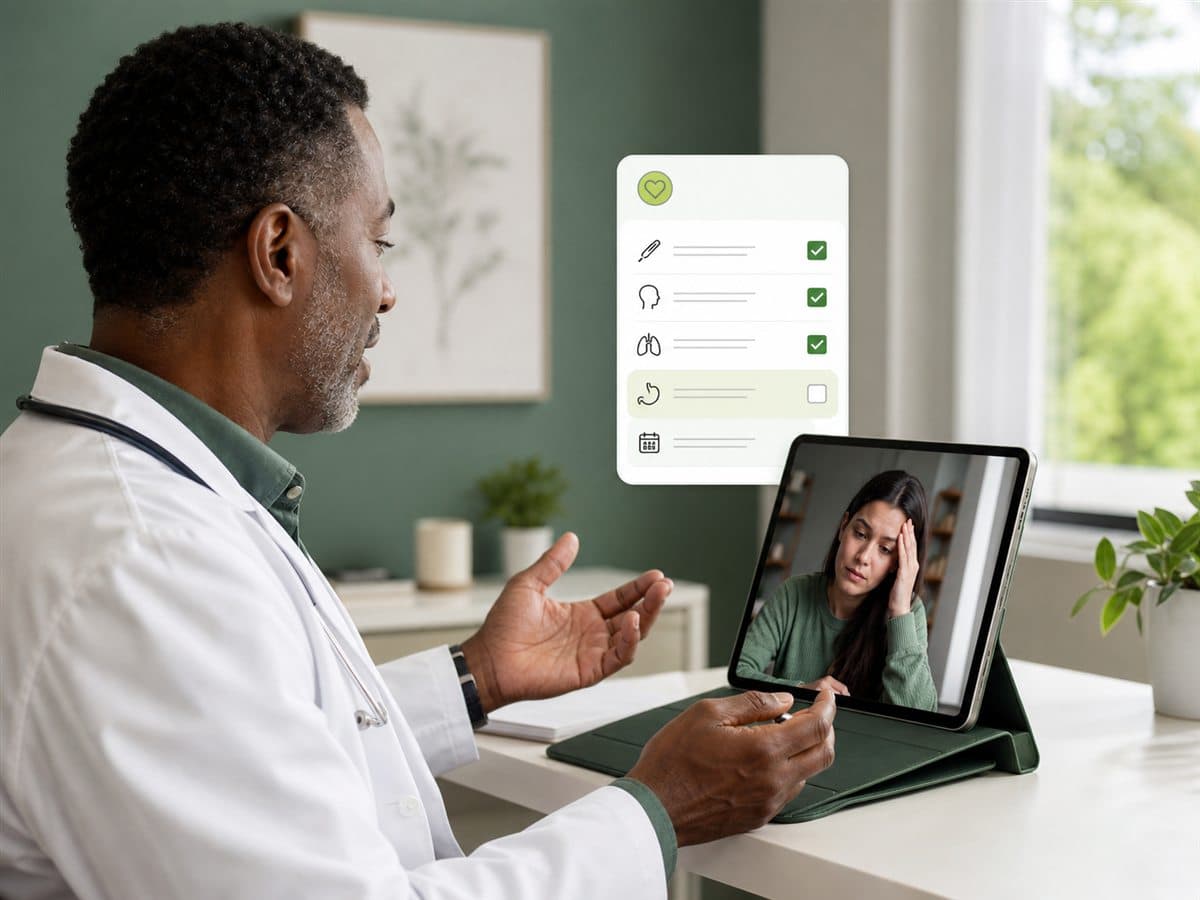
Talk any result through with a registered doctor by video, and get the checks a calculator cannot give you.
Body mass index from your height and weight, on the WHO adult scale.
Open calculatorHow many calories a day you need to maintain, lose or gain weight.
Open calculatorWhat your two numbers mean on the European adult blood pressure chart.
Open calculatorYour estimated due date, how far along you are, and the weeks that matter in between.
Open calculatorThe six-question adult ADHD screener, scored the way the scale is designed.
Open calculatorYour fertile window, your estimated ovulation day and when your next period is due.
Open calculatorWhether a sore throat looks bacterial or viral, using the age-adjusted score clinicians use — plus the warning signs that need seeing today.
Open calculatorQuestions
No. FRAX is a separate, proprietary tool developed by the University of Sheffield, and its coefficients are not published — this tool does not reproduce it or claim to match its output. This is a case-finding checklist based on published guidance (NICE CG146): it tells you whether it's worth being assessed, never a fracture probability.
A dual-energy X-ray absorptiometry scan — a low-dose X-ray that measures bone density, usually at the hip and spine. It is the test an assessment actually relies on; nothing on this page replaces it.
No. A flagged risk factor means guidelines recommend you be assessed, not that you have the condition. Many people with risk factors have a normal bone density scan, and osteoporosis can also occur with none of the factors listed here.
Raise it with a doctor anyway. This tool covers the risk factors named in one clinical guideline; it does not cover every personal or family history that might be relevant, and a conversation costs nothing this checklist can weigh.
A doctor, from a DXA bone density scan — usually a T-score of -2.5 or below at the hip or spine. A risk-factor questionnaire like this one can only suggest who should have that scan; it cannot diagnose anything itself.
No. The scoring runs entirely in your browser. Nothing you select is sent to our servers or saved.
Yes. DXA scanning is available on referral within the public insurance system, and privately without one in many clinics. Czechia follows a similar risk-factor-led approach to this checker — risk factors decide who is assessed, not age or a scan alone.
Start with a doctor's appointment. They will go through your risk factors and, where the guideline threshold is met, refer you for a DXA scan within the insurance system or point you to a private one.
Book a video consultation with a registered doctor, go through your risk factors, and find out whether a referral for a DXA scan makes sense.