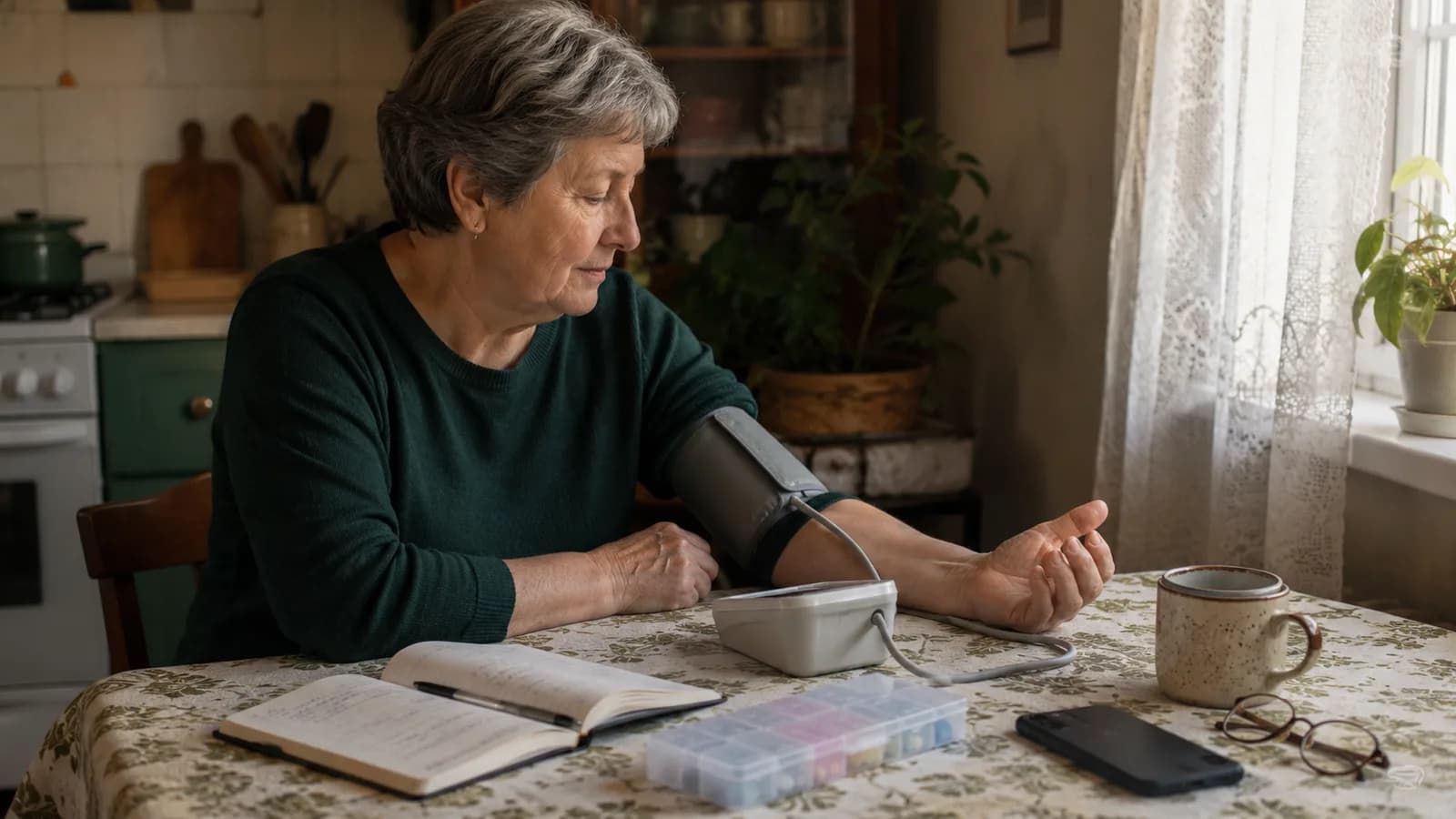

Normal blood pressure
Age changes your risk and follow-up plan. It does not change the fact that a reading that is too high remains too high.
For the average adult, a clearly normal blood pressure is below 120/80 mmHg. If readings repeatedly rise into the 120-139 systolic or 70-89 diastolic range, they are no longer ideal and should be monitored methodically. Hypertension is confirmed through repeated measurements, ideally including readings taken outside the clinic. In practice, a confirmed clinic reading of 140/90 mmHg or higher is already in the hypertension range. This is the key point when searching for values ‘by age’: no reading suddenly becomes normal simply because you are 65 or 75.
The short answer
What blood pressure is considered normal in adults
The direct answer is that below 120/80 mmHg is clearly normal, while repeated clinic readings of 140/90 mmHg are already in the hypertension range.
The intermediate range causes the most confusion. Someone with a reading of 132/84 may hear ‘it is not that bad’ and assume it no longer matters. It does matter. It may not yet be confirmed hypertension, but it is not an ideal reading either and should be monitored if it recurs.
- Below 120/80: a clearly normal reading.
- Systolic 120-139 or diastolic 70-89: no longer the ideal range; repeat the measurement correctly and monitor the trend.
- Repeated readings of 140/90 or above: consistent with hypertension and requiring confirmation.
- A single reading does not establish a diagnosis on its own if it was measured incorrectly or under unfavourable circumstances.
Patient information and materials from the Romanian Society of Cardiology: Cardioportal. The current European guideline remains the main clinical reference: ESC 2024.
Where the misconception arises
What changes with age and what does not
People search online for a separate table for ages 30, 50 or 70. Medicine looks for something else: how consistent the readings are, your overall risk and which other conditions are present.
At 28, repeatedly high blood pressure matters because it has decades in which to cause harm. At 68, the same reading matters because it may occur alongside kidney disease, diabetes, atrial fibrillation, stroke or heart failure. It does not become ‘normal’ in either case.
- Young adult: hypertension may go unnoticed precisely because it rarely causes pain.
- Middle age: weight, smoking, cholesterol and blood glucose affect how closely it should be monitored.
- Older person: the treatment target may be individualised to avoid dizziness or falls, but this does not make a high reading acceptable.
- Pregnancy: this is a separate clinical situation and should not be combined with general adult tables.
Two numbers
What systolic and diastolic pressure mean
Systolic pressure is the maximum pressure when the heart pumps blood. Diastolic pressure is the minimum pressure between heartbeats.
The practical rule is simple: if either number is abnormal, the reading deserves attention. A reading of 152/78 is not reassuring simply because ‘the second number is good’. A reading of 126/94 is not good simply because the first number has not reached 14.
- High systolic pressure with a better diastolic reading: particularly common at older ages and should not be dismissed.
- High diastolic pressure: this also matters, especially when it recurs.
- Symptoms, pulse and test results help with interpretation, but they do not cancel out a series of high readings.
- The trend is more useful than a single number recorded on a bad morning.
If you want to follow the trend rather than one isolated number, use the blood pressure calculator and record instead of treating every measurement as a final verdict.
Technique
How to measure your blood pressure correctly at home
Many ‘bad readings’ are not truly bad; they were measured incorrectly. Correcting the technique is quicker than changing a treatment plan unnecessarily.
- Sit quietly for five minutes first, with your back supported and your legs uncrossed.
- Do not measure immediately after coffee, smoking, exercise or climbing stairs.
- Use an upper-arm monitor with the correct cuff size; wrist monitors are more prone to error.
- Keep your arm at heart level and do not talk during the measurement.
- Take two readings and record the time, circumstances and any symptoms.
- Repeat this over several days, not only after a stressful day or, conversely, an unusually calm one.
A record like this makes the consultation useful. The doctor sees a pattern rather than a snapshot. Sound decisions can then be based on that pattern: simple monitoring, blood tests, an ECG, lifestyle changes or an adjustment to treatment.
Cardioportal also provides patient guidance on correct home measurement: Cardioportal.
The practical decision
When an appointment is enough and when to seek urgent care
Most high readings are not an emergency. It becomes an emergency when a high reading occurs with symptoms suggesting acute harm.
- Book an appointment if you have high readings over several days, even if you feel well.
- Do not delay if you also have diabetes, kidney disease, are pregnant, have heart disease or have previously had a stroke.
- Seek urgent help if you develop chest pain, shortness of breath, weakness on one side, fainting, confusion or a sudden, severe headache.
- Do not take leftover ‘emergency’ medication from a previous episode without a plan agreed with your doctor.
What a consultation can do
What an online chronic disease consultation can address
It offers more than a ‘prescription renewal’: it can turn a disorganised collection of readings into a clear follow-up plan.
For stable hypertension, a GP can coordinate monitoring, current treatment and the management of risk factors. During an online chronic disease consultation, your home readings, symptoms, prescribed medication, test results and cardiovascular risk can all be reviewed.
If readings remain uncontrolled, symptoms develop, organ damage is suspected or specialist tests are needed, the GP may recommend cardiology or an in-person assessment. Having an organised record already available makes this transition clearer and faster.
- Interpretation of a properly completed home blood pressure record.
- Review of previously prescribed antihypertensive treatment and how well it is tolerated.
- Assessment of blood pressure alongside other chronic conditions: diabetes, kidney disease and dyslipidaemia.
- Clear guidance on when cardiology or urgent assessment is needed.
That is the difference between an article that merely attracts traffic and one that can support a genuine clinical next step.
Global Health Romania
Next steps
If you already have several readings outside the normal range, another search is not the useful next step. Review the full pattern and decide whether it requires monitoring, further tests or a change to treatment.
- Online chronic disease management
- Blood pressure calculator and record
- Our doctors in Romania
- Contact Global Health Romania
Do you have repeatedly high or fluctuating readings?
Bring your recorded measurements to the consultation. The aim is not to label one isolated number, but to understand whether there is a pattern that requires monitoring, tests or an adjustment to your plan.
Sources
Where to verify the information
The European guideline remains the reference for ranges and diagnostic confirmation; patient information helps explain it in more accessible language.
The links open external resources. This article explains thresholds and practical steps; diagnosis and treatment targets are individualised during a consultation.
Frequently asked questions
Frequently asked questions
Is normal blood pressure different for men and women?
Not in the practical sense most adults mean. Non-pregnant adults should not use a different table based only on sex. Overall risk and clinical context change, not the definition of a clearly good or clearly high reading.
At what reading is blood pressure considered hypertension?
A repeated clinic reading of 140/90 mmHg or above is already in the hypertension range and requires confirmation. High home readings repeated over several days also deserve discussion, even though one number alone does not establish a diagnosis.
Is a reading of 13 over 8 acceptable?
It is not a catastrophic reading, but it is not ideal either. It is above a clearly normal reading and should be repeated correctly over several days to determine whether it is a trend or an exception.
Does age make higher blood pressure normal?
No. Age may change how carefully treatment is managed and which target is chosen for a frail person, but it does not turn persistently high blood pressure into a normal reading.
When should I seek urgent medical help for my blood pressure?
When a high reading occurs with warning symptoms: chest pain, shortness of breath, weakness on one side, fainting, confusion or a sudden, severe headache. Urgency is determined by the combination of the reading and symptoms.
Can an online consultation genuinely help me?
Yes, particularly for interpreting repeated readings, reviewing treatment and deciding whether tests or cardiology input are needed. It does not replace emergency care or investigations that must be performed in person.