
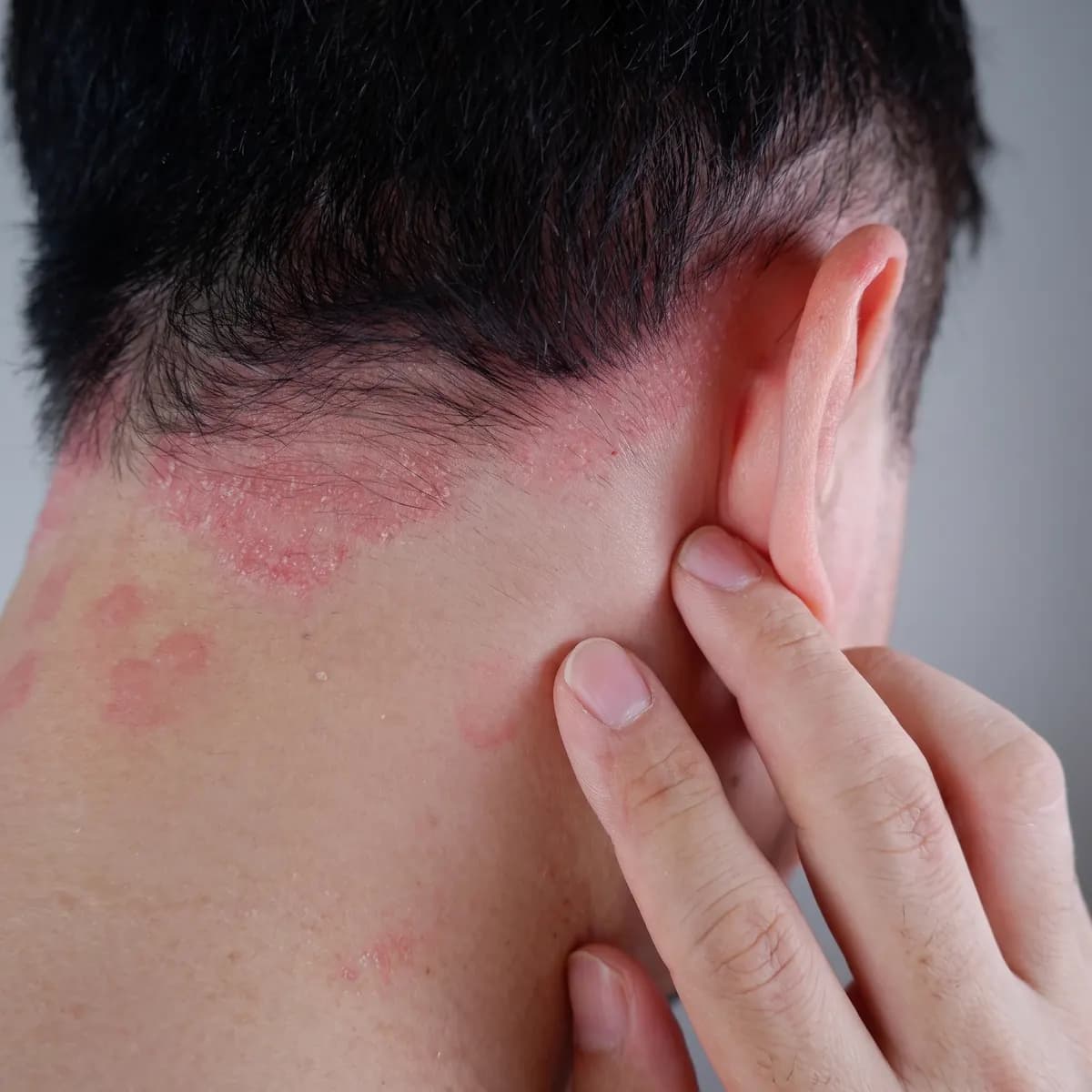
Psoriasis is a long-term skin condition that causes raised, red or darker patches covered with silvery scales, most often on the elbows, knees, lower back and scalp. Psoriasis treatment with prescription creams, ointments and scalp applications can clear or reduce patches during a flare. With Global Health you can request psoriasis treatment online in Ireland for €25 if you have already been diagnosed with mild to moderate plaque or scalp psoriasis. You complete a secure questionnaire, a doctor registered with the Irish Medical Council reviews your answers, and if treatment is clinically suitable your prescription is sent to the Irish pharmacy of your choice.
What is included
- A review of your medical questionnaire by an Irish Medical Council-registered doctor
- A prescription for an established topical treatment, such as a cream, ointment, gel or scalp application, if clinically suitable
- Secure electronic delivery of the prescription to your chosen pharmacy in Ireland
- Written advice on how to apply the treatment and what to expect
- Secure messaging with the doctor about your request
The €25 fee covers the doctor's review. The cost of the medication is paid separately at your pharmacy.
Who this service is not suitable for
This service is only for adults with previously diagnosed mild to moderate plaque or scalp psoriasis. Our doctors cannot safely prescribe psoriasis treatment online if you:
- are under 18
- have never been diagnosed with psoriasis by a doctor (a first presentation needs an in-person assessment)
- have psoriasis covering a large area of your body, or on the face, genitals or skin folds that needs more than mild treatment
- have pus-filled spots (pustular psoriasis) or red, inflamed skin over most of your body (erythrodermic psoriasis)
- have joint pain, swelling or stiffness, which can be a sign of psoriatic arthritis
- are pregnant, breastfeeding or trying to conceive
- take tablets or injections for psoriasis prescribed by a specialist
Widespread red, hot skin with fever, chills or feeling very unwell is an emergency: call 112 or 999 or go to an emergency department. If any other point applies, please book a video consultation with a GP so a doctor can assess you properly.
How it works
- Complete the questionnaire. Answer questions about your psoriasis, general health and any medication you take. You may be asked for photos of the affected areas. It takes about five minutes.
- Doctor review. An Irish-registered doctor reviews your answers against clinical guidance and may message you if more information is needed.
- Prescription sent. If treatment is suitable, the prescription is sent securely by Healthmail to the Irish pharmacy you choose, ready for you to collect.
What is psoriasis?
In psoriasis, skin cells are replaced much faster than normal, within days instead of weeks. The extra cells build up on the surface and form thick, scaly patches called plaques. These can be itchy or sore and may crack. Psoriasis usually comes and goes, with flare-ups followed by quieter periods. It is not contagious.
What causes it?
Psoriasis is caused by an overactive immune system that triggers inflammation in the skin. It often runs in families. Flares can be triggered by stress, skin injury, throat infections, cold dry weather, smoking, alcohol and some medicines.
Types of psoriasis
- Plaque psoriasis. The most common type, with well-defined scaly patches on the elbows, knees, lower back and elsewhere.
- Scalp psoriasis. Scaly patches on the scalp that can extend to the hairline, forehead and behind the ears, often mistaken for severe dandruff.
- Other types. Guttate, inverse, pustular and erythrodermic psoriasis, and nail psoriasis, need an in-person assessment.
Psoriasis treatment options
Topical treatments are the first step for mild to moderate psoriasis. Your doctor will choose one based on where your patches are and how thick they are:
- Emollients. Daily moisturisers soften scales, reduce itching and help other treatments work. Use them even when your skin is clear.
- Steroid creams and ointments. These reduce inflammation and are used in short courses during a flare.
- Vitamin D-based treatments. These slow down skin cell growth and are often combined with a steroid in one product.
- Scalp applications. Gels, lotions, foams and shampoos designed for the scalp, sometimes combined with treatments that soften and lift thick scale first.
Scalp psoriasis treatment tips
Part the hair and apply the treatment directly to the scalp rather than the hair. If scale is thick, soften it first with a scale-softening product and gently comb it out. Avoid scratching or picking.
What to expect
Most topical treatments show improvement within two to four weeks, with fuller results after about eight weeks. Psoriasis usually returns at some point, so it helps to restart treatment early when a flare begins.
Self-care
Stopping smoking, limiting alcohol, keeping a healthy weight and managing stress can all reduce flares. People with psoriasis have a higher risk of heart disease, so regular check-ups with your GP are worthwhile.
Side effects and safety
Topical treatments can cause irritation, stinging or dryness, especially on sensitive areas. Vitamin D-based products can irritate the face and skin folds. Long-term overuse of stronger steroid creams can thin the skin, and stopping them suddenly after heavy use can trigger a rebound flare. Use only the amount prescribed, and do not exceed the stated weekly maximum.
When to see a doctor in person
See your GP if your psoriasis is spreading, has not improved after eight weeks of treatment, affects your nails, or is affecting your mood or sleep. See a doctor promptly if you develop painful, swollen or stiff joints, as early treatment of psoriatic arthritis can protect the joints. You can also meet our Irish-registered doctors or see all online prescription services.