
 €49
€49Women's Health Consultation
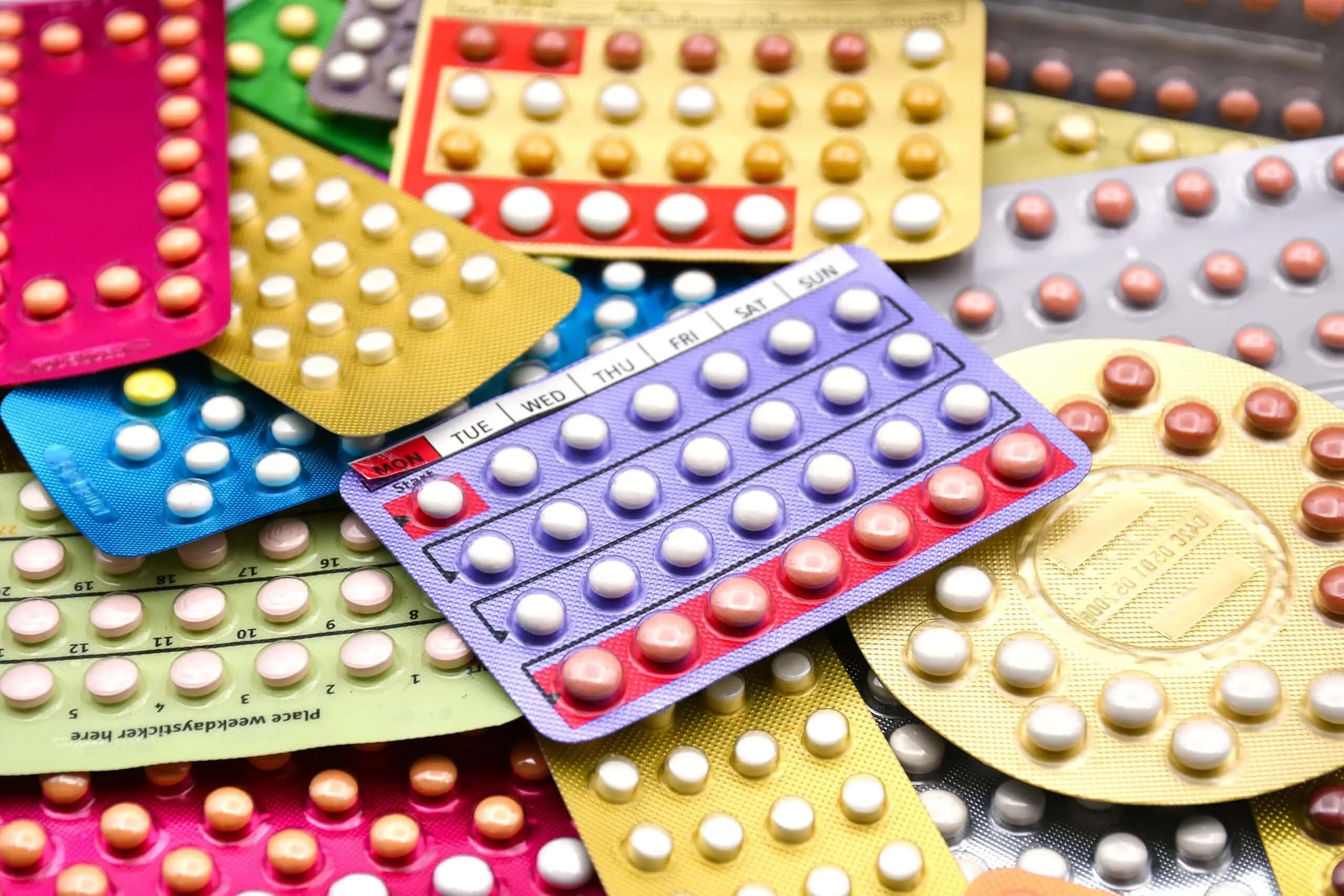
Confidential women's health assessment with a doctor registered with the Portuguese Medical Association. Contraception, hormonal health, menopause, PCOS, and more, by secure video call.
20 min
Free health tool
Enter the first day of your last period to see the six days you are most likely to conceive, your estimated ovulation day and when your next period is due.
Your fertile window
The day bleeding started, not the day it stopped.
Days from the start of one period to the start of the next. Leave it at 28 if you are not sure.
Estimated ovulation
Counted back 14 days from your next expected period, which is what keeps the timing right on cycles that are not 28 days long.
An estimate from the dates you enter, not a diagnosis — and not a method of contraception. Ovulation moves from cycle to cycle, and pregnancy is possible on days outside the window shown.
01
A cycle is counted from the first day of bleeding. Ovulation is not pinned to day 14: it happens about 14 days before your NEXT period, so a 35-day cycle ovulates around day 21 and a 24-day cycle around day 10. That is why counting forward from your last period mis-times every cycle that is not 28 days.
The days below are one 28-day cycle. The calculator above shifts them to the cycle length you entered.
Day 1
Days 2 – 8
Days 9 – 13
Day 14
Days 15 – 16
Day 28
02
A calculator predicts; these confirm. Tracking one or two of them across a couple of cycles tells you whether your own ovulation matches the estimate — and that is worth knowing before you plan anything around it.
03
It works from two things only: the date you enter and the assumption that your luteal phase is a standard 14 days. Both are reasonable, neither is guaranteed.
04
An ovulation estimate is a timing guide, not a fertility assessment. These are the consultations our doctors run when you want someone to look at the whole picture.
€49Confidential women's health assessment with a doctor registered with the Portuguese Medical Association. Contraception, hormonal health, menopause, PCOS, and more, by secure video call.
Talk any result through with a registered doctor by video, and get the checks a calculator cannot give you.
Body mass index from your height and weight, on the WHO adult scale.
Open calculatorHow many calories a day you need to maintain, lose or gain weight.
Open calculatorWhat your two numbers mean on the European adult blood pressure chart.
Open calculatorYour estimated due date, how far along you are, and the weeks that matter in between.
Open calculatorThe six-question adult ADHD screener, scored the way the scale is designed.
Open calculatorWhich published risk factors for a fragility fracture apply to you, and whether it's worth asking for a bone density scan.
Open calculatorWhether a sore throat looks bacterial or viral, using the age-adjusted score clinicians use — plus the warning signs that need seeing today.
Open calculatorQuestions
On the day of ovulation and the two days before it. The window as a whole covers about six days: the five before ovulation plus the day itself. Sperm survive up to five days and the egg under one, which is why the window opens early and closes fast.
No. Day 14 is only true of a textbook 28-day cycle. Ovulation sits roughly 14 days before your next period, so on a 32-day cycle it lands around day 18 and on a 24-day cycle around day 10. Counting 14 days forward from your last period is the commonest way to get the timing wrong.
Enter your usual cycle length and treat the result as a wide estimate rather than a date. If your cycles vary by more than a few days, ovulation predictor kits or tracking cervical mucus will tell you far more than any calendar calculation, and cycles that are consistently under 21 or over 35 days are worth a doctor's opinion.
No. It is not a contraceptive method and should never be used as one. Ovulation shifts between cycles, sperm can survive up to five days, and pregnancy is possible on days this calculator marks as outside the fertile window. If you are avoiding pregnancy, use a recognised method of contraception.
Most home tests are reliable from the day your period is due, which is about 14 days after ovulation — the "test from" date in the read-out. Testing earlier can give a negative result even when you are pregnant, because there is not yet enough hCG in urine to detect.
No. The calculation runs entirely in your browser. Nothing you type is sent to our servers or saved.
Start at your local health centre: the family doctor does the first assessment and blood tests for both partners and refers on to gynaecology or a reproductive medicine service when that is the next step. Our registered doctors can review irregular cycles and preconception checks by video in the meantime.
In pharmacies and parapharmacies, without a prescription. They detect the LH surge in urine 24 to 36 hours before the egg is released, so start testing a few days before the date estimated above.
Talk to a registered doctor by video about irregular cycles, preconception checks or the medicines you already take.