
Food poisoning: symptoms, home care and how to prevent it during the festive season
A guide for summer and the end-of-year holidays: how to recognise food poisoning, manage diarrhoea, avoid dehydration and store the festive meal and leftovers safely.
Food poisoning is an illness caused by eating food or drinking water contaminated with bacteria, viruses, parasites or toxins. The most common symptoms are nausea, vomiting, abdominal pain, diarrhoea, loss of appetite and fever. In most cases it clears up on its own within a few days with fluids and light eating. In summer, the heat and the Christmas and New Year feasts raise the risk. Some signs need prompt care: see the warning in the dehydration section.
Understanding the condition
Food poisoning: what it is and what causes it
The Ministry of Health calls this group of illnesses waterborne and foodborne diseases (DTHA).
They are illnesses caused by swallowing contaminated water or food. The causes can be bacteria and their toxins, viruses, intestinal parasites or chemical substances. There are also poisonings from natural toxins, such as those in some mushrooms, algae and fish. More than 250 types of DTHA have been described worldwide.
The main agents identified in outbreaks recorded in Brazil include Salmonella, Escherichia coli, Staphylococcus and norovirus. When two or more people fall ill with similar symptoms after eating or drinking from the same source, this is considered an outbreak.
Most microorganisms multiply between 5 °C and 60 °C, the so-called danger zone. In summer, a dish left on the table reaches this range quickly.
Sources: Ministry of Health, DTHA; Ministry of Health, DTHA: frequently asked questions.
Recognising the signs
Food poisoning: symptoms and when they start
The most common symptoms affect the stomach and intestines.
- Nausea and vomiting
- Abdominal pain and cramps
- Diarrhoea
- Loss of appetite
- Fever
The time between the meal and the first symptoms depends on the agent involved. It can range from hours to weeks, but is usually short. For that reason, the suspect meal is not always the last one you had.
Severity also varies with the agent, the amount eaten and each person's health. In rare cases the illness affects other organs, such as the kidneys in haemolytic uraemic syndrome, or the nervous system.
Sources: Ministry of Health, DTHA; Ministry of Health, DTHA: frequently asked questions; Finger et al., Foods 2019.
The most common symptom
Acute diarrhoea: what to expect and how long it lasts
Acute diarrhoea means having at least three loose or watery bowel movements in 24 hours.
According to the Ministry of Health, acute diarrhoeal disease is usually self-limiting and lasts up to 14 days. The Brazilian Society of Pediatrics (SBP) describes a usual duration of around seven days. Besides loose stools, there may be cramps, abdominal pain, fever, nausea, vomiting and, in some cases, blood or mucus in the stools.
The main complication of diarrhoea is dehydration. It is more dangerous in young children, older people and anyone with a chronic illness.
Sources: Ministry of Health, Acute diarrhoeal diseases; SBP, recommendations on diarrhoea.
Do not wait
Dehydration and warning signs
Losing a lot of water through vomiting and diarrhoea, especially in the heat, can lead to dehydration within a few hours.
Sources: Ministry of Health, Acute diarrhoeal diseases; Ministry of Health, Technical Note no. 38/2023.
Hydration first
How to treat diarrhoea at home without becoming dehydrated
With no warning signs, home care rests on three points: more fluids, your usual diet and observation.
- Drink more fluid than usual: water, coconut water, juice, tea, soup or oral rehydration solution
- After each episode of vomiting or watery stool, the Ministry of Health recommends oral rehydration solution: 50 to 100 ml for children under 1 year, 100 to 200 ml from 1 to 10 years and, over 10 years, as much as the person will accept
- Keep to your usual diet, in smaller portions if the nausea is strong
- Continue breastfeeding in babies
- Wash your hands well after using the toilet, so as not to pass the infection to the family
If vomiting is frequent, drink in small sips, many times.
Medicine is not the first step. The Ministry of Health reserves antibiotics for cases with blood or mucus in the stools, a poor general condition or cholera with severe dehydration, always under medical supervision. In children, zinc is part of the treatment, as directed by the doctor.
Sources: Ministry of Health, Acute diarrhoeal diseases; Ministry of Health, Technical Note no. 38/2023.
Christmas and New Year
A Christmas and New Year meal without food poisoning
The festive meal is often prepared in advance, served over several hours and kept for the next day. Each stage needs its own care.
When shopping and preparing
- Check the expiry date and that the packaging is intact, with no holes, tears or moisture
- Wash your hands before you start and clean worktops, boards and utensils
- Do not let raw food touch cooked food, and wash any utensils used with raw meat before using them again
- Do not defrost meat at room temperature: use the fridge, or the microwave if you will cook it straight afterwards
- Cook meat thoroughly: chicken and beef should not be red inside, and the juices should run clear
On the table and with leftovers
- Hot dishes should stay above 60 °C until serving
- Cold dishes, such as salads with mayonnaise, should stay below 5 °C
- Keep the time between preparation and eating as short as possible
- Store leftovers in the fridge, below 5 °C, and eat them within five days
Summer
Heat, beach and travel: caring for food and water
In the heat, food left out of the fridge reaches the danger zone sooner.
- Ready-made food served hot can stay at 60 °C or above for no more than 6 hours
- Refrigerated food should stay below 5 °C for no more than 5 days
- Eggs: cook for at least 7 minutes and avoid raw or undercooked egg, as in homemade mayonnaise and mousse
- Fruit and vegetables: wash them and soak them in a 2.5% sodium hypochlorite solution, at 10 ml per litre of treated water
- Untreated water: boil for 5 minutes, or filter it and add 2 drops of 2.5% hypochlorite per litre, then wait 30 minutes
- Meat, fish and seafood: avoid eating them raw or undercooked
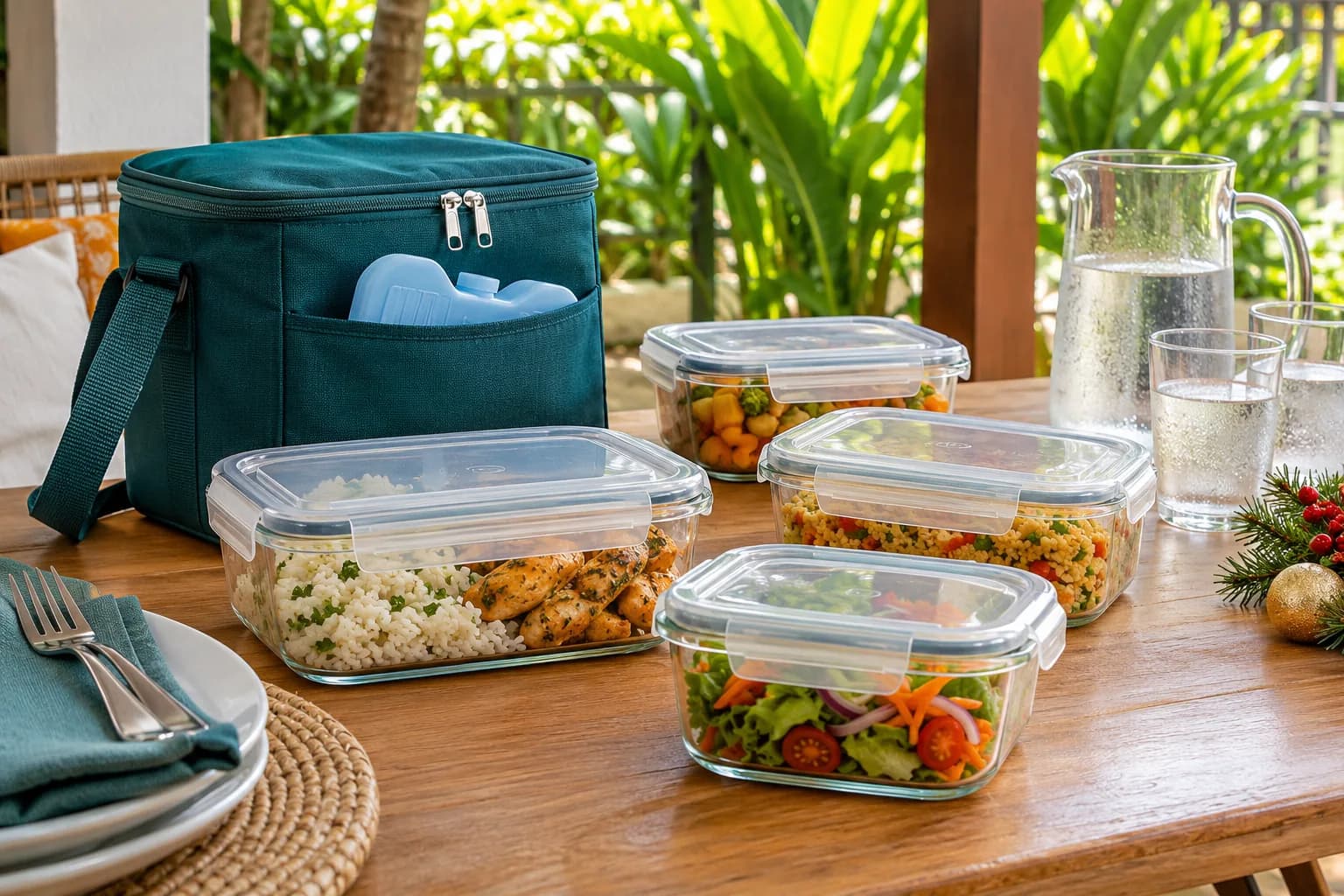
At the beach and on the road, carry food in a cool bag with ice and choose snacks that do not spoil easily. Be wary of dishes with mayonnaise, seafood or eggs that have sat in the sun for hours.
Sources: Ministry of Health, DTHA; Ministry of Health, Acute diarrhoeal diseases.
Brazil in numbers
Food poisoning outbreaks in Brazil: what the data show
Recorded outbreaks are only part of the cases: many are never reported.
- 662 outbreaks a year, on average, between 2007 and 2020
- 156,691 people ill in those outbreaks, about 17 per outbreak
- 22,205 hospital admissions and 152 deaths in the period
A study published in the journal Foods (Finger and colleagues, 2019) analysed the official data from 2000 to 2018: there were 13,163 outbreaks, 247,570 people ill and 195 deaths. Among the agents identified, Salmonella was the most frequently cited, in 14.4% of outbreaks (in 38% of them the agent was not identified), and homes were the main place of occurrence, with 12.5% of outbreaks. In other words, many cases of food poisoning happen in the home kitchen, not only in restaurants.
Sources: Ministry of Health, DTHA: epidemiological situation; Finger et al., Foods 2019.
Extra attention
Children, older people and those with a chronic illness
Some groups become dehydrated faster and are at higher risk of complications.
- Babies under 3 months
- Young children in general
- Older people, who feel less thirst
- People with diabetes
- People with kidney or liver disease
In these groups, do not wait several days before asking for medical advice. During the holidays, when the family gathers, keep a close eye on whoever is more vulnerable.
Sources: SBP, recommendations on diarrhoea; Ministry of Health, Acute diarrhoeal diseases.
Online care
Online clinical consultation for food poisoning and diarrhoea
With no emergency signs, a video conversation with a doctor helps you understand what is happening and decide the next step.
In the Online Clinical Consultation, you speak by video with a doctor holding an active CRM registration. Care is usually available on the same day in most cases. For food poisoning and diarrhoea, acute non-urgent conditions such as gastroenteritis, the doctor:
- Assesses your symptoms: when they began, what you ate, how many bowel movements and episodes of vomiting you have had and whether other people felt unwell
- Assesses your level of hydration from your account and the video and guides fluid replacement
- Looks for warning signs and advises urgent care when they appear
- Issues a digital treatment plan, a request for tests or a referral to a private specialist, when clinically indicated
- Assesses the need for a medical certificate if you need time off work; the consultation does not guarantee that a certificate will be issued or accepted
- Schedules a follow-up to monitor your progress, if needed
An online consultation does not replace an in-person examination. When you need to be examined in person, the doctor will say so clearly and advise you on where and how to do it.
Next step
Continue with the right care
When there are no emergency signs, an online clinical consultation helps assess hydration, guide your care and decide whether an in-person examination is needed.
Felt unwell after a meal?
In the online clinical consultation, the doctor assesses your symptoms, checks for signs of dehydration and guides your care and next steps.
References
Sources consulted
Sources checked on 8 November 2026.
The article summarises guidance from the Brazilian Ministry of Health, Anvisa and the Brazilian Society of Pediatrics, and a peer-reviewed Brazilian study. The outbreak figures come from official notifications and underestimate the total number of cases. The text does not name medicines or doses and does not replace a medical assessment.
Questions
Frequently asked questions about food poisoning
How long does food poisoning last?
In most cases, acute diarrhoea clears up on its own. The Ministry of Health describes a duration of up to 14 days, and the SBP gives around seven days as usual. If there is no improvement within 2 days or warning signs appear, follow the warning in the dehydration section.
Does food poisoning cause a fever?
It can. Fever is among the most common symptoms, along with nausea, vomiting, abdominal pain, diarrhoea and loss of appetite. The signs that need prompt care are in the warning in the dehydration section.
Do I need antibiotics for diarrhoea?
Most of the time, no. The Ministry of Health reserves antibiotics for cases with blood or mucus in the stools, a poor general condition or cholera with severe dehydration, always under medical supervision. The most important thing is hydration.
What should I eat with diarrhoea?
The Ministry of Health advises keeping to your usual diet, in children and adults, and increasing fluids. If the nausea is strong, have smaller, more frequent meals. Babies should keep breastfeeding.
Is the online consultation suitable for food poisoning?
Yes, when there are no emergency signs. The doctor assesses the symptoms and hydration, guides your care and, if needed, issues a request for tests, a digital treatment plan or a referral. If the case needs an in-person examination, the doctor will say so clearly.