
Back pain and chronic lower back pain: causes, symptoms and treatment
A guide to lower back pain, lumbago with sciatica and sciatic pain in Brazil: what the data show, when pain is a warning sign, what ICD code M54.5 means and how to return to exercise safely.
Back pain that lasts more than 12 weeks is called chronic lower back pain, or chronic low back pain, and in most cases it improves with movement, exercise and follow-up. According to IBGE's 2019 National Health Survey, 21.6% of Brazilian adults, about 34.3 million people, reported a chronic spinal problem. Pain that travels down the leg, that does not improve within a few weeks or that comes with weakness, fever or changes in urination needs a medical assessment. If there are no emergency signs, an online medical consultation is a good first step.
Understanding the pain
Back pain and lumbago: what chronic lower back pain is
Lower back pain, or lumbago, is pain in the lower part of the back, between the lowest rib and the buttocks, with or without pain in the leg.
The World Health Organization (WHO) classifies lower back pain by how long it lasts: it is acute when it lasts less than 6 weeks, subacute between 6 and 12 weeks and chronic when it goes beyond 12 weeks. Most people will have back pain at some point in their lives, and many acute episodes get better on their own. In some people, however, the symptoms continue and the pain becomes chronic.
In about 90% of cases, lower back pain is non-specific: no disease or injury can be identified that explains the pain. In the remaining cases there is an identifiable cause, such as a compressed nerve, an inflammatory disease, a fracture or, more rarely, an infection or a tumour.
- Non-specific lower back pain. The most common type, linked to overload, muscle weakness, a sedentary lifestyle and emotional factors.
- Herniated disc and sciatic pain. Compression of a nerve root, with pain that travels down the leg, tingling or numbness.
- Degenerative changes. Wear of the discs and joints, spinal stenosis and osteoarthritis.
- Inflammatory back pain. Stiffness on waking that improves with movement; it may point to spondyloarthritis, including in young people.
Source: WHO, Low back pain.
Brazil in numbers
Spinal pain in Brazil: what the data show
A chronic spinal problem is one of the health conditions most often reported by Brazilian adults, and it is the leading cause of time off work.
- 21.6% of adults reported a chronic spinal problem in 2019
- 34.3 million Brazilians aged 18 or over
- 237,113 work absences due to dorsalgia (ICD M54) in 2025
- 208,727 absences due to intervertebral disc disorders (ICD M51), such as a herniated disc, in 2025
In the 2019 National Health Survey (PNS), carried out by IBGE in partnership with the Ministry of Health, the indicator reached 21.6%, compared with 18.5% in 2013. Women reported the problem more often (24.5%) than men (18.3%), and the proportion rose with age: from 10.2% between 18 and 29 years to about 30% from the age of 60.
A study published in the Revista Brasileira de Epidemiologia (Malta and colleagues, 2022), using data from 88,531 adults in the PNS 2019, found a higher likelihood of chronic spinal pain among women, older people, smokers and former smokers, people who do heavy housework, people with obesity, high blood pressure or high cholesterol, and adults with less formal education.
At work, back pain led temporary incapacity absences paid by INSS, Brazil's social security institute, for the third year in a row: in 2025, dorsalgia kept 237,113 formally employed workers off work for more than 15 days, compared with 205,142 in 2024. Among women it was the main cause of sick leave, with 121,586 cases.
The PNS indicator is self-reported and includes pain in any part of the spine. Sources: IBGE, PNS 2019; Malta DC et al., 2022; Agência Brasil, Social Security data; Correio.
Classification
ICD code for lower back pain: what M54.5 and nearby codes mean
On a sick note or a test request, lower back pain usually appears with code M54.5 of ICD-10, the International Classification of Diseases, known in Brazil as CID.
In the ICD-10 table used in Brazil, published by the Ministry of Health, code M54.5 stands for “low back pain” and includes lower back pain and lumbago not otherwise specified. It belongs to group M54, dorsalgia, the same group that appears in the INSS absence statistics.
| Code | ICD-10 title | Most common use |
|---|---|---|
| M54.5 | Low back pain | Lower back pain and lumbago not otherwise specified |
| M54.4 | Lumbago with sciatica | Lower back pain with sciatic pain in the leg (lumbosciatica), when it is not attributed to a disc problem |
| M54.3 | Sciatica | Pain along the path of the sciatic nerve, without lower back pain |
| M51 | Other intervertebral disc disorders | Herniated disc and other disc problems; M51.1 includes the lumbar disc with radiculopathy |
The code describes the condition, not its severity or its treatment. The doctor chooses it after assessing you, and it may change if investigation shows a different cause.
Sources: ICD-10 table of the Ministry of Health; WHO, ICD-10 version 2019, M54.5.
Why it hurts
Causes and risk factors of lower back pain
There is rarely a single cause. The pain usually arises from a combination of strain, physical fitness, habits and emotional factors.
- A sedentary lifestyle and long hours sitting, which weaken the muscles that support the spine
- Heavy work: lifting loads, awkward postures and repetitive movements, including heavy housework
- Obesity, high blood pressure, high cholesterol and smoking, associated with chronic spinal pain in the PNS 2019
- Ageing: wear of the discs and joints, spinal stenosis and osteoporosis
- Herniated disc and compression of nerve roots
- Stress, anxiety, depression and poor sleep, which make the pain more likely to become chronic
- Inflammatory diseases and, more rarely, fractures, infections or tumours
Sources: WHO, Low back pain; Malta DC et al., 2022.
Symptoms
Lumbago with sciatica and sciatic pain: symptoms and warning signs
When the pain travels from the lower back to the buttock, thigh or leg, a nerve root is usually irritated. This is sciatic pain; combined with lower back pain, it is called lumbosciatica, or lumbago with sciatica.
Common symptoms
- Dull, burning or stabbing pain in the lower back
- Stiffness on waking or after sitting for a long time
- Lower back pain that radiates to the leg, sometimes down to the foot, with tingling, electric-shock sensations or numbness
- Difficulty bending, lifting or walking for long periods
- Disturbed sleep and tiredness because of the pain
Signs that call for a medical assessment soon
- Night pain that is not relieved by rest, or unexplained weight loss
- A history of cancer, osteoporosis or long-term corticosteroid use
- Onset before the age of 20 or after 50
- Pain that has not improved after 4 to 6 weeks
- Prolonged morning stiffness that improves with movement
Sources: Paraná State Health Department; WHO, Low back pain.
Investigation
How lower back pain is diagnosed
Diagnosis starts with a conversation and an examination. Imaging comes in when there are warning signs or when the pain does not improve with treatment.
| Step | What it shows |
|---|---|
| Medical history and physical examination | Type and duration of pain, radiation, mobility, strength, reflexes and sensation |
| Classifying the pain | Mechanical or inflammatory; presence of warning signs and of emotional and social factors |
| X-ray of the spine | Alignment, degenerative changes and fractures |
| MRI scan | Discs, nerve roots and stenosis; indicated with warning signs or when treatment does not help |
| Blood tests (ESR, CRP, full blood count) | Signs of inflammation or infection |
Wear such as bone spurs (known in Brazil as “bico de papagaio”) and even herniated discs are common on scans of people without pain. That is why imaging is interpreted together with the clinical examination and is not requested routinely when there are no warning signs.
“A finding on imaging does not necessarily explain the patient's pain, and treating the image instead of the patient is a common mistake that can lead to unnecessary interventions, including surgery.” Bruno Bodanese, orthopaedic doctor, in a statement from the Paraná State Health Department, 16 October 2026
Source: Paraná State Health Department.
Treatment
Treatments for acute and chronic back pain
In most cases, treatment combines information, movement, exercise and, when needed, medication for the shortest possible time.
During an acute episode
- Stay active: prolonged bed rest does not help and can delay recovery
- Painkillers and anti-inflammatories for the shortest possible time, with medical advice
- Local heat and a gradual return to activities
For chronic lower back pain
- Therapeutic exercise and physiotherapy, with strengthening and conditioning
- Pain education: understanding the problem reduces the fear of moving
- Weight management, sleep and psychological support when there is anxiety or depression
- Nerve blocks and injections in selected cases
- Treatment of the inflammatory cause, when there is one
- Surgery for nerve compression with loss of strength, severe stenosis or failure of well-conducted non-surgical treatment
In 2023, the WHO published its first guideline on chronic primary low back pain. It recommends education and self-care, exercise, some physical therapies, such as spinal manipulation and massage, cognitive behavioural therapy and some medicines, such as anti-inflammatories. For most people, it advises against lumbar belts, traction and opioid painkillers.
In Brazil, medication still dominates. In the PNS 2019, among people receiving some treatment for their spinal problem, 44.4% used medication or injections and 27.4% exercised regularly. Using 2013 data, a study in Ciência & Saúde Coletiva (2019) showed that 46.4% of people with the problem received no treatment at all and that those with higher education were 2.39 times more likely to have physiotherapy.
When it is indicated, surgery can help. The neurosurgeon Denildo Veríssimo, a specialist in spinal surgery, told the Banda B news site that the idea that all spinal surgery leaves lasting damage is a myth and that, “when properly indicated and performed with good technique”, it relieves pain. Whether surgery is indicated depends on the examination, on imaging that matches the symptoms and on the failure of non-surgical treatment.
Sources: WHO, 2023 guideline; IBGE, PNS 2019; Romero DE et al., 2019; Banda B.
Movement
Exercise for lower back pain: how to start safely
Exercise is the foundation of treatment for chronic lower back pain. The rule is to start gently and progress gradually.
- Walking. Start with short walks at a comfortable pace and gradually increase the time.
- Core strengthening. Exercises for the abdomen, glutes and back muscles, such as the bridge and a modified plank, help support the spine.
- Pilates and stretching. These build strength, control and mobility; at first, choose classes with professional guidance.
- Swimming and water aerobics. Water reduces impact.
- Breaks during the day. If you spend a lot of time sitting, stand up and change position.
For adults, the WHO recommends at least 150 minutes of moderate physical activity per week. With back pain, this target can be reached gradually.
Sources: WHO, Physical activity; WHO, 2023 guideline.
Do not delay
Why early assessment matters and the risks of delaying treatment
An early assessment makes it possible to rule out serious causes, identify the type of pain, start the right treatment and stop an acute episode from turning into chronic pain.
The anaesthesiologist Marco Delazzo, a specialist in chronic pain, told Correio that many workers live with pain every day, take medication on their own and put off treatment, and that it is common for him to see patients who have had pain for one, two or three years. During that time, he said, the nervous system adapts, the pain becomes chronic and treatment becomes more complex.
“Chronic pain is not fate. It is a health problem with effective treatment.” Marco Delazzo, anaesthesiologist, to Correio, 6 October 2026
Risks of putting it off
- Chronic pain: repeated episodes and constant pain
- Nerve damage: lasting weakness and loss of sensation when compression is left untreated
- Loss of mobility, time off work and loss of income
- Anxiety, depression and insomnia
- Undiagnosed disease, such as an infection, fracture or spondyloarthritis
- Overuse of painkillers
Source: Correio.
Online care
Online medical consultation for back pain
Chronic lower back pain is rarely resolved in a single appointment: it calls for an assessment, a clear plan and follow-up.
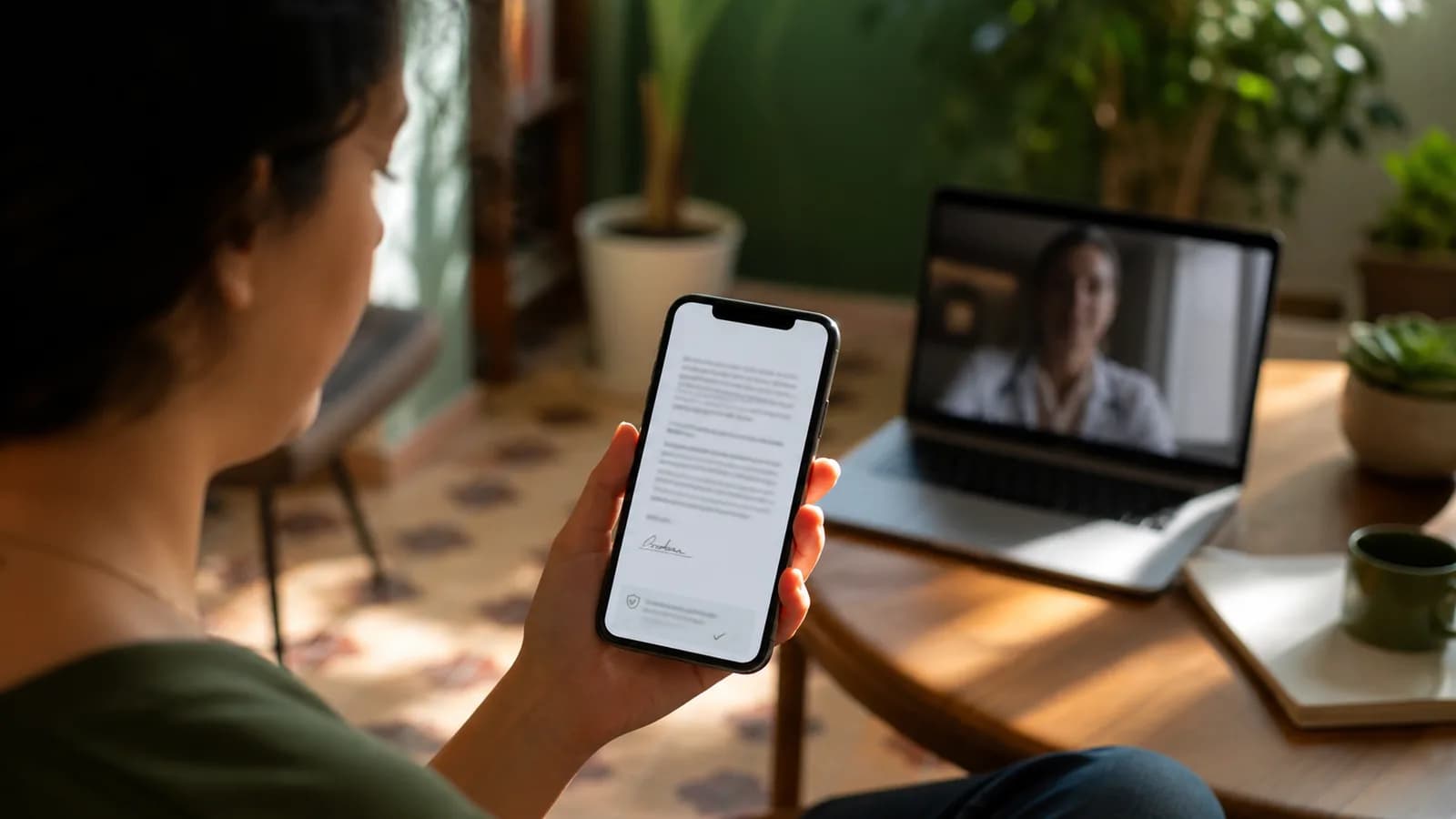
In the Online Medical Consultation, you speak by video with a doctor registered with the CRM (Regional Medical Council), such as Dr. Renato Sarmento, a specialist in family and community medicine. During the consultation, the doctor:
- Assesses the pain: onset, location, radiation to the leg and what makes it better or worse
- Looks for warning signs and directs you to urgent care when they appear
- Observes simple movements by video, such as walking on tiptoe and on your heels
- Requests tests, imaging or blood tests, when they make sense
- Draws up a plan with exercise, changes to your routine and, if needed, medication
- Monitors your progress in follow-up appointments
- Refers you to orthopaedics, rheumatology, physical medicine and rehabilitation, physiotherapy or spinal surgery when the case requires it
An online consultation does not replace a full physical examination of the spine. When you need to be examined in person, the doctor will tell you so clearly and guide you on the next step.
Next step
Continue with the right care
If there are no emergency signs, an online medical consultation helps you understand the pain, organise tests and put together a treatment plan.
- Online Medical Consultation
- Dr. Renato Sarmento's profile
- Doctors available in Brazil
- All blog articles
Has your back been hurting for more than a few weeks?
In the online medical consultation, the doctor assesses your pain, checks for warning signs and draws up a plan with you, including tests and referral when they are needed.
References
Sources consulted
Sources checked on 18 October 2026.
This article summarises data from IBGE and the Ministry of Social Security, two peer-reviewed Brazilian studies and WHO guidance. The work absence figures refer to INSS benefits for formally employed workers. Expert quotes were checked against their original pages. The text does not recommend specific medicines or doses and does not replace a medical assessment.
Questions
Frequently asked questions about back pain
When does back pain need a medical assessment?
When it lasts more than a few weeks, travels down the leg, wakes you at night, comes with weakness, tingling, fever or weight loss, or when you have a history of cancer or osteoporosis. Loss of bladder or bowel control and numbness in the genital area are an emergency: follow the warning in the symptoms section.
Is lower back pain that radiates to the leg always a herniated disc?
No. A herniated disc is a common cause of sciatic pain, but pain that travels down the leg can also come from spinal stenosis, the joints of the spine or the muscles of the area. When lower back pain and leg pain appear together, it is called lumbosciatica, or lumbago with sciatica. The doctor identifies the cause from your history, the examination and, if needed, imaging.
What is the ICD code for lower back pain?
In ICD-10, low back pain has the code M54.5. Lumbago with sciatica, lower back pain with sciatic pain, is usually recorded as M54.4, and a herniated disc appears in group M51. The doctor chooses the code after assessing your case.
Which doctor treats the spine?
If you are looking for a doctor who treats the spine, start with our online medical consultation. Our doctor assesses the pain, requests tests when needed, draws up the treatment plan and, if the case requires it, refers you to orthopaedics, rheumatology, physical medicine and rehabilitation, or spinal surgery.
Do I need an MRI scan?
Not always. Without warning signs, most lower back pain does not need imaging at first. An MRI is indicated when there are warning signs, suspected nerve compression with loss of strength or pain that does not improve with treatment.