Flu: symptoms, course and how to protect yourself at Christmas
How to tell flu from a cold, how long it lasts, when it becomes dangerous and why it is worth getting vaccinated before the holidays.
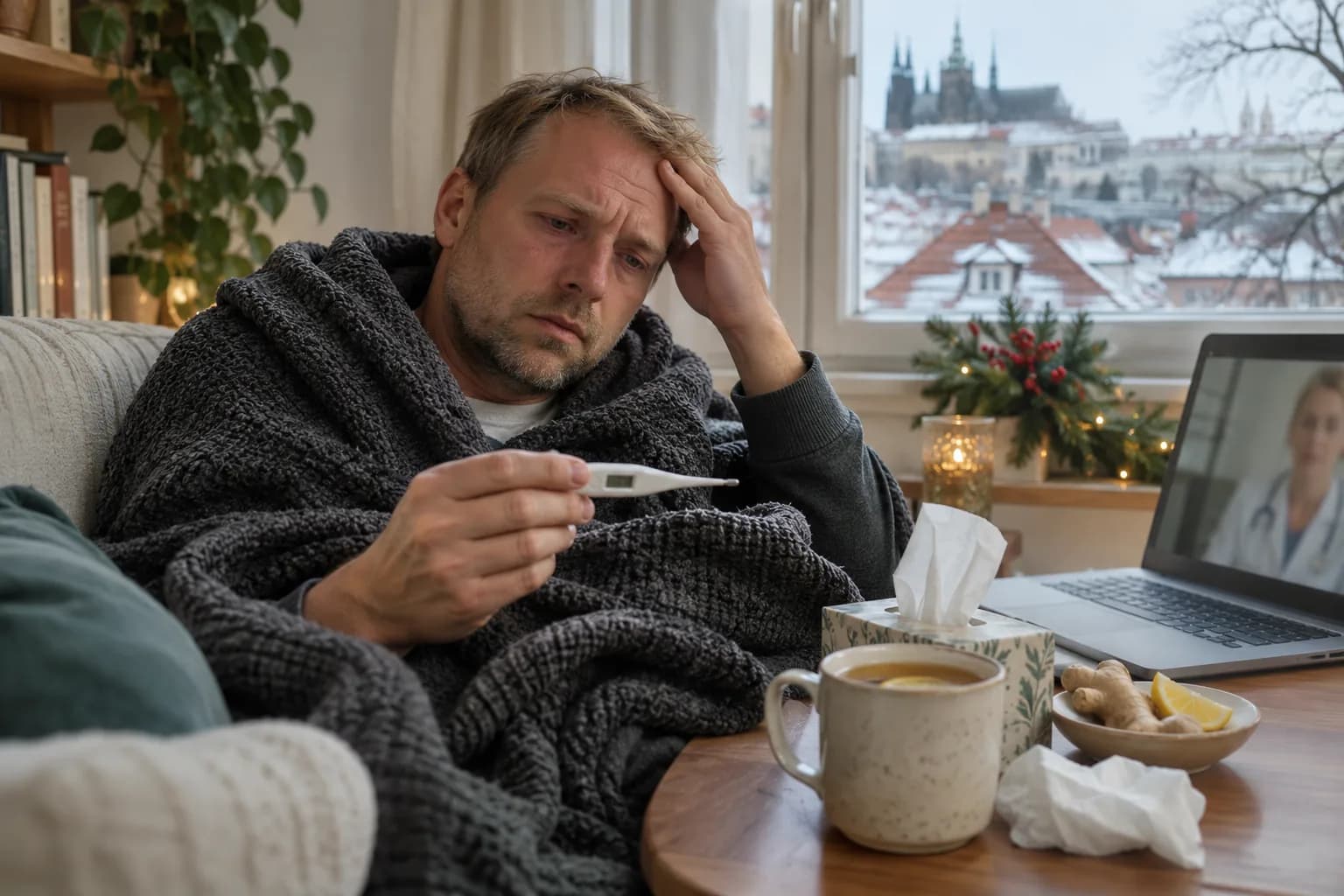
Flu has typical symptoms: a sudden start, a fever often above 39 °C, a dry cough, headache, muscle and joint pain, and severe tiredness. Uncomplicated flu usually lasts 4 to 7 days, but the cough and tiredness can linger longer. Most people recover at home with rest and plenty of fluids. Older people, young children, pregnant women and people with chronic illness are at higher risk of complications. In an online consultation, the doctor assesses your symptoms, warning signs and next steps.
How flu starts
Flu symptoms and the first days of illness
Flu does not usually start slowly. You feel fine in the morning, and by the afternoon you have a fever, you are shivering and your whole body aches.
Flu is caused by influenza viruses of types A, B and C, which trigger epidemics every winter. From infection to the first symptoms, usually 1 to 4 days pass.
- Sudden start. Symptoms appear within a few hours.
- Fever and chills. Your temperature can rise above 39 °C.
- Headache, muscle and joint pain. It is often stronger than with an ordinary cold.
- Dry, irritating cough and sore throat. The cough can last longest of all the symptoms.
- Tiredness and weakness. Many people have to stay in bed.
- Other symptoms. A runny nose and loss of appetite.
In older people, flu can look different. The Ministry of Health points out that instead of a fever it can show up as confusion, falls, loss of appetite or a general decline. If your parents or grandparents suddenly become weak and confused, think of flu as well.
Sources: SZÚ, Basic information about flu; NZIP, Flu: what it is, prevention and symptoms; MZd, Questions and answers: flu vaccination.
Differences
Flu or a cold?
At first glance, flu and a cold are hard to tell apart. It helps to note how quickly the symptoms began and how high the temperature is.
| Sign | Cold | Flu |
|---|---|---|
| Start | Rather gradual | Fast, within hours |
| Temperature | Normal or raised, usually up to 38 °C | Fever, even above 39 °C |
| Main symptoms | Runny or blocked nose, scratchy throat | Muscle pain and headache, dry cough, a strong feeling of being ill |
| Tiredness | Mild | Severe |
| Complications | Only occasionally, for example sinus or ear infection | Rarely a severe or life-threatening course |
COVID-19 and other respiratory viruses cause similar symptoms. Only a test can tell the cause for certain. For treatment at home, however, this often makes no difference. What matters more is how you feel and whether you belong to a risk group.
Source: NZIP, Cold or flu?.
Course and infectiousness
How long flu lasts and when you are infectious
Uncomplicated flu usually lasts 4 to 7 days. A short recovery period follows, when your strength returns gradually.
- Days 1 to 3. The highest fever, muscle pain and headache, severe tiredness.
- Days 4 to 7. The temperature falls, the body aches ease, the cough may get stronger.
- Second week. Cough and tiredness can last longer than the other symptoms.
Infectiousness. According to the SZÚ, adults are infectious mainly from the first to the fifth day of illness. In children and people with a weakened immune system, it can be considerably longer. The NZIP points out that you can spread the virus roughly a day before symptoms appear.
Flu spreads mainly through droplets when coughing, sneezing and talking. It also spreads via hands and objects, for example tissues, toys or handrails on public transport.
If a high fever returns after you had improved, your cough gets worse or you become short of breath, do not wait. It may be a complication, for example pneumonia.
Sources: SZÚ, Basic information about flu; NZIP, Flu: what it is, prevention and symptoms; MZd, Flu: basic information.
The situation in Czechia
The flu season in Czechia
Every year in Czechia, hundreds of thousands up to a million people fall ill with flu. The Ministry of Health links it to almost two thousand deaths a year on average.
- Start of November 2026: in week 44, the rate of acute respiratory infections was 828 per 100 000 inhabitants. The 21 % drop compared with the previous week was influenced by the public holiday.
- The most cases were among children under 5: 3 253 per 100 000.
- Flu viruses had so far appeared only sporadically, and the rate of flu-like illness was low, as expected for the time of year.
For comparison, the 2025/26 season: in week 6 of 2026, the rate of respiratory infections reached 1 534 per 100 000 inhabitants and flu was spreading epidemically in Czechia. By 6 February 2026, 299 severe flu cases in intensive care units had been reported, of whom 103 people died.
Sources: SZÚ, press release of 2 November 2026; SZÚ, weekly report on acute respiratory infections, week 6 2026; MZd, Flu: basic information.
Who is at risk of complications
Who is at greater risk from flu
Most healthy adults manage flu at home. For some people, however, there is a risk of a more severe course and complications.
- People aged 60 and over.
- Infants and pre-school children.
- Pregnant women and women shortly after giving birth.
- People with a chronic illness of the heart, lungs, kidneys or liver, or with diabetes.
- People with a weakened immune system.
- Smokers.
Flu can make an existing condition worse, for example heart failure, asthma or COPD. Serious complications include pneumonia and inflammation of the heart muscle. In children, flu can be followed by a middle ear infection or a sinus infection.
Sources: NZIP, Flu: what it is, prevention and symptoms; SZÚ, Basic information about flu; MZd, Flu: basic information.
When to act immediately
Warning signs that do not belong at home
Most cases of flu get better on their own. Some symptoms, however, mean that help is needed immediately.
A quick assessment by a doctor makes sense even without an acute threat. For example, if you belong to a risk group, the fever does not go down for more than three days, or you got worse again after improving. An older person who is weak and confused also needs an assessment, even without a fever.
What helps
Treating flu at home and when medicines come into play
The basis of treatment is bed rest, plenty of fluids and medicines to ease fever and pain as the doctor recommends.
- Stay at home. The SZÚ recommends staying at home with symptoms of infection. This protects colleagues and family.
- Drink small amounts more often. You lose more fluid when you have a fever.
- Rest. Flu that is not rested off can drag on.
- Wash your hands and air the room. This lowers the risk of infecting others in your household.
Antibiotics do not help against flu. Flu is caused by a virus, and antibiotics work only against bacteria. A doctor considers them only when a bacterial complication develops.
Antivirals. For more severe illness and for patients at risk, there are medicines against the flu virus. They are available on prescription, and treatment must start within 2 days of the first symptoms. According to the overview from the European Medicines Agency, oseltamivir shortened the illness in adults in studies, on average, from 5.2 to 4.2 days. The doctor will assess whether the medicine is suitable for you.
Sources: SZÚ, Basic information about flu; SZÚ, press release of 2 November 2026; EMA, medicine overview for Tamiflu (in Czech).
The holidays
Flu at Christmas: visits, parties and travel
In December we meet more people than usual. Office parties, shopping, trips by train and plane, and family visits give viruses an ideal opportunity.
- With a fever, postpone the visit. Grandparents and small children are among those at greatest risk. A short delay is better than a sick family over the holidays.
- Remember the day before symptoms. You can be infectious before the first symptoms appear. If someone in the family feels ill, avoid hugging and sharing dishes.
- Before a journey, pack a thermometer and the medicines you take regularly. If you get flu while travelling, rest and drink fluids.
- After a party, watch whether a fever and muscle pain appear within 1 to 4 days.
If you want to be protected by vaccination on Christmas Eve, bear in mind that protection starts 10 to 14 days after the jab. A vaccination by about 10 December will therefore be in time for the Christmas visits.
Prevention
Flu vaccination before the holidays
The flu vaccine is the most effective protection. It lowers the risk of a severe course and of complications.
- Who: it is recommended for everyone from 6 months of age, especially older people, people with chronic illness, pregnant women and people who live with or care for those at risk.
- When: ideally in October and November. A later vaccination during the season still helps.
- How often: every year. For the 2026/27 season, all three strains in the vaccine have changed.
- Types of vaccine: an injected vaccine, a nasal spray for children and adolescents aged 2 to 17, and a high-dose vaccine for people aged 60 and over.
- Cost: public health insurance covers vaccination for selected groups, including people aged 65 and over and some people with chronic illness. For others, the health insurance company may contribute from its prevention programmes.
The vaccine does not cause flu. The Ministry of Health states that the vaccines do not contain live viruses capable of causing the disease. After vaccination you may feel tired or have a headache or a raised temperature, which usually pass within a few days. If you have a feverish illness, vaccination is postponed until you have recovered.
The vaccine is given in person. In an online consultation, the doctor will discuss with you whether vaccination is suitable for you and which type of vaccine comes into question.
Sources: SZÚ, Flu vaccination 2026/2027; MZd, Questions and answers: flu vaccination.
Video consultation
How an online consultation with a doctor helps
With a fever and aching body, you do not have to go anywhere. The video consultation is available seven days a week, including evenings and weekends.
- Assessing your symptoms. The doctor asks when the symptoms began, how high your temperature is and which medicines you take.
- Warning signs and risk. They assess whether you belong to a risk group and whether an in-person examination is needed.
- Treatment. They recommend how to proceed at home. If it is clinically appropriate, they issue an electronic prescription, for example for an antiviral.
- Electronic sick note (eNeschopenka). The doctor can issue it after a clinical assessment. Issuing it is not automatic.
- Documentation and next steps. They issue any necessary recommendation or documentation the same day.
- Follow-up. If your condition does not improve, you can book another consultation.
A video call cannot replace listening to your lungs and other physical examination. If you need an in-person examination, the doctor will tell you openly and recommend the next step.
Have ready when the symptoms began, the temperatures you have measured and a list of the medicines you take. Book an online consultation with a doctor.
Care in Czechia
Talk to a doctor online
Do you have a fever and are not sure whether it is flu? Have your symptoms assessed by a doctor from home.
Do you have a fever and an aching body?
In a video consultation, the doctor assesses your symptoms and warning signs, recommends treatment and, if needed, issues an electronic prescription or an electronic sick note. If an in-person examination is necessary, they will tell you.
Sources
Expert sources for this article
Sources checked on 8 November 2026.
The article is based on official Czech sources (SZÚ, Ministry of Health, NZIP) and on the Czech-language overview from the European Medicines Agency, checked on 8 November 2026. The figures for the current season are from week 44 of 2026; the figures from last winter are labelled with the 2025/26 season. The article gives no medicine doses.
Frequently asked questions
Frequently asked questions about flu
How long does flu last?
Uncomplicated flu usually lasts 4 to 7 days. The cough and tiredness can last longer, so return to full activity gradually. If your condition gets worse again after improving, get examined.
What are the first symptoms of flu?
A sudden start within a few hours is typical: fever and chills, headache, muscle and joint pain, severe tiredness and a dry cough. In older people, flu can also show up without a fever, for example as confusion or falls.
Do antibiotics help against flu?
No. Flu is caused by a virus, and antibiotics work only against bacteria. In a more severe illness or in patients at risk, the doctor may consider an antiviral, which must be started within 2 days of the first symptoms.
When should I get vaccinated so that I am protected at Christmas?
Protection starts 10 to 14 days after vaccination. If you want to be protected on Christmas Eve, get vaccinated by about 10 December. October and November are ideal, but vaccination during the season still helps.
Can I get a sick note online because of flu?
The doctor can issue an electronic sick note after a clinical assessment in a video consultation. Issuing it is not automatic and depends on your state of health.