High blood pressure in Czechia: when it becomes dangerous, why you don't feel it and how it is treated
In Czechia, hypertension affects roughly half of middle-aged men. Most of them don't know it for years, because nothing hurts.
High blood pressure (hypertension) means that repeated readings reach 140/90 mmHg or higher. A single reading at the surgery does not make the diagnosis; what counts is repeated values, ideally backed up by home monitoring. Symptoms usually appear only after years, which is why, in a Czech population study, about a quarter of men and more than a fifth of women with hypertension did not know they had it. Treatment starts with lifestyle changes and, for most people, continues with medication. It pays off: every 10 mmHg off systolic pressure means roughly a quarter fewer strokes.
ESH 2023 classification
At what readings is blood pressure high?
The threshold is 140/90 mmHg. It is enough for one of the two numbers to exceed it repeatedly.
The European Society of Hypertension (ESH) divides readings, measured in millimetres of mercury, into six bands. The Czech Society of Hypertension (ČSH) and centres such as IKEM use the same 140/90 threshold.
- Optimal: below 120/80
- Normal: 120–129 and/or 80–84
- High-normal: 130–139 and/or 85–89
- Grade 1 hypertension: 140–159 and/or 90–99
- Grade 2 hypertension: 160–179 and/or 100–109
- Grade 3 hypertension: 180 or higher and/or 110 or higher
So your monitor showed 140/90? That is the lower limit of grade 1: not a reason to panic, but a reason to keep measuring. A higher reading at the surgery can also be white-coat hypertension, which is why the doctor wants to see readings taken at home. You can place your numbers in a band with our blood pressure calculator.
Bands according to the ESH 2023 guideline summary; the 140/90 threshold also according to IKEM and the ČSH 2022 recommendations.
A silent disease
Symptoms of high blood pressure: why most people don't feel them
Blood vessels and the heart adapt to raised pressure for years. By the time symptoms appear, pressure has usually been high for a long time.
When high blood pressure does cause symptoms, these are the most common:
- headache, typically in the morning and at the back of the head
- dizziness, buzzing or ringing in the ears
- palpitations and breathlessness on exertion
- inner restlessness, nervousness, poorer sleep
- tiredness lasting several days
None of these symptoms confirms or rules out hypertension. Many people with a blood pressure of 160/100 feel well. That is why it makes sense to measure even when nothing is bothering you.
Symptoms according to NZIP (ÚZIS); threshold for emergency care according to WHO, September 2025.
Primary and secondary hypertension
What causes high blood pressure
In about 90% of cases there is no single cause, but a combination of inherited factors and lifestyle.
This form is called primary (essential) hypertension. The remaining 10% or so is secondary hypertension, caused by another condition: kidney disease, a hormonal disorder (such as excess aldosterone), sleep apnoea or certain medicines. In a young person with high blood pressure, or when pressure does not respond to treatment, the doctor looks specifically for a secondary cause.
In primary hypertension, the same culprits keep coming up:
- Salt. According to SZÚ (the Czech National Institute of Public Health), Czech women eat around 10 g of salt a day and Czech men 14–15 g; WHO recommends less than 5 g.
- Excess weight and too little exercise, often together with diabetes or high cholesterol.
- Alcohol and smoking.
- Long-term stress and too little sleep. According to Prof. Miroslav Souček of St Anne's University Hospital in Brno, chronic stress is one of the main drivers of hypertension.
Hypertension also rarely comes alone. If your blood sugar is raised too, read our article on diabetes as a silent disease.
Share of primary and secondary forms according to NZIP; salt according to SZÚ (2022) and WHO (2026); Prof. Souček's statement according to the VZP press release.
VZP and Czech study data
Hypertension in Czechia in numbers
Roughly every second man aged 25–64 in Czechia has high blood pressure. Yet only a minority of patients are well treated.
- 41.5% of adults aged 25–64 had hypertension in the 2016/17 survey (men 50.6%, women 33.5%).
- Under control: blood pressure was controlled in only 29.8% of men and 37.0% of women with hypertension. Among those taking medication, the figure was 49–58%.
- 1,311,204 clients of VZP, the largest Czech public health insurer, were treated for hypertension in 2025, about 200,000 more than ten years earlier.
- 24,268 new patients were added in 2025; those treated include 3,886 children under 18, 281 more than a year earlier.
- CZK 4.56 billion is what hypertension treatment cost VZP in 2025.
For comparison: in 1985, fewer than 4% of patients had their blood pressure under control. That is major progress, but according to VZP many patients still do not reach target values below 140/90, do not take their medicines regularly or start treatment late.
Sources: Cífková et al., PLoS One 2020, Cífková et al., Front Cardiovasc Med 2022 and VZP ČR, 13 May 2026.
Diagnosis
How to check your blood pressure and what the doctor will do
A week of home monitoring, following a simple routine, gives the most reliable picture.
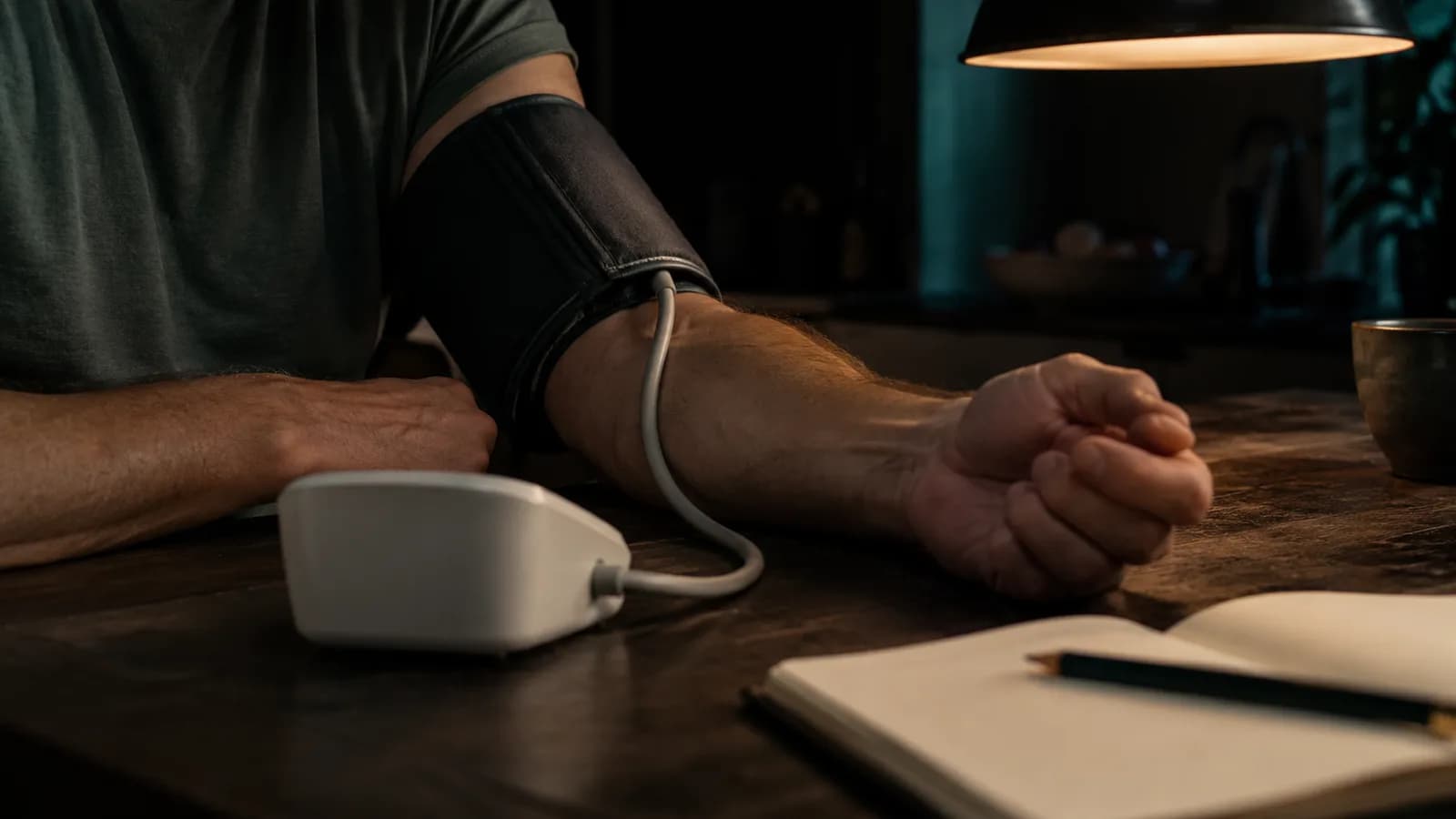
- Measure for 7 days (at least 3), morning and evening, seated after 5 minutes of rest.
- Take two readings each time, 1–2 minutes apart, with the cuff on your bare upper arm at heart level.
- Discard the first day's readings, average the rest and take the record to your doctor.
Your GP will also measure your blood pressure at a preventive check-up, to which you are entitled every two years from the age of 18 under Czech public health insurance. If hypertension is suspected, blood tests (kidneys, minerals, sugar, cholesterol), a urine test and an ECG usually follow. The aim is to find out whether the pressure has already damaged organs and whether it has a secondary cause.
Home monitoring protocol according to ESH, cited in J Clin Hypertens 2022; check-ups according to NZIP (January 2026) and VZP.
Lifestyle and medication
Treating hypertension: lifestyle, medication and regular check-ups
With high-normal pressure and mild hypertension, treatment starts with lifestyle changes. Most people with hypertension, however, eventually need medication as well.
The foundations are less salt (under 5 g a day), 150–300 minutes of moderate-intensity exercise a week, weight loss if you are overweight, cutting down on alcohol and stopping smoking. The doctor chooses medication according to your age and other conditions. The most common options are ACE inhibitors or sartans (ARBs), calcium channel blockers and diuretics, often combined in a single tablet.
Treatment does not end with the first prescription. Doses are adjusted according to your home records, and medicines are not stopped when blood pressure improves, because it improved precisely thanks to them. The effort is worth it: a meta-analysis of 123 studies showed that every 10 mmHg reduction in systolic pressure lowers the risk of stroke by 27%, heart failure by 28% and all-cause mortality by 13%.
Reviewing home readings, blood results or side effects can often be done remotely as well. What an online consultation can handle, and when you need to be seen in person, is explained in our article what an online doctor can solve.
Lifestyle measures according to WHO; treatment effect according to Ettehad et al., Lancet 2016.
Global Health Czechia
Blood pressure and medical care
Measure your blood pressure, write down the readings and go through them with a doctor.
- Blood pressure calculator and chart
- What an online doctor can solve
- Diabetes: symptoms, treatment and prevention
- Doctors in Czechia
- Contact Global Health
Higher readings at home?
A Global Health doctor will go through your readings, recommend tests and discuss the next steps. In Czech, English and other languages.
Expert sources
Sources for this article
Data and recommendations verified on 17 September 2026.
This article does not replace a medical examination. Your doctor sets your target values and treatment.
Frequently asked questions
High blood pressure
Is a reading of 140/90 already high?
Yes, if it keeps recurring. It is the lower limit of grade 1 hypertension. One reading is not enough; measure your blood pressure at home for a week and discuss the results with a doctor.
Can high blood pressure be caused by nerves?
Stress raises blood pressure in the short term, and long-term stress is a risk factor. If your readings are high even when you are relaxed at home, it is not just nerves and it is time to get checked.
Can hypertension be cured?
Primary hypertension can usually only be kept under control in the long term with lifestyle measures and medication. Secondary hypertension sometimes resolves once its cause is treated.
When should I call an ambulance for high blood pressure?
With readings around 180/120 or higher together with chest pain, breathlessness, difficulty speaking, weakness in a limb or worsening vision. Call 155 or 112.