Causes, Symptoms, Treatments, and the Future of Care
Brazil now ranks 6th in the world for the number of diabetes cases, with 16.6 million people living with the disease, many still undiagnosed. This guide covers everything you need to know: causes, warning signs, treatments that follow current diabetes management guidelines, why regular checkups matter, and the emerging therapies that could transform diabetes care in the years ahead.
Section 01
Diabetes in Brazil: Understanding the Scale of the Problem
According to the Ministry of Health, the Vigitel survey showed that diabetes prevalence among Brazilian adults rose from 5.5% in 2006 to 12.9% in 2024, a 135% increase in under two decades, prompting the 2026 launch of the Viva Mais Brasil program, with a projected investment of R$1.5 billion to jointly tackle diabetes and hypertension. The 2025 Global Diabetes Atlas, published by the International Diabetes Federation (IDF), found that Brazil now ranks 6th in the world for the number of cases, with 16.6 million people living with the disease, a 5.7% increase in just four years. The Brazilian Diabetes Society (SBD) estimates that the true national total, including undiagnosed cases, is approaching 20 million people.
Sources: Ministry of Health — Vigitel 2025; International Diabetes Federation — Global Diabetes Atlas 2025; Brazilian Diabetes Society (SBD).
According to the IDF, diabetes is now responsible for more than 111,000 deaths a year in Brazil, roughly 20 times the number of dengue deaths in the same period, and the SBD identifies it as the leading cause of non-traumatic lower-limb amputation in the country, with more than 10,000 amputations recorded annually by the public health system (SUS), an average of over 28 per day.
Section 02
Types of Diabetes
Not all diabetes is the same. Understanding which type you have, or which one you're at risk for, is the first step toward managing it effectively.
Section 03
Causes and Risk Factors
Type 1 Diabetes
The exact cause of type 1 diabetes remains only partly understood. It's an autoimmune disease, the body's immune system mistakenly attacks and destroys the insulin-producing beta cells in the pancreas. Genetic factors play a role, as does possible exposure to certain viral infections. In Brazil, research in this area is carried out by centers such as the SBD — Brazilian Diabetes Society and research groups at the University of São Paulo (USP) and the Federal University of São Paulo (UNIFESP).
Type 2 Diabetes
Type 2 diabetes has a more complex, and more modifiable, set of causes, combining genetic predisposition with lifestyle and environmental factors. The core mechanism is insulin resistance, in which the body's cells stop responding effectively to insulin, paired with a progressive decline in the pancreas's ability to compensate with higher output.
Section 04
Signs and Symptoms
Symptoms vary considerably between type 1 and type 2 diabetes. Type 1 tends to present acutely, with symptoms appearing quickly and potentially signaling diabetic ketoacidosis (DKA), a medical emergency. Type 2, by contrast, typically develops slowly and silently over years, with symptoms so subtle or gradual that many people attribute them to aging, stress, or everyday tiredness.
Section 05
Current Treatments for Diabetes in Brazil
Diabetes treatment has undergone a genuine revolution over the past decade. In Brazil, the Ministry of Health sets out the Clinical Protocol and Therapeutic Guidelines (PCDT) for Type 2 Diabetes Mellitus, updated in April 2024 and in effect since 2025 following CONITEC review, aligned with international recommendations from the American Diabetes Association (ADA) and the European Association for the Study of Diabetes (EASD). The country is also investing in domestic insulin production: a public-private partnership is set to supply 20 million vials of insulin glargine to SUS, and there are ongoing discussions about expanding access to long-acting insulin analogs for people with type 1 diabetes.
Lifestyle Changes — The Foundation of Every Treatment Plan
For both type 1 and type 2 diabetes, lifestyle is the foundation of disease management. For type 2 in particular, dietary changes and increased physical activity can meaningfully lower HbA1c, improve insulin sensitivity, and in some cases, especially after bariatric surgery or very low-calorie diets, lead to sustained remission. The SBD, ANAD, and the nutrition and nursing teams at SUS primary care clinics across the country offer structured support for lifestyle management.
Medication
The following drug classes are available in Brazil. Treatment decisions are individualized, and the 2025 Ministry of Health, SBD, and ADA guidelines all emphasize a patient-centered approach that weighs cardiovascular risk, kidney function, weight, and personal preferences.
Section 06
Why Regular Checkups Matter
Diabetes is a chronic disease that evolves over time, and its complications, if left undetected, can be severe and irreversible. Diabetic retinopathy is a leading cause of preventable blindness among Brazilian adults. Diabetic nephropathy is one of the biggest drivers of end-stage kidney disease. Peripheral neuropathy can lead to foot complications that, in the most severe cases, result in amputation, and according to the SBD, diabetes is already the leading cause of non-traumatic lower-limb amputation in Brazil, with more than 10,000 procedures per year recorded by SUS, an average of over 28 per day, and around 13 million people with diabetes living with foot ulcers.
Decades of research show that all of these complications are largely preventable, or can be significantly delayed, with good glycemic control, blood pressure management, and regular follow-up care. A structured annual diabetes checkup is one of the most cost-effective interventions in all of medicine.
What Your Annual Diabetes Checkup Should Include
- HbA1c assessment (average blood glucose over the past 3 months)
- Blood pressure measurement and review of antihypertensive therapy
- Kidney function — estimated glomerular filtration rate (eGFR) and urine albumin-to-creatinine ratio
- Cholesterol and a full lipid panel
- Weight and BMI assessment
- Foot exam, including pulse and sensation checks
- Dilated eye exam to screen for diabetic retinopathy
- Medication review and adjustment, if needed
- Review of adherence to your diabetes self-care plan
- Smoking status assessment and cessation support, if applicable
- Flu vaccination (strongly recommended for people with diabetes)
Screening If You Haven't Been Diagnosed Yet
If you have risk factors for type 2 diabetes and have never been screened, your doctor can order a fasting glucose or HbA1c test — simple tests available through both public and private healthcare. This is especially important if you're over 45, have a family history of diabetes, high blood pressure, or had excess weight during pregnancy. Catching prediabetes early offers a real window of opportunity to prevent or delay the onset of type 2 diabetes.
Section 07
The Future of Diabetes Treatment
The pace of innovation in diabetes medicine is unprecedented. Several research areas, some already in advanced clinical trials, have the potential to fundamentally change what it means to live with diabetes over the next decade.
Stem cell therapy research for type 1 diabetes is examined in detail in a 2025 publication in PMC (PMID: PMC12689004), which concludes that stem cell therapy offers a dual strategy, combining regeneration of insulin-producing beta cells with regulation of immune responses. While an outright cure remains a future goal, the direction of research has never been more promising.
Section 08
Reference Institutions and Resources in Brazil
If you live with diabetes in Brazil, or are concerned about your risk of developing it, the following organizations and services are the key points of reference for clinical care, education, and support.
Ministry of Health — PCDT and Vigitel
The Ministry of Health is the national authority for diabetes policy and clinical guidelines in Brazil. The Clinical Protocol and Therapeutic Guidelines (PCDT) for Type 2 Diabetes Mellitus, reviewed by CONITEC, sets the criteria for diagnosis, follow-up, and treatment options within SUS. The Vigitel survey, conducted annually, is the primary tool for tracking diabetes and other chronic disease prevalence among the Brazilian population. In 2026, the Ministry launched the Viva Mais Brasil program, with investment in chronic disease prevention and health promotion.
SBD — Brazilian Diabetes Society
The SBD is Brazil's leading scientific society for diabetes. It publishes clinical guidelines updated annually, promotes continuing medical education, produces national epidemiological data, and works with the government to expand access to treatment within SUS.
ANAD — National Diabetes Care Association
The ANAD, certified by the IDF as a Center of Excellence in diabetes care and education, runs free national screening and outreach campaigns, including the National Free Diabetes Campaign, which has already provided free testing and referrals to more than 240,000 people.
Disque Saúde 136
The Disque Saúde 136, run by the Ministry of Health, offers guidance and information on SUS services. For medical emergencies, always call SAMU (192).
SBEM — Brazilian Society of Endocrinology and Metabolism
The SBEM is the scientific society representing Brazil's endocrinology and diabetes specialists. It publishes clinical guidelines, organizes continuing medical education, and represents the country in international diabetes research networks.
Section 09
Frequently Asked Questions
How many people have diabetes in Brazil?
According to the IDF's 2025 Global Diabetes Atlas, Brazil ranks 6th in the world for the number of cases, with 16.6 million people living with the disease. The Ministry of Health's Vigitel survey shows adult prevalence rose from 5.5% in 2006 to 12.9% in 2024. The SBD estimates the true total, including undiagnosed cases, is approaching 20 million Brazilians.
What are the first signs of diabetes?
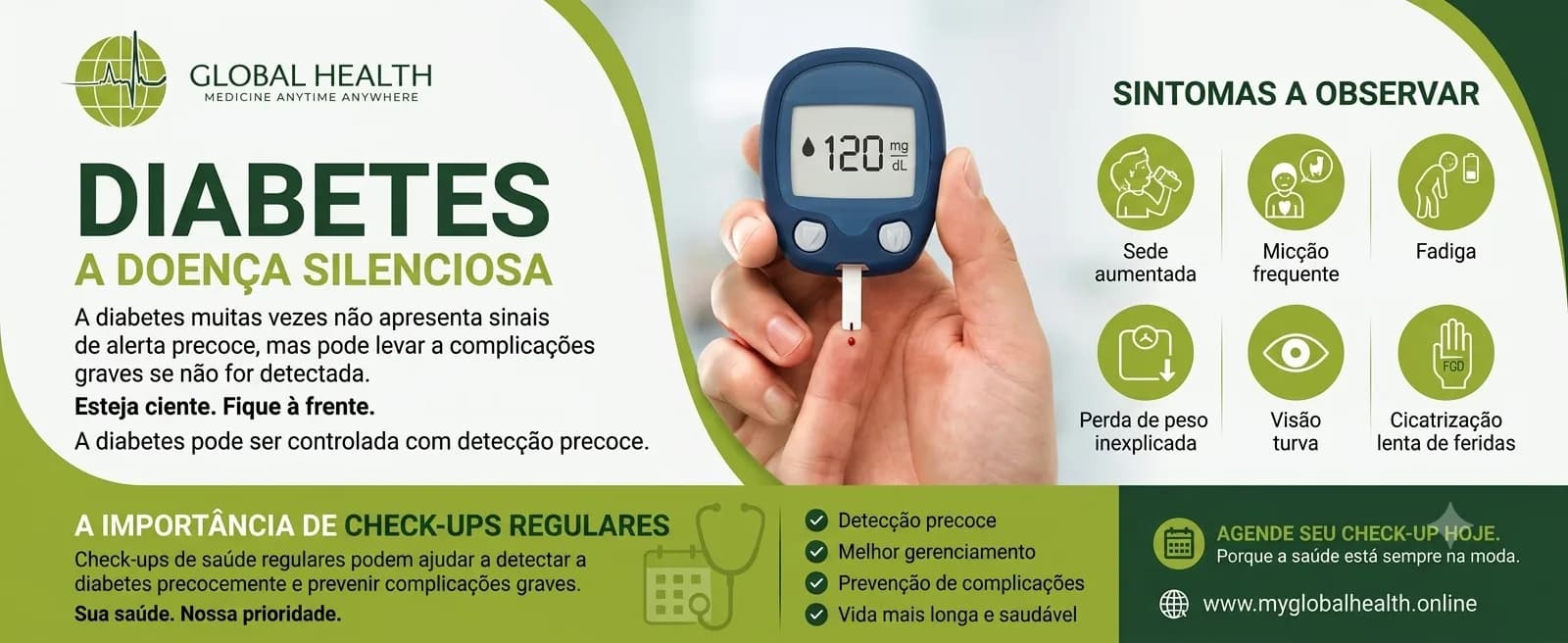
The most common signs include excessive thirst, frequent urination (especially at night), persistent fatigue, blurred vision, slow-healing wounds, constant hunger even after eating, and tingling or numbness in the hands and feet. Type 2 diabetes can develop slowly and silently, and according to the IDF, about 1 in 3 people with diabetes in Brazil don't know they have it. If you have risk factors, talk to your doctor about a fasting glucose or HbA1c test even if you have no symptoms.
What's the difference between type 1 and type 2 diabetes?
Type 1 diabetes is an autoimmune disease in which the immune system destroys the insulin-producing beta cells in the pancreas, requiring lifelong insulin therapy and usually appearing in childhood or early adulthood. Type 2 diabetes occurs when the body becomes resistant to insulin or doesn't produce enough of it, is strongly linked to lifestyle factors like diet, inactivity, and excess weight, and accounts for more than 90% of cases in Brazil. The two conditions have different causes, treatments, and clinical courses, although both require careful management to avoid complications.
What treatments for type 2 diabetes follow current guidelines in Brazil?
First-line treatment usually includes metformin alongside lifestyle changes. Newer drug classes, particularly GLP-1 agonists (such as semaglutide/Ozempic) and SGLT2 inhibitors (such as empagliflozin/Jardiance), have revolutionized treatment by lowering blood glucose while also protecting the heart and kidneys and promoting weight loss. The Ministry of Health's PCDT and the SBD and 2025 ADA guidelines recommend these classes for patients with established cardiovascular disease, heart failure, or chronic kidney disease. Treatment is always individualized, your doctor will tailor it to your specific profile.
How often should I see a doctor if I have diabetes in Brazil?
If you've been diagnosed with diabetes, you should have at least one structured annual checkup, including HbA1c, blood pressure, kidney function, cholesterol, weight, a foot exam, and a dilated eye exam. More frequent HbA1c checks (every 3 to 6 months) are recommended if glycemic control isn't adequate or if therapy has recently changed. Unlike some other countries, Brazil doesn't yet have a unified national retinopathy screening program, so it's worth booking your eye exam directly with an ophthalmologist or through SUS primary care.
Can diabetes go into remission?
Type 2 diabetes can, in some cases, go into remission, meaning near-normal blood glucose levels without medication, through significant weight loss, often achieved with very low-calorie diets or bariatric surgery. The DiRECT study showed remission in around 50% of participants after one year on a structured dietary program. This doesn't mean the underlying tendency is eliminated, remission requires sustained lifestyle changes to maintain. Type 1 diabetes currently has no cure, though stem cell therapies in clinical trials hold promise for restoring insulin production in the years ahead.
Can I see a doctor about diabetes online in Brazil?
Yes. Global Health offers online general practice consultations with CRM-registered doctors, including diabetes review visits, symptom assessment, medication review, and lab test requests (including HbA1c, fasting glucose, and a full metabolic panel). Digital prescriptions are issued in compliance with CFM regulations and are accepted directly at pharmacies across Brazil, when clinically appropriate. Book your consultation at myglobalhealth.online or reach out by email at globalhealth@myglobalhealth.online.
Have questions about diabetes? Talk to a doctor today.
Online general practice consultations with CRM-registered doctors. Digital prescriptions compliant with CFM regulations. Available in Portuguese, English, Spanish, and more.