No family doctor: what the numbers say and what your options are
Why so many people have no regular doctor, what official data show about how doctors are distributed and about the SUS queue, and where an online consultation with a General Practice Doctor fits in.
Anyone without a family doctor lives in a country with 575,930 active doctors who are poorly distributed: the state capitals hold 52% of them and 23% of the population. In the SUS (Sistema Único de Saúde, Brazil's public health system), access to specialists is regulated and there is a queue. An online consultation with a General Practice Doctor assesses your case and, when indicated, requests tests or refers you to a private specialist.
Understanding the picture
Why do so many people have no family doctor?
Having a regular doctor depends on where you live and on how the health network is organised.
In the SUS, Primary Care (Atenção Primária) is the preferred point of entry and the level that takes the main responsibility for coordinating care, according to the National Policy on Specialised Health Care (Portaria GM/MS nº 1.604/2023, a Ministry of Health ordinance). It takes on the coordination of care for the people in its area.
Having a regular doctor therefore depends on there being doctors near where a person lives. Data from the CFM (Conselho Federal de Medicina, the Federal Council of Medicine) show that how doctors are distributed matters as much as how many there are.
Source: Portaria GM/MS nº 1.604/2023 (Official Gazette of 20/10/2023).
CFM data
Is the shortage of doctors about numbers or about distribution?
CFM data show a country with more doctors than ever, but concentrated in a few regions.
The Demografia Médica 2024 (Medical Demography), published by the Federal Council of Medicine on 15 October 2024, counted 575,930 active doctors in Brazil, with data updated to January 2024. In the early 1990s there were 131,278. In most states the number of doctors doubled between 2010 and 2024.
Even so, the shortage shows up where the numbers are lower. The same survey shows large differences:
| Area | Doctors per thousand inhabitants |
|---|---|
| Southeast region | 3.76 |
| Northeast region | 2.22 |
| North region | 1.73 |
| Capitals (23% of the population, 52% of doctors) | about 7 |
| Interior (77% of the population, 48% of doctors) | about 1.9 |
Among the federative units, the Federal District has the highest density, with 6.3 doctors per thousand inhabitants, and Maranhão has 1.3. In other words, people who live in the interior or in the North and Northeast have fewer doctors per inhabitant.
Source: CFM, Demografia Médica 2024.
Training and staffing
How many family and community doctors does Brazil train?
The specialty has grown a lot, but it started from a low base.
According to a Ministry of Health presentation from December 2025 that cites the Demografia Médica no Brasil 2025, specialists in family and community medicine rose from 2,392 in 2011 to 15,542 in 2024. The increase was 549.7%, or 13,150 doctors in 13 years, attributed to the expansion of residency programmes and grants.
The same presentation covers the federal programmes that place doctors in Primary Care, such as Mais Médicos ("More Doctors"). In May 2025, the programme had potential coverage of 63,726,250 inhabitants, with 4,274 municipalities with filled posts, equal to 82.5% of the municipalities with active vacancies.
In other words, the federal government recognises the problem and is acting on it, but training family doctors takes years. In the meantime, many people still have no regular doctor.
Source: Ministry of Health (SGTES), presentation on federal placement of doctors in Primary Care, Dec. 2025.
Specialist care
How does the SUS queue for a specialist appointment work?
In the SUS, access to specialist care is regulated, and waiting times vary.
Portaria GM/MS nº 1.604/2023 provides that regulated access must use clinical prioritisation criteria, which assess risks and vulnerabilities, and that regulation is regional, under the responsibility of the state, district or municipal manager. In other words, the order in which people are seen depends on regulation and clinical criteria, and not only on the date of the request.
In May 2025, the Ministry of Health launched Agora Tem Especialistas ("Specialists Now"), with joint efforts to clear backlogs, mobile units and expanded telehealth, to reduce waiting times for appointments, tests and surgery. In June 2026, the assessment by the Federal Court of Accounts (Tribunal de Contas da União, TCU) found that the outpatient component was at an early stage: in 2025 only 6.9% of what states and municipalities had planned was carried out. The TCU also noted that queues are hard to monitor, because many municipalities cannot connect their data to the federal system.
The official sources I read give no national waiting time for a specialist appointment, so this article does not quote a figure. The SUS queue for appointments varies by region, specialty and clinical priority.
Sources: Ministry of Health, launch of Agora Tem Especialistas; TCU, assessment of the programme.
The Global Health option
How does an online GP consultation help people with no regular doctor?
An online GP consultation gives you a medical assessment by video, without depending on a place in a network.
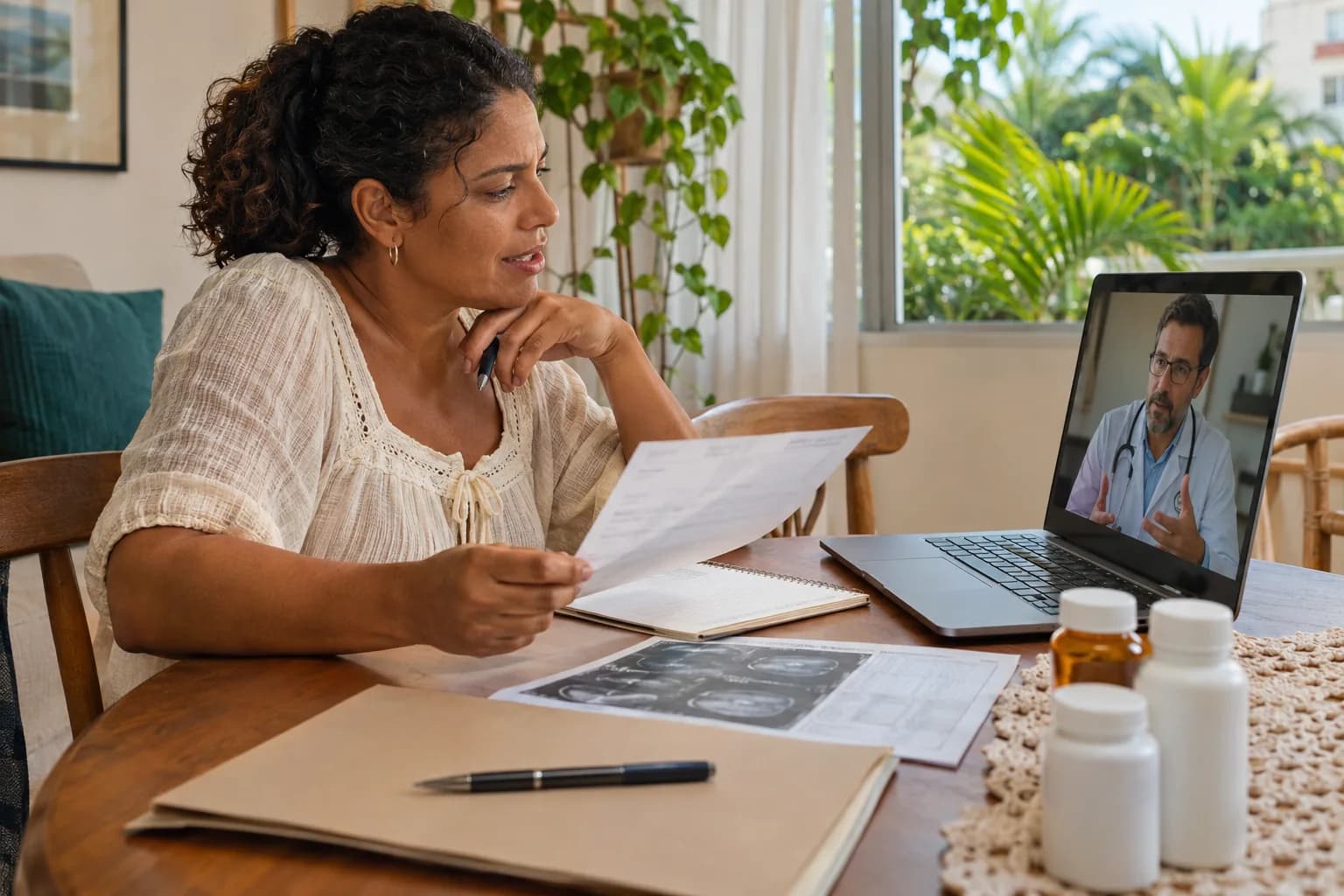
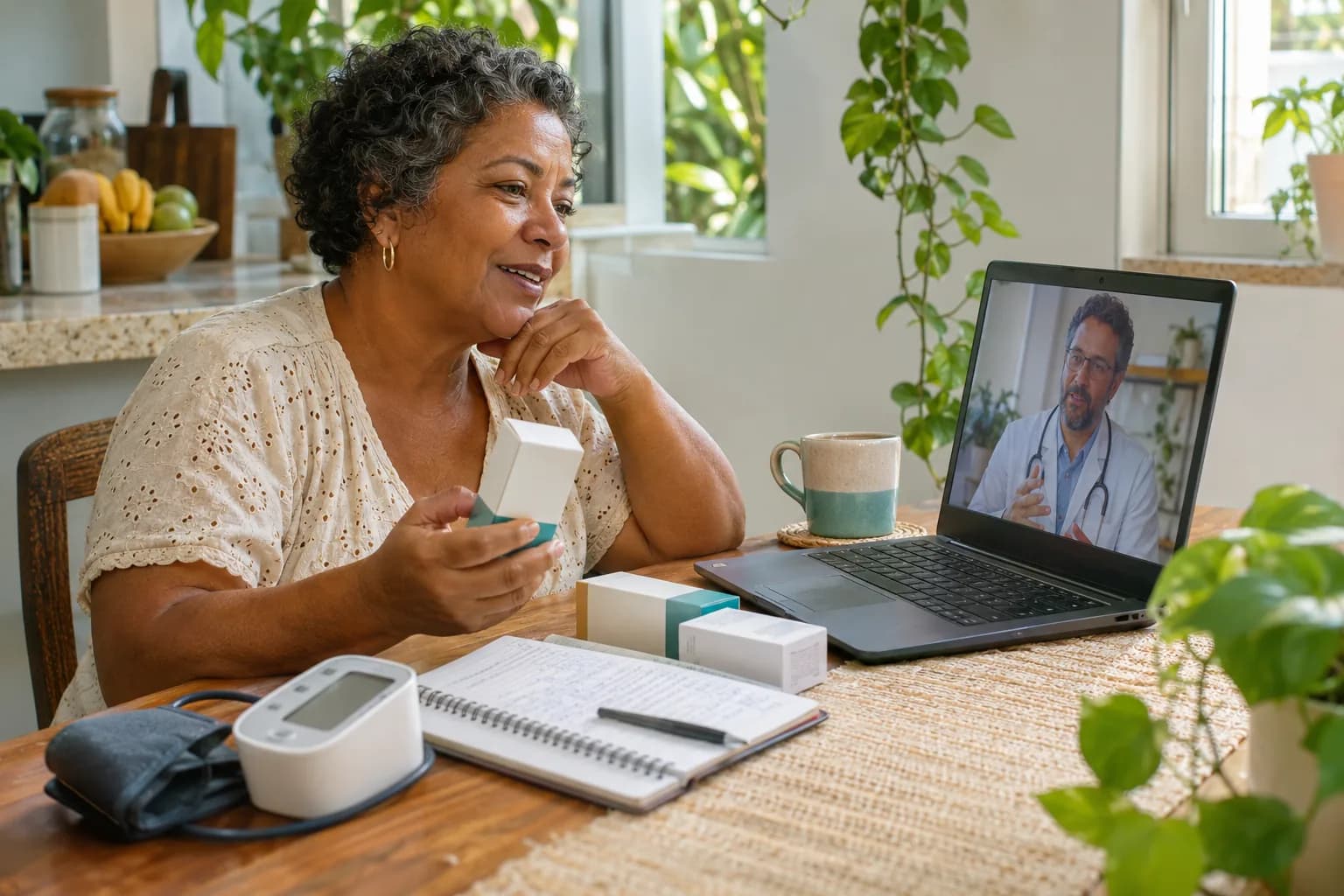
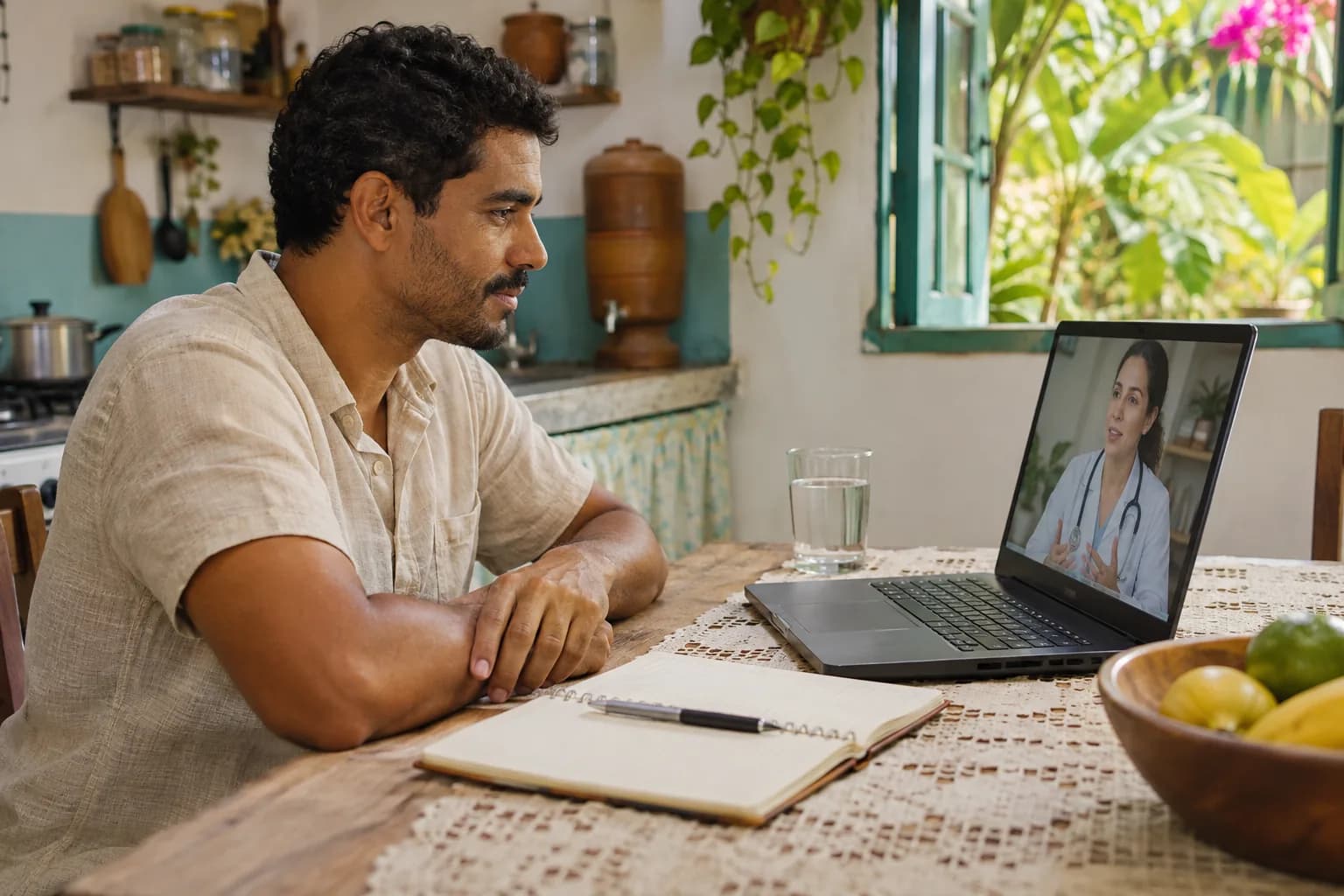
The online GP consultation is a video call of up to 30 minutes with a General Practice Doctor, in Portuguese, English or Spanish, with no health plan and with direct payment. The doctor takes your medical history, reviews the medicines you take and considers your personal and family history. Then the doctor advises on your case.
When clinically indicated and at the doctor's discretion, the service page states that the doctor can issue:
- a medical certificate, if the doctor judges it necessary; the consultation does not guarantee that the document will be issued or accepted;
- a digital treatment plan;
- requests for laboratory and imaging tests at private laboratories and clinics;
- a referral to a private specialist, with the clinical documentation;
- a follow-up, for acute cases, test results and treatment adjustments.
In other words, the online consultation organises the first step of care. The doctor assesses you, requests tests and says whether you need a specialist.
The service page also states that it complements the SUS and does not replace it, and that it does not cover SUS referrals.
CFM rules
What can telemedicine with a GP resolve, and what needs an in-person examination?
CFM Resolution nº 2.314/2022 allows teleconsultation and sets limits.
The resolution, dated 20 April 2022, defines teleconsultation as a remote medical consultation mediated by digital technologies. It allows the doctor-patient relationship to begin virtually, at the first consultation, if the technical conditions and good medical practice are respected, and provides for in-person follow-up.
- the in-person consultation is the reference standard, and telemedicine is a complementary act;
- the doctor must tell you that a teleconsultation does not allow a full physical examination and may ask you to attend in person;
- in chronic or long-term conditions, there must be an in-person consultation at intervals of up to 180 days.
The clinical consultation page also lists what the service does not cover: emergencies, INSS (the national social security institute) medical assessments, invasive procedures and other acts that need an in-person assessment. An online GP is a point of support, not a substitute for a physical examination.
Source: CFM, news item on Resolution 2.314/2022; arts. 1 and 6 in copy of the resolution.
Prices and rules
How much does an online GP consultation cost and how do you book it?
The online GP consultation costs R$ 249, and Global Health online consultations start at R$ 199.
You book on the website, with secure payment through Stripe and confirmation by email. The video call works on a phone, tablet or computer, with no app to download. The service includes a summary of the consultation.
The service page states that booking is available the same day in most cases. Free slots appear when you book.
- cancelling 24 hours or more in advance gives a full refund;
- cancelling less than 24 hours in advance gives no refund, except in a documented medical emergency;
- you can reschedule once, at no cost, up to 12 hours before the consultation.
Safety
When should you not wait for a booked appointment?
Warning signs do not wait for a place in a queue or for an appointment.
Next step
Carry on with the right care
For a medical assessment by video, with tests requested and a referral to a private specialist when indicated, start with the online GP consultation.
- Online GP Consultation
- Online doctor consultation in Brazil
- Book a consultation
- Doctors available in Brazil
No regular doctor?
In the online GP consultation, the General Practice Doctor assesses your case, reviews your medicines and, when indicated, requests tests or coordinates a referral to a private specialist. The consultation costs R$ 249; online consultations start at R$ 199.
References
Sources consulted
Sources checked on 10 November 2026.
The article summarises data from the CFM, the Ministry of Health and the TCU, and the Global Health service pages. Where the sources give no figure, the text says so. It does not replace a medical assessment.
Questions
Frequently asked questions about having no family doctor
Is there a shortage of family doctors in Brazil?
CFM data show 575,930 active doctors, but poorly distributed: the capitals have about 7 per thousand inhabitants and the interior about 1.9. Family and community medicine grew from 2,392 to 15,542 specialists between 2011 and 2024, according to the Ministry of Health.
How long is the SUS queue for a specialist appointment?
The official sources I consulted give no national waiting time for a specialist appointment, and the TCU noted difficulty in monitoring the queues. The time varies by region, specialty and clinical priority, which is set by regulation.
Is there an online doctor available 24 hours?
The Global Health clinical consultation page does not advertise 24-hour care. The consultation is booked, free slots appear when you book and the service states same-day availability in most cases. An online consultation is not for emergencies.
Can an online GP consultation request tests and refer you to a specialist?
Yes, when clinically indicated and at the doctor's discretion. The service page states that the doctor can request tests at private laboratories and clinics and coordinate a referral to a private specialist. The service does not cover SUS referrals.
Does an online consultation replace in-person follow-up?
No. CFM Resolution nº 2.314/2022 treats the in-person consultation as the reference standard and telemedicine as a complementary act. In chronic conditions, there must be an in-person consultation at intervals of up to 180 days.