
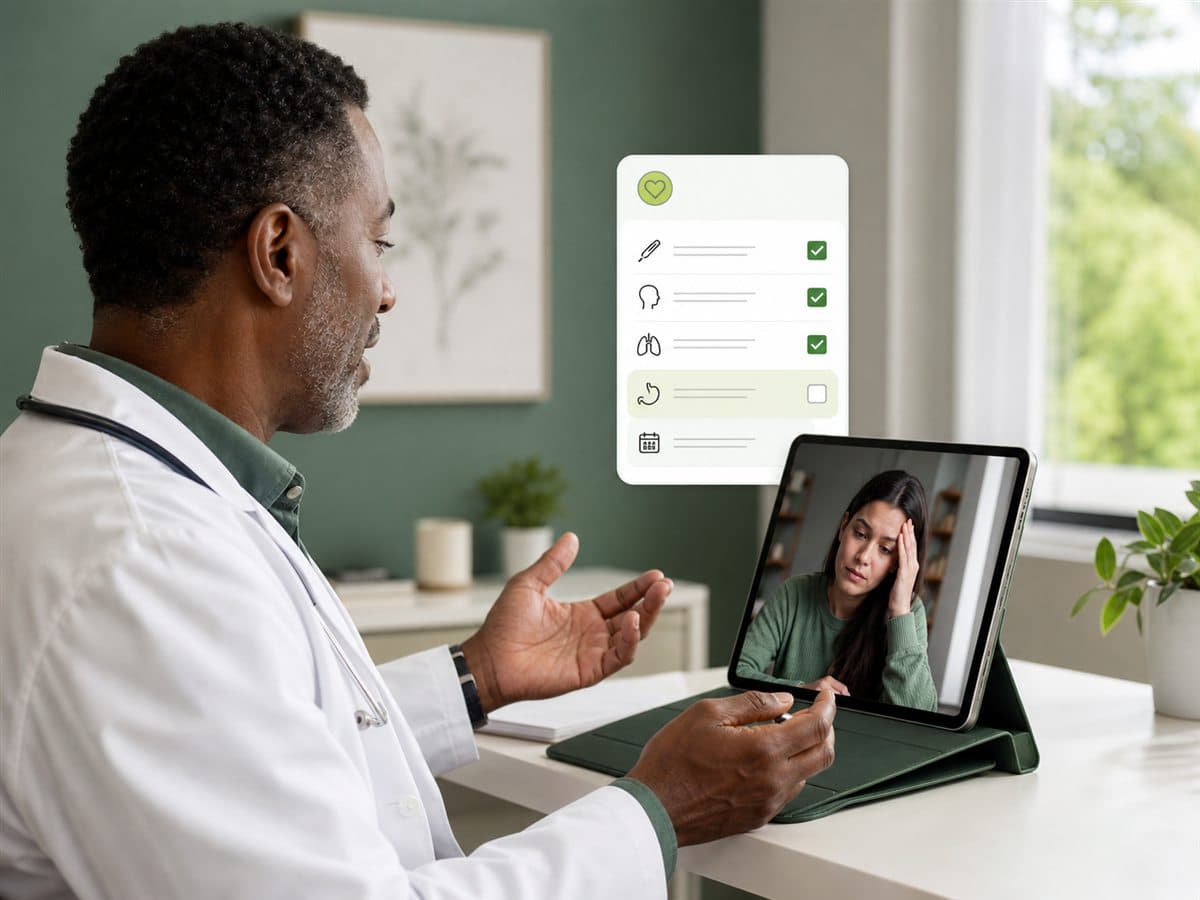
Migraine assessment, online
Migraine is more than a headache. It deserves a proper clinical check. Our Irish-registered doctors look at your headache pattern, triggers, and history by secure video call. Then they advise on how to manage and prevent it.
Your symptoms may point to something that needs a specialist or more tests. If so, we arrange a neurology referral and the right next steps.
Is it migraine or a headache?
An ordinary headache is a nuisance. A migraine attack usually stops you in your tracks. The HSE describes the main symptom as a moderate or severe throbbing pain, often on one side of the head, that gets worse when you move. It often comes with:
- feeling sick or being sick
- sensitivity to light, sound, smells or movement
- sweating, feeling very hot or cold, dizziness or tummy pain
- poor concentration and tiredness
An attack usually lasts between 4 hours and 3 days, and many people feel washed out for a day or more afterwards. Some people have attacks a few times a year. Others have several a month.
Doctors talk about migraine without aura (the most common type), migraine with aura, and silent migraine, where the aura or other symptoms come without the headache.
Migraine aura: the warning signs
About 1 in 3 people with migraine get an aura before the pain starts. It usually builds over about 5 minutes and lasts up to an hour. Typical aura symptoms are:
- flashing lights, zig-zag patterns or blind spots in your vision
- pins and needles that start in one hand and spread up the arm to the face, lips or tongue
- feeling dizzy or off balance
- difficulty speaking
Aura that is part of a known migraine pattern passes within the hour. If an aura lasts more than an hour, or if you have weakness on one side of your body or slurred speech, do not assume it is migraine. Get urgent help first (see below).
What triggers migraine?
Nobody knows exactly what causes migraine. Genes play a part: around half of people with migraine have a close relative who has it too. The HSE says it affects around 1 in 5 women and 1 in 15 men, and usually starts in early adulthood.
Many people notice that certain things set off an attack. Stress is a common one. The WHO also mentions alcohol, disrupted sleep and certain foods. Missing meals, not drinking enough water and too much caffeine are worth looking at too. Triggers differ from person to person, which is why a diary helps (see below).
Treating attacks without overusing painkillers
There is no cure for migraine, but treatment can make attacks less frequent and easier to manage. During an attack, it often helps to lie down in a dark, quiet room, drink water, and use a cold or warm pack.
For medicines, the HSE suggests:
- Over-the-counter painkillers such as paracetamol, aspirin or ibuprofen. Take them at the first sign of an attack, as they work less well if you wait. Soluble versions may work faster. Avoid painkillers that contain codeine.
- Triptans, a medicine for migraine available on a doctor's recommendation. They are taken when the headache starts, as tablets, nasal sprays or injections.
- Anti-sickness medicines, which also help your body absorb painkillers.
Be careful not to take painkillers too often. The HSE advises against using the maximum dose on more than 2 days a week, and against taking painkillers on more than 10 days a month over the long term. Doing so can cause a medication overuse headache, which makes migraine harder to treat.
If you have frequent attacks, a preventive medicine taken every day may help. Examples include propranolol and topiramate. They can take several weeks to work. Topiramate can make hormonal contraceptives less effective and can harm an unborn baby, so tell your doctor if you could become pregnant. When preventive medicines do not help, your GP can refer you to a migraine clinic, which may offer other options such as anti-wrinkle injections or CGRP treatments. Do not give aspirin to children under 16 without a doctor's advice.
Keep a migraine diary
There is no scan or blood test that diagnoses migraine. Tests can still be part of the diagnosis, because it is important to rule out other causes of headache. Your doctor relies mainly on your description, so a diary kept for at least 4 weeks is one of the most useful things you can bring. Note:
- the date and time each attack started, and how long it lasted
- what you were doing when it began
- your symptoms, including any aura
- which medicines you took, the dose, and whether they helped
- when your last period was, if relevant
Our article on using a headache diary before your appointment has a simple template.
What an online doctor can and cannot do
Because migraine is diagnosed mainly from your history, a video consultation is a good place to start. Your doctor can:
- take a detailed history and go through your diary
- tell you whether your pattern fits migraine or something else
- advise on treating attacks and on prevention, and recommend treatment where clinically appropriate
- check whether you are overusing painkillers
- refer you to a neurologist if the diagnosis is unclear, you have headaches on 15 or more days a month, treatment is not working, or you develop new symptoms
What video cannot do is a full neurological examination. A GP in person may check your vision, coordination, reflexes and sensation to rule out other causes. If your doctor thinks you need that, they will say so and tell you where to go.
When it is an emergency
Call 112 or 999 and ask for an ambulance if you or someone else has:
- weakness or paralysis in one or both arms, or one side of the face
- slurred or garbled speech
- a sudden, very painful headache unlike anything before
- a headache with a high temperature, stiff neck, confusion, seizures, double vision or a rash
See a GP (online or in person) if your migraines are severe and over-the-counter painkillers do not help, or if you have more than 5 attacks a month.
Support for migraine in Ireland
The Migraine Association of Ireland offers information and support. If your family spends more than €80 a month on approved medicines, the Drugs Payment Scheme caps what you pay. The HSE also runs Living Well, a free self-management programme for people with long-term conditions, with workshops and resources to help you manage your condition day to day.
If you are pregnant or breastfeeding, try to limit migraine medicines and focus on avoiding triggers. If you need medicine, ask your GP what is safe.
Book an assessment
Have an Irish-registered doctor check your migraines.
See a Doctor Online (GP Consultation)
Neurology Specialist Consultation
Sources
- Migraine (overview) (HSE)
- Symptoms of migraine (HSE)
- Migraine and other headache disorders (WHO)
- Treating and preventing migraine (HSE)
- Diagnosing migraine (HSE)
- Migraine (NHS)