
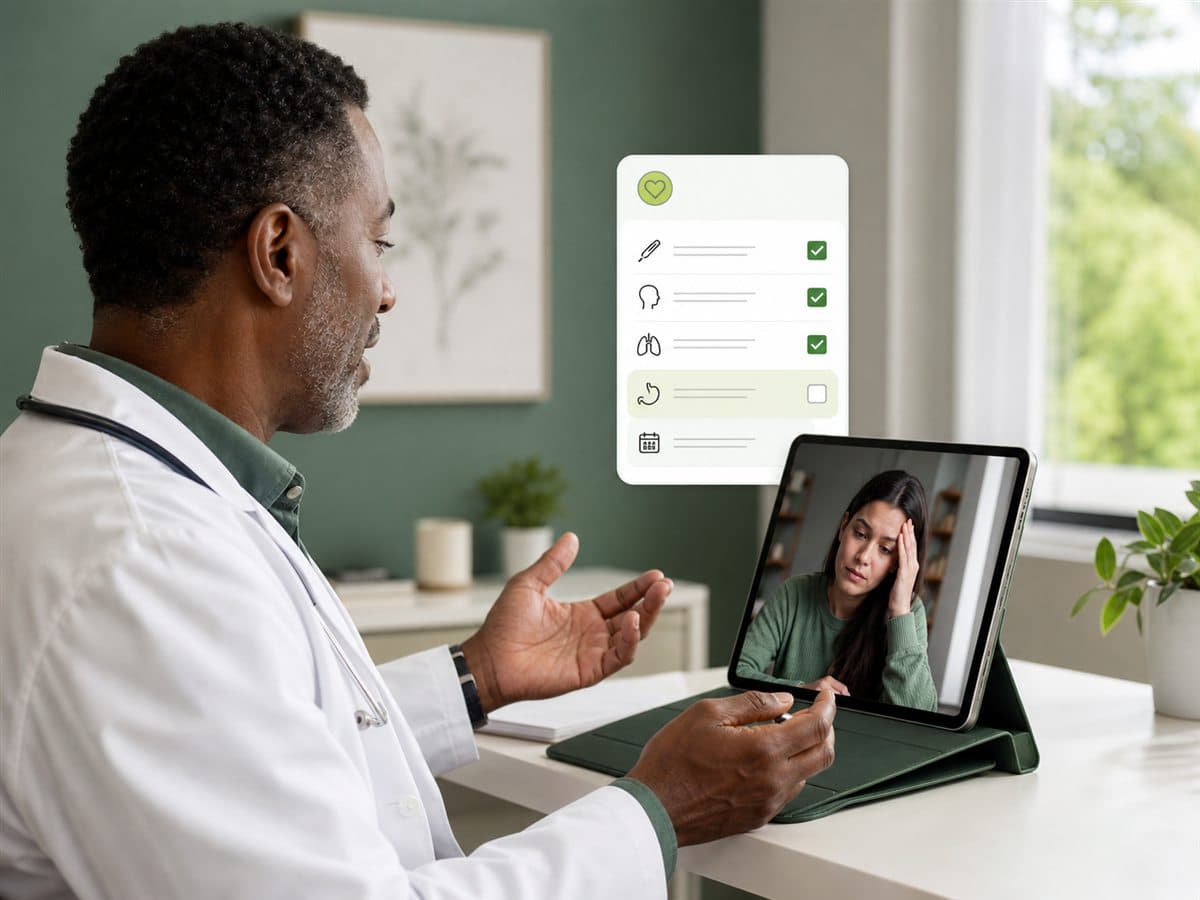
Manage high blood pressure from home
High blood pressure can be asymptomatic, with no symptoms at all, which is exactly why it needs regular review. Our Irish-registered doctors assess your readings, medication, and cardiovascular risk via secure video call — and tell you clearly when something needs to change.
Hypertension is best managed as part of ongoing care rather than a one-off visit. Where your blood pressure is stable, we review and continue your plan; where it is not, we escalate, adjust, or arrange investigations and specialist referral.
What counts as high blood pressure?
A blood pressure reading has two numbers. The top one (systolic) is the pressure when your heart pushes blood out. The bottom one (diastolic) is the pressure while your heart rests between beats. So a reading of 140/90 means 140 systolic and 90 diastolic, both measured in mmHg.
As a general guide, the HSE uses these figures:
- High blood pressure: 140/90 or higher when measured at a surgery or pharmacy, or an average of 135/85 or higher at home.
- If you are over 80: 150/90 or higher at the surgery, or an average of 145/85 or higher at home.
- Ideal: usually between 90/60 and 120/80.
- In between: readings between 120/80 and 140/90 can mean you are at risk of developing high blood pressure if nothing changes.
One high reading does not mean you have hypertension. Blood pressure moves up and down through the day, and feeling anxious at an appointment can push it up. That is why a diagnosis rests on repeated readings, often taken at home or with a 24-hour monitor. You can compare your own numbers with our blood pressure chart.
Why you may feel nothing
High blood pressure may not cause any symptoms. Plenty of people feel completely well while their readings creep up for years. The only way to know is to have it checked. The HSE advises a check at least once a year if you are 40 or older, and at least every five years if you are 18 to 39, healthy, and have no family history of high blood pressure.
Very high blood pressure is different. According to the WHO, readings of around 180/120 or higher can cause severe headaches, chest pain, dizziness, difficulty breathing, nausea or vomiting, blurred vision, confusion, nosebleeds or an irregular heartbeat. If you have any of these symptoms along with a high reading, get care immediately.
What causes high blood pressure?
In most people there is no single cause. Instead, several things add up. The HSE lists these as raising your risk:
- getting older
- a family history of high blood pressure
- a lot of salt in your food
- not getting enough exercise
- being overweight
- regularly drinking a lot of alcohol
- eating a lot of liquorice
- smoking
- long-term lack of sleep, or obstructive sleep apnoea
- anxiety and long-term stress, which are very common
- your ethnic background: the risk is higher if you have a Black African, Black Caribbean or South Asian background
In about 1 in 20 cases, high blood pressure happens because of another health condition or a medicine you take. Tell your doctor about every medicine and supplement you use, so this can be checked.
Checking your blood pressure at home
Home readings give a truer picture than a single reading at the surgery. They are also what your doctor needs to see in an online review. The HSE suggests this routine:
- Sit down for at least 5 minutes first, with your back supported and your legs uncrossed.
- Rest your arm on a cushion or chair arm so the cuff is level with your heart. Try not to talk.
- Measure twice a day, morning and evening. Each time, take 2 readings 1 minute apart.
- Keep this up for 7 days. Your doctor works out your average from those readings.
Use a monitor that has been properly tested. The non-profit STRIDE-BP keeps a list of validated home devices. Write the readings down or keep them on your phone, and have them in front of you when your consultation starts.
Lifestyle first, medicine when it is needed
Everyone with high blood pressure is advised to make lifestyle changes. Whether you also need medicine depends on your readings and on your overall risk of heart attack and stroke. The HSE advises that if your blood pressure stays above 140/90 (135/85 at home):
- and your risk of other problems is low, you will be advised to make lifestyle changes
- and your risk is high, you will be offered medicine as well
- above 160/100, you will be offered medicine whatever your other risks
The changes that help most are cutting salt to under 6g a day (about one teaspoon), eating plenty of fruit and vegetables, staying active, drinking less alcohol and caffeine, losing weight if you need to, stopping smoking and getting at least 6 hours of sleep. Some of these lower blood pressure within weeks.
If you need medicine, people under 55 are usually offered an ACE inhibitor or an ARB. People 55 or older are usually offered a calcium channel blocker, an ACE inhibitor, or both. Your ethnic background matters too, because some blood pressure medicines work differently in different groups. If you are of Black African or African-Caribbean family origin, a calcium channel blocker is usually the first choice at any age, unless you also have type 2 diabetes. Many people take blood pressure medicine for life, although some can reduce or stop it after several years of good control. If a tablet gives you side effects, such as the dry cough some people get with ACE inhibitors, do not just stop it. Talk to your doctor, who can switch you to something else.
What an online doctor can and cannot do
A video consultation suits most of the routine work of managing blood pressure. Your doctor can:
- go through your home readings and work out whether your blood pressure is controlled
- review your current medicines, side effects and how you are taking them
- talk through the lifestyle changes that matter most for you
- review ongoing treatment where it is clinically appropriate
- arrange a referral for tests or a specialist opinion when your readings or symptoms call for one
There are also things video cannot do. Your doctor cannot measure your blood pressure through the screen, listen to your heart, or take the blood and urine tests that are used to check your kidneys and your overall risk. If you have not had those tests recently, your doctor will tell you which ones you need and where to get them. If your doctor needs to measure your blood pressure or listen to your heart and this is not possible by video, you will be told plainly and directed to in-person care.
When to get help urgently
Call 112 or 999 straight away if you have chest pain or a heavy, tight feeling in your chest, or pain that spreads to your arms, back, neck or jaw. These can be signs of a heart attack. Call too if you suddenly become confused.
Call 112 or 999 too if someone has signs of a stroke. The HSE lists three to check: their face has dropped on one side and they cannot smile, they cannot lift both arms and keep them there, or their speech is slurred or garbled.
If your home monitor shows a very high reading (around 180/120 or above) and you also have a severe headache, blurred vision, breathlessness or chest pain, treat it as an emergency. If your reading is that high but you feel well, rest for several minutes and measure again. If it stays that high, get medical help. If it comes down, still tell your doctor what happened.
Your blood pressure care in Ireland
You can ask for a blood pressure check at any time. You do not have to wait to be offered one. Checks are available at GP surgeries, some pharmacies, some workplaces and health events.
The HSE also runs a Chronic Disease Management Programme in general practice. Its prevention strand enrols people at risk of heart disease or diabetes, so ask your GP whether you qualify. Online care works alongside that, not instead of it. It is useful between visits, when you have new readings to review or a question about a side effect, or when getting to the surgery is hard. Where it helps, your doctor can give you a clinical summary to share with your regular GP.
Book your review
Speak with an Irish-registered doctor today.
Chronic Disease & Ongoing Care Consultation
Cardiology Specialist Consultation
Need to be seen for a new or sudden problem? Book a GP Consultation Online.
Sources
- High blood pressure, symptoms and diagnosis (HSE)
- High blood pressure (overview) (HSE)
- Hypertension fact sheet (WHO)
- High blood pressure (NHS)
- High blood pressure, treatment (HSE)
- Hypertension in adults, recommendations 1.4.30-1.4.35 (NICE NG136)
- Shortness of breath (HSE)
- Stroke (HSE)
- First report of the Chronic Disease Management Prevention Programme in general practice (HSE)