
Take control of your blood pressure from home
High blood pressure may cause no symptoms, and that is precisely why it needs regular review. Our doctors registered with the Ordem dos Médicos assess your readings, medication, and cardiovascular risk by secure video call — and tell you clearly when something needs to change.
Hypertension is best managed as ongoing follow-up rather than as a one-off appointment. When your blood pressure is stable, we review and keep the plan; when it is not, we adjust it, coordinate tests, or refer you to cardiology.
See our blood pressure chart to compare your readings.
What readings count as high blood pressure?
Blood pressure (which the DGS guidelines call pressão arterial rather than tensão arterial) is given as two numbers. The top number, or systolic pressure, is the pressure when the heart pumps blood. The bottom number, or diastolic pressure, is the pressure when the heart rests between beats. A reading of 140/90 means 140 on top and 90 on the bottom, in mmHg.
According to the World Health Organization, hypertension is present when the top number is 140 or higher and/or the bottom number is 90 or higher, on readings taken on two different days. That is why so-called high diastolic pressure also counts: a bottom number of 90 or more, even with a normal top number, deserves assessment.
DGS Norma 001/2026 divides blood pressure measured in the clinic into three groups: non-elevated (below 120/70), elevated blood pressure (from 120/70 to below 140/90, which is not yet hypertension) and hypertension (140/90 or higher). For readings taken at home, the hypertension threshold is lower: 135/85 or higher. On a 24-hour recording with an automatic device (ambulatory blood pressure monitoring, known in Portugal as MAPA) it is 130/80 or higher.
A single high reading is not enough for a diagnosis. Blood pressure varies throughout the day and rises with the nervousness of an appointment. The doctor relies on several readings, often taken at home or with a device that records your blood pressure over 24 hours (MAPA).
Why you may not feel anything
Hypertension may cause no symptoms. Many people feel well for years while their readings rise. The only way to know is to measure. DGS Norma 001/2026 recommends measuring blood pressure at least every 3 years up to the age of 40 and every year from the age of 40.
When hypertension does cause symptoms, it is usually late. SNS 24 mentions headaches, dizziness, ringing in the ears, palpitations, chest pain or shortness of breath.
Very high blood pressure is different. The WHO notes that readings of around 180/120 or higher can cause a severe headache, chest pain, dizziness, shortness of breath, nausea or vomiting, blurred vision, confusion, ringing in the ears, nosebleeds or an irregular heart rhythm. If you have any of these symptoms with high blood pressure, seek help immediately.
What increases the risk
In most cases there is no single cause. Several factors add up. The WHO lists these as factors you can change:
- eating a lot of salt and a lot of saturated fat
- eating little fruit and few vegetables
- doing little physical activity
- anxiety and lack of sleep
- smoking and drinking alcohol
- being overweight
And as factors you cannot change: having relatives with hypertension, being over 65 and having other conditions, such as diabetes or kidney disease.
Some medicines and substances also raise blood pressure. SNS 24 mentions oral contraceptives, nasal decongestants, anti-inflammatories and some dietary supplements. Tell the doctor everything you take, including anything you buy over the counter.
How to measure your blood pressure at home
Home readings give a more accurate picture than a single reading at the health centre (centro de saúde). They are also what the doctor needs to see in an online consultation. The DGS and SNS 24 recommend:
- Use a validated device, with a cuff that is the right size for your arm. Your doctor or pharmacist can confirm whether the device is suitable.
- Do not smoke or drink coffee before measuring. Sit down and rest for at least 5 minutes, with your back supported, your arm supported and the cuff at heart level. Do not talk during the measurement.
- Take three readings 1 to 2 minutes apart and record the average of the last two.
- Always measure on the arm where your blood pressure is higher. At the first consultation, the doctor measures both arms to find out which one it is.
- Write down all your readings, on paper or on your phone, and have them to hand when the consultation starts. The doctor will tell you for how many days you should measure.
Lifestyle first, medication when it is needed
Everyone with high blood pressure benefits from changing some habits. DGS Norma 001/2026 and the WHO recommend:
- less salt: under 5 g a day, less than one level teaspoon
- a varied, Mediterranean-style diet, with fruit, vegetables, pulses and whole grains and little fat
- at least 150 minutes a week of moderate exercise, such as brisk walking
- less alcohol, under 100 g a week, or none
- stopping smoking
- keeping a normal weight, with a BMI between 20 and 25
- avoiding energy drinks; coffee on its own does not increase cardiovascular risk
If you need medication, the DGS recommends that most people start with two medicines at a low dose, preferably in a single tablet. The first-line options are ACE inhibitors or angiotensin II receptor blockers (ARBs), calcium channel blockers and thiazide diuretics. For most people, the target is a top number between 120 and 129 and a bottom number between 70 and 79. If a medicine causes side effects, do not stop it on your own: talk to the doctor, who can adjust or change the treatment.
If you smoke and want to quit, our stop smoking consultation can help.
What an online doctor can and cannot do
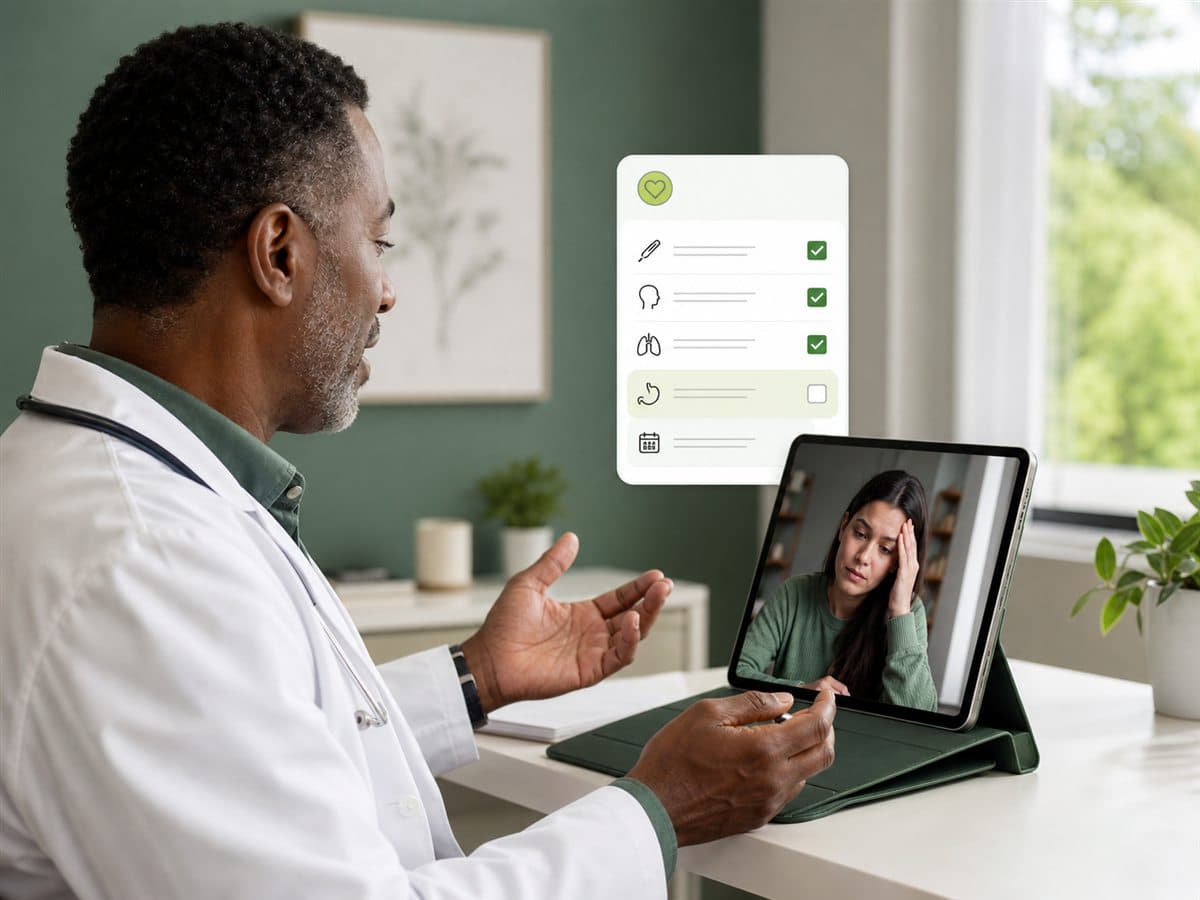
A video consultation works well for much of hypertension follow-up. The doctor can:
- review the readings you have taken at home and work out whether your blood pressure is under control
- review your medication, any side effects and how you are taking it
- help you choose the lifestyle changes that matter most in your case
- renew your treatment when clinically appropriate
- request lab tests, investigations or a referral to a specialist
There are things a screen does not allow. The doctor cannot measure your blood pressure, listen to your heart or take samples for any lab tests you may need. If an in-person examination is needed, you will be told clearly and referred.
When to seek urgent help
Call 112 immediately if you have chest pain or tightness that does not go away, or sudden shortness of breath. Also call 112 if someone shows signs of a stroke. SNS 24 highlights three: a drooping mouth (facial paralysis), difficulty speaking or loss of speech, and loss of strength in an arm or a leg. The sooner you call, the sooner the stroke fast-track pathway (Via Verde do AVC) is activated.
If your device shows very high readings (around 180/120 or higher) and you have a severe headache, blurred vision, shortness of breath or chest pain, treat it as an emergency and call 112. If you have no emergency signs but are unsure, call the SNS 24 helpline (808 24 24 24). The helpline assesses the situation and directs you to the most appropriate health facility.
Hypertension within and outside the SNS
Blood pressure can be measured in the clinic, at home or with a 24-hour recording (MAPA). If you buy a device to use at home, SNS 24 recommends checking with your doctor or pharmacist that it is a validated device.
An online consultation does not replace follow-up at your health centre: it complements it. It is useful between appointments, when you have new readings to review or questions about a side effect, when you have not been assigned a family doctor (médico de família) or when it is difficult for you to travel. If helpful, the doctor can give you a clinical summary to share with your family doctor.
Book your appointment
Speak today with a doctor registered with the Ordem dos Médicos.
General and Family Medicine Consultation
Sources
- Hypertension fact sheet (WHO)
- Norma 001/2026, hipertensão arterial (DGS)
- Hipertensão arterial (SNS 24)
- Acidente Vascular Cerebral (AVC) (SNS 24)
- Sobre nós (Linha SNS 24, 808 24 24 24) (SNS 24)