
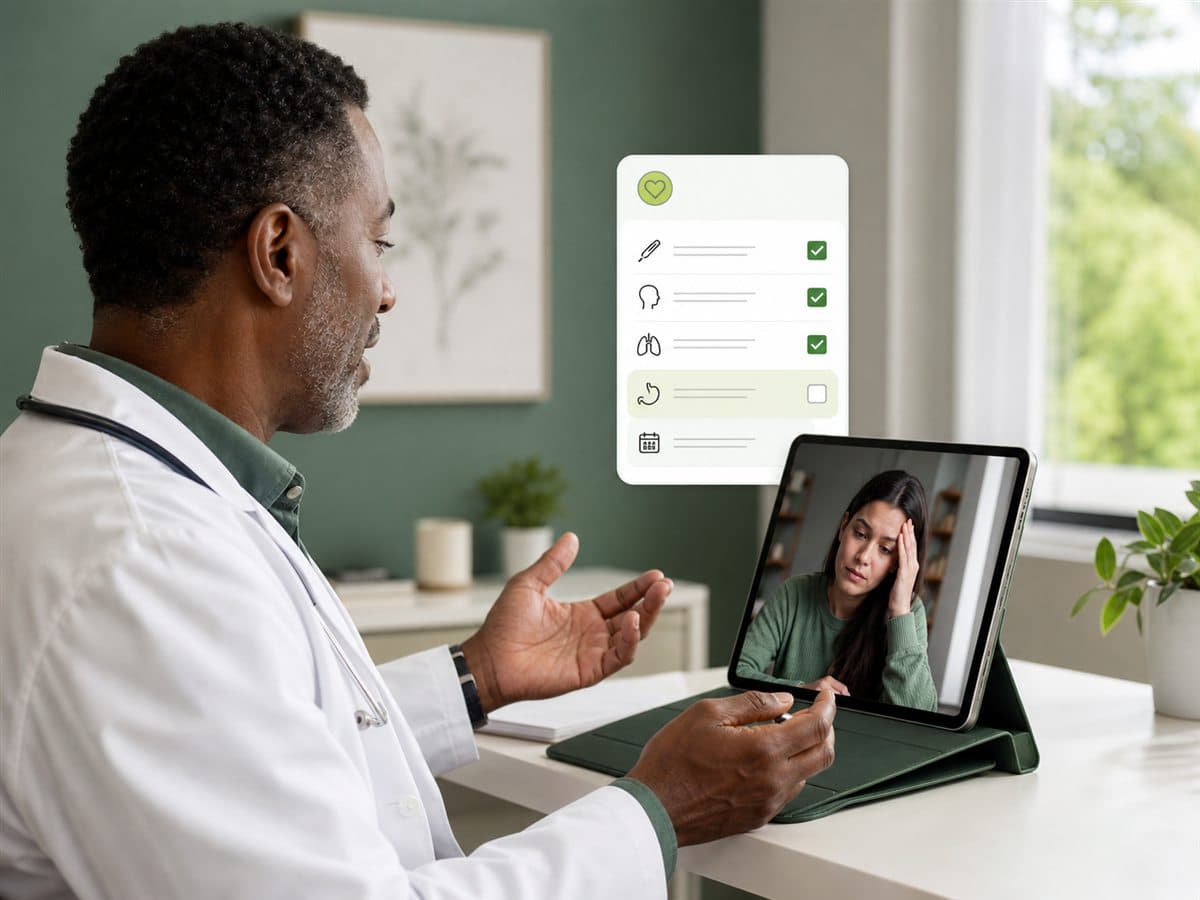
Ongoing diabetes follow-up, online
Diabetes is a condition you live with every day, and good control depends on regular, structured review. Our doctors registered with the Ordem dos Médicos assess your blood glucose control, medication, and overall risk by secure video call, and coordinate tests or specialist support when needed.
This is structured clinical follow-up — not an automatic renewal. If your control has changed or new symptoms have appeared, we assess them appropriately.
Symptoms of diabetes
Type 2 diabetes develops slowly and the first signs are easily mistaken for everyday tiredness. SNS 24 and the WHO list these symptoms:
- feeling very thirsty and having a dry mouth
- feeling hungrier than usual
- passing urine more often than usual
- blurred vision
- extreme tiredness
- losing weight without trying (suddenly, in type 1 diabetes)
In type 2, these symptoms can be so mild that they go unnoticed for years. That is why many people only find out they have diabetes when complications have already developed. If you recognise yourself in this list, or if you have risk factors that the WHO links to type 2 diabetes, such as being overweight, doing little physical activity or having relatives with diabetes, talk to a doctor about having tests.
How it is diagnosed
Diabetes is diagnosed with blood tests. According to DGS Norma 002/2011, diabetes is present when one of these results is found:
- fasting blood glucose of 126 mg/dl or higher
- glycated haemoglobin (HbA1c) of 6.5% or higher
- blood glucose of 200 mg/dl or higher two hours after an oral glucose tolerance test
- random blood glucose of 200 mg/dl or higher, with typical symptoms
In someone without symptoms, a single abnormal result should be confirmed with a repeat test one to two weeks later.
There is also an intermediate stage, prediabetes: fasting blood glucose between 110 and 125 mg/dl, or between 140 and 199 mg/dl two hours after the tolerance test. It is a warning, but it is also the moment when changing your habits makes the biggest difference.
Glycated haemoglobin shows your average blood sugar over the last two to three months, and it is also the test used to monitor control in people who already have diabetes. Your doctor will set your target together with you.
Monitoring to detect complications early
Over time, poorly controlled diabetes damages the blood vessels and nerves. SNS 24 and the WHO point out that it increases the risk of heart attack, stroke and chronic kidney disease, and can cause eye disease and blindness, foot problems that lead to ulcers and, in severe cases, amputation, as well as skin and gum infections, sexual dysfunction and depression.
Many of these problems can be prevented or delayed with treatment and regular monitoring. The WHO highlights regular eye, kidney and foot checks. In practice, follow-up includes:
- glycated haemoglobin, which shows your control over the last 2 to 3 months
- blood pressure and cholesterol
- blood and urine tests to check your kidneys
- screening for diabetic retinopathy (an eye examination)
- checking your feet at appointments and, at home, every day
Your doctor will decide how often you need each check, depending on your case.
Diet, exercise and medication
For type 2 diabetes, lifestyle is the foundation of treatment and prevention. The WHO recommends:
- reaching and keeping a healthy weight
- doing at least 150 minutes of moderate exercise a week, such as brisk walking
- eating healthily, avoiding sugar and saturated fat
- not smoking
Many people also need medication to control their blood sugar. There are several types, such as metformin, sulfonylureas, SGLT-2 inhibitors or insulin, and the doctor chooses according to your case. In type 1 diabetes, daily insulin is always needed.
More than 95% of people with diabetes have type 2, which can often be prevented or delayed. Type 1 has no known cause and no way of preventing it. In both cases, the earlier the diagnosis, the lower the risk of complications.
What an online doctor can do
Much of diabetes follow-up is conversation and review, and that works well by video. The doctor can:
- go through your glycated haemoglobin, blood glucose readings and other test results with you
- review your medication, any side effects and how it fits into your day
- renew your treatment when clinically appropriate
- talk about diet, physical activity and weight, and refer you to our weight loss consultation
- request lab tests, investigations or a referral to a specialist
Some things require an in-person appointment. A video call does not allow testing the sensation in your feet, examining the back of your eye or taking blood. The doctor will tell you what needs to be done in person and where. Bigger changes to treatment are often best decided with your family doctor or the hospital team, who follow your case over time.
When to seek urgent help
Talk to your doctor soon if your symptoms suddenly get worse, if new symptoms appear between appointments or if you notice changes in your vision.
According to SNS 24, hypoglycaemia (low blood sugar) causes shaking, palpitations, sweating, anxiety and hunger. If it is severe, it can cause difficulty thinking, seizures or loss of consciousness. Call 112 if a person with diabetes is confused, very drowsy, unconscious or unable to treat the hypoglycaemia on their own.
Very high blood sugar can also be an emergency. Vomiting, abdominal pain, rapid breathing, severe drowsiness and sweet-smelling breath, together with high blood glucose, can be signs of diabetic ketoacidosis. In that case, call 112 or go to the emergency department. If in doubt, the SNS 24 helpline (808 24 24 24) assesses the situation and tells you where to go.
Diabetes in the SNS
In Portugal, diagnosis and follow-up of diabetes usually start at the health centre (centro de saúde), with hospital support when needed. The DGS guideline on diagnosis is intended specifically for primary care. With a doctor's recommendation, the State reimburses blood glucose test strips (85% of the maximum price) and covers the full cost of needles, syringes and lancets (Portaria n.º 35/2016).
An online consultation complements this follow-up. It is useful between appointments, when you have not been assigned a family doctor (médico de família) or when you need to review results without waiting.
To find out more, read our article Diabetes: the silent disease.
Book your appointment
Continue your diabetes follow-up with a doctor registered with the Ordem dos Médicos.
General and Family Medicine Consultation
Sources
- Diabetes (SNS 24)
- Diabetes fact sheet (WHO)
- Norma 002/2011, diagnóstico e classificação da diabetes mellitus (DGS)
- HbA1c testing (HSE)
- Health problems related to type 2 diabetes (HSE)
- Hypoglycaemia (HSE)
- Ketones and DKA (HSE)
- Sobre nós (Linha SNS 24, 808 24 24 24) (SNS 24)
- Portaria n.º 35/2016, comparticipação de tiras-teste, agulhas, seringas e lancetas (Diário da República)
- Type 2 diabetes, food and keeping active (NHS)